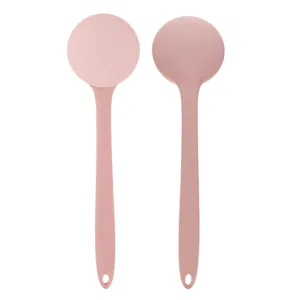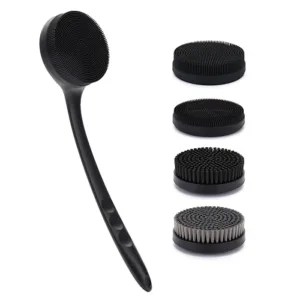
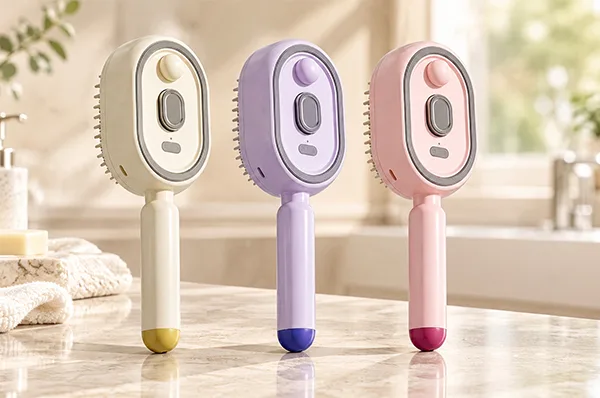
There is a shift from the usual practices of washing and styling the hair to more advanced methods of taking care of the scalp and overall wellness of people. Products that have both cleansing, massage, ease of use, and pleasantness are gaining interest from customers. There is a possibility to create multi-functional scalp massagers which are better alternatives to ordinary shampoo brushes for beauty brands, wholesalers, salon suppliers, and private label manufacturers.
There is a lot of features that could be included in a single multi-functional scalp massager, such as soft silicone bristles, ergonomic handle, ability to dispense shampoo, working with both dry and wet hair, and compact size. So,there is also a chance to add even more functions depending on the product development budget.
But the addition of more functions is not necessarily the recipe for creating a better product. It takes a good understanding of consumer needs, proper engineering of the product, choice of materials, production capability, and a unique product positioning strategy.
For cosmetic companies wishing to diversify their product line in hair care solutions, cooperating with a seasoned silicone scalp massagers manufacturer will assist in turning their ideas into successful commercial products. Beaut-LOHAS offers silicone products customization and OEM/ODM production services, helping companies to create branded hair care tools for the world markets.
This manual tells you how to design a multi-functional massager, what features to choose, what materials to select, how to mitigate manufacturing risks, and how to create a distinctive hair wellness product line.
1. Multi-functional Scalp Massager Definition
A multi-functional scalp massager is a personal care device that serves two or more complementary purposes in one item. It differs from the simple brush that facilitates shampoo distribution and scalp massaging in that it combines several functions in one device, thus ensuring convenience and full-scale hair care.
According to its construction, a product might incorporate such functions as:
- Scalp massaging and shampooing
- Cleansing and exfoliating
- Silicone flexible bristles and ergonomic design
- Shampoo or conditioner delivery system
- Wet massaging and dry scalp massaging
- Compactness and portability
- Disassembling for cleaning or replacement
- Electronic massaging capabilities
Of course, not each product requires these features to be incorporated into it. An ordinary brush made of silicone with an ergonomic handle and appropriate bristles might be enough for a perfect user experience.
The essential thing is to choose those functions which can be combined well.
The above distinction is important in case of B2B buyers, because an effective multi-purpose massager for scalp can be instrumental in helping a brand distinguish itself by positioning and bundling its offerings. A very complex product, however, can pose challenges in terms of rising tooling costs, assembly needs, quality concerns and customer confusion.
This is why the first step in developing such a product should involve clearly defining the concept of the product, i.e., who would use it, what problem it solves, and why customers would buy it.
2. Why Hair Wellness Allows Product Innovations
Conventional hair care products are based mainly on cleansing, conditioning, styling, and look. Hair wellness expands this idea by adding to it a focus on a scalp care regimen, a comfortable sensation, convenience, and regular self-care.
Here are some possible directions of product innovations.
First, the company can create a collection of complementary products instead of an accessory. For example, a shampoo brush can be sold along with scalp cleansing products, hair masks, massage oils, or any other compatible hair care products.
Second, the product can have additional perceived value due to the smart design of it. The dispensing feature, comfortable grip, and convenient storage may make the conventional scalp brush easier to use without using any electronic parts.
Third, multi-functional tools can work effectively in multiple sales channels. Beauty stores may prefer the product with attractive retail packaging while professional salons can prefer the durable and easy-to-clean one and e-commerce stores – with compact packaging and demonstration.
This must not be taken as a certainty of market demand. It is important for brands to confirm the idea first through competitive analysis, customer reviews, sampling, and market tests when possible before investing in tooling.
The goal of this exercise is for manufacturers and purchasers to relate product innovation with a customer need. It is more sustainable than product development without proof that customers care about the features.
3. Seven Functional Attributes to Think About While Designing a Scalp Massager
It is crucial to make the correct choice regarding the attributes of a product, which is an essential stage of developing any new device. The next functional attributes are useful options for companies that want to create their own custom scalp massagers made of silicone.
a. Scalp massaging
Elastic bristles can create a pleasant massaging effect when the user moves the device slowly on the surface of the scalp. The parameters of bristles, such as their length, distance from each other, elasticity, and form of tips affect the general perception of the massage.
The main purpose is to combine comfortable contact and necessary structure. Very hard bristles will cause discomfort, and very elastic bristles may not provide the proper touch.
b. Shampoo distribution
A scalp massager can help in distributing the shampoo on the scalp during the process of washing hair. It is better to think about this function when designing manual silicone brushes for shower.
Instructions must suggest only gentle movements and cannot promise to treat scalp issues.
c. Cleansing of the surface
The brush may assist in loosening the residue and spreading of the cleansing products. However, the effect will depend on the design of the bristles, the technique used, and the shampoo or treatment applied.
No unsubstantiated claims can be made about removing all dandruff or treating the irritation of the scalp.
d. Dispensing of the shampoo or conditioner
Inclusion of a reservoir will allow storage of a limited amount of liquid product that is released in a controlled manner from the dispenser.
Although this design will improve the convenience, it will add to the list of technical issues such as leakage prevention, access to refilling, fluidic delivery, residue formation, and cleaning.
e. Wet/dry use capability
There are manual scalp massagers that can be used both when washing hair and during dry massage.
The wet/dry use capability will widen the application opportunities; however, the manufacturer should test the grip capabilities, the cleaning needs, and material compatibility.
f. Ergonomic handling
An ergonomically designed body or handle will allow the product to be manipulated easily, especially when the user’s hands are wet and/or lathered in shampoo.
The possibilities here range from the shape, texture, weight, and proportion of a good grip that works well with the user’s palm. Again, the specific option to choose will depend on the end-user and the specific use.
g. High-end or electronic functions
For high-positioned products, there could be the possibility of using a detachable massage head, electronic functions like vibration, among others.
These will add more differentiation to the product; however, issues like battery life, waterproofing, and charging will need to be considered. This being said, for many brands, starting out with a manual product will be better.
4. Influence of Design of Silicone Bristles on Product Performance
Silicone bristles are one of the essential elements in the composition of most massaging tools for the scalp. They determine the comfort of use, flexibility, effectiveness of cleansing process, durability, and quality of the product.
The manufacturer has to consider several parameters collectively instead of setting the parameters of bristle dimensions independently.
Length of bristles: The longer bristles are able to work between the clumps of hair better, whereas shorter bristles could offer a more solid contact feeling. In fact, everything depends on the purpose of the product and its target audience.
Thickness of bristles: Thicker bristles usually give more strength to the bristle, whereas thinner bristles might be more flexible. However, in addition to that, it depends on the stiffness of the material and the form of the bristle itself.
Form of tip: The rounded tips might help to achieve a more gentle contact feeling. The sharp or unpolished tips should be avoided since they may cause an unpleasant feeling for the user.
Spacing of bristles: It determines the flexibility, access, and movement of the brush in the hair.
Material hardness: Silicon hardness impacts how easily each bristle bends. The optimal specification of silicon would require the entire product rather than just its hardness to be taken into consideration.
In OEM and ODM programs, sampling and testing becomes even more important. It is recommended for the buyer to test whether the brush snags in wet or dry hair (where possible), examine bristle ends, and verify whether the item can be rinsed and dried easily.
The company Beaut-LOHAS produces silicone scalp massagers with customization possibilities, namely with regard to the design, color, logo, and packaging of the product. The buyer may start from an already existing item or make certain changes according to their preferences.
5. Selecting Proper Materials and Products Construction
The choice of materials affects comfort, durability, manufacturability, price and the claims which the manufacturer can make.
Materials for silicone components
Silicone is widely used for personal care accessories due to its flexibility and availability in different surface textures. It can be used to create soft bristles and textured gripping surface in a scalp massager.
While purchasing silicone materials, the buyer should know the intended purpose of the product, the type of silicone, its hardness and color as well as necessary certificates. The certification as food-contact material does not mean that the material is appropriate for any cosmetic, skin contact or medical purposes.
Handles and other parts from plastic
Some products consist of silicone bristles and plastic handle or inner construction. This combination may provide a different combination of rigidity, weight and cost.
For multi-component products, designers have to study assembly strength, connections durability and possibilities to hold water or shampoo.
Dispensing Components
A hair brush for dispensing shampoo would have a reservoir, cap, outlet valve or other flow control parts.
The construction needs to be tested for leakage, consistency of dispensing, refilling convenience and residual cleaning. The performance may also depend on the liquid formulation itself, so testing should use actual shampoos or conditioners rather than just water.
Electronic Components
For any product with vibration or other electronic features, the design team will need to test the sealing, electrical safety, battery performance, charging arrangements and product standards applicable.
Waterproof appearance does not necessarily imply a certain level of water resistance. If there is any rating or performance claim, it needs to be backed up with proper testing.
Before manufacturing, the buyer and manufacturer should come to an agreement regarding the bill of material and other requirements.
6. How to Create a Custom Multifunctional Scalp Massager
Creating a custom scalp massager involves much more than just changing its color or adding your logo to it. A proper development process ensures the creation of something that is both unique and functional.
Step 1: Target customer identification
Decide which customer your product is aimed at: mass market, salons, luxury hair care brands, travel sets, gifts, etc.
There is a wide variety of customers. Products designed for use by salon professionals require good grip and durability as well as frequent washings, while products designed for mass market or as gifts require something else.
Step 2: Write a product requirements brief
Prepare a list of functions you need in your product, its desired cost, size, materials, color, design and order quantity.
If you have an example or a reference product, sketch, or even a prototype, show it to your manufacturer.
Step 3: Select an existing mold or create a new one
The use of an existing mold can help save time and reduce the need for tooling costs if the existing structure satisfies your needs.
A new mold will be necessary if the product requires an unusual shape, a particular bristle pattern, a particular grip, or a dispenser construction.
The producer needs to clarify which modifications are possible without the need for new tooling and which will necessitate the creation of a new mold or parts.
Step 4: Evaluate design feasibility
Before approval of the design concept, feasibility assessments must be performed in relation to moldability, wall thickness, parting lines, assembly, cleanability, and compatibility of silicone and other materials.
For dispensing or electronic products, feasibility assessments must also include the feasibility of the internal mechanism, seals, and maintenance.
Step 5: Create and assess samples
The prototype gives the purchaser an opportunity to test the appearance and handling of the product before ordering large volumes.
The grip, flexibility of the bristles, shampoo dispensation, dispensing properties in case of dispensers, and cleanability need to be tested and problems recorded.
Step 6: Validate Specifications and Quality Requirements
After the design approval, record the material, dimension, color standard, logo placement, package, function requirement, inspection process, and defect allowance.
Step 7: Validate Production Sample
The validated sample can act as the reference sample during the mass production process. Any changes after validation should be recorded and re-validated whenever there are any function and appearance changes.
Beaut-LOHAS offers OEM/ODM services for customized silicone products in terms of color, logo, packaging, and product development. The production process at Beaut-LOHAS ranges from product design and tooling to molding and production process. When quoting, buyers need to consider project specific tooling requirements, sampling schedule, MOQ, and production time.
7. Design of a Shampoo-Dispensing Scalp Massager
This product is a good illustration of the integration of two functions in one. This product integrates the massage brush function with the function of a liquid reservoir for shampoo and conditioner.
Nevertheless, the design of such products needs to take into account the practical aspect and not the mere fact that there is a liquid reservoir in the product.
Reservoir size: There needs to be enough capacity in the reservoir to provide the amount of liquid required for the use of the product without being too heavy and hard to manipulate.
Consistent dispensation: The mechanism must release the liquid at an appropriate flow speed which should neither be too fast nor slow.
Refilling and cleaning: There should be an easy access point through which the user can refill and clean the product.
Leakage Prevention: The product caps, valves, seals and connection points need to be tested under conditions that mimic the real use conditions of the product. Test the product under various positions and after opening and closing the cap multiple times.
Material Compatibility: Various shampoo and conditioner products have different viscosities and material compositions. Test representative products for issues such as dispensing, staining, swelling, degradation and others.
Packaging & Transport: A reservoir product may require packaging that will protect its parts from any leakage during transportation.
There is a silicone scalp massager with a dispensing function that is one of the products offered by Beaut-LOHAS. Potential buyers can see the design of the product as an example.
8. Manufacturing and Quality Control Processes
While a multi-functional scalp massager appears to be a simple product, it is manufactured based on material control, accurate tooling, assembly, and inspection processes.
Depending on whether the design involves only silicone, combination of silicone and plastic, dispensing system or electronics, the manufacturing process will change.
When it comes to manufacture of molded silicone, the company will have to control material preparation, molding process, curing process, demolding process, and finishing process.
In case the item is manufactured using multiple materials, the assembly process brings additional factors which need to be considered.
Quality control plan needs to address the following check points:
- Incoming material inspection: Inspect materials for specifications, color requirement, and other relevant documents.
- Molding inspection: Check for insufficient filling, flash, deformation, surface imperfection, and dimensional variance.
- Bristles inspection: Inspect tips for good condition, uniformity, flexibility, and absence of any sharp edges.
- Assembly inspection: Inspect assembly for proper fit, handle stability, seal, and attachment strength.
- Performance test: Test dispensing, leakage, grip or electronic features based on the approved design.
- Final inspection: Inspection of appearance, logo position, packaging, labeling and order specifications.
The terms of inspection need to be agreed upon prior to volume production. Buyers may also dictate the sampling approval process, defect classification, testing frequency and shipping acceptance standards.
Beaut-LOHAS defines its manufacturing capability in terms of liquid silicone rubber injection molding, silicone compression molding and quality inspection. The right manufacturing process will depend on the scalp massager design under consideration.
9. OEM and ODM Options for Hair Care Companies
OEM and ODM production enable brands to manufacture their scalp care products without setting up their own injection molding operations.
- OEM production is ideal for buyers with a product idea, design, or specifications and looking for a manufacturer to produce it.
- ODM production is ideal for buyers requiring assistance in developing a product idea, choosing from a design or a manufacturer’s product platform.
In case of multi-functional scalp massagers, customization can be done in the following areas:
- Shape and size of the product
- Structure and hardness of the silicone bristles
- Material and texture of the handle
- Coloring and Pantone matching
- Printed, embossed, or debossed logo when applicable
- Structures for dispensing shampoos
- Packaging and retail display
- Custom molds and product changes
Depending on design, materials, manufacturing process, and budget, customization options will vary.
Take for instance, a hair care company may start with an existing manual scalp massager design but change its color and apply its logo. Another hair care company may need to come up with a unique grip design or dispensing design in order to have a unique product.
Beaut-LOHAS offers customization services for silicon scalp massagers and other personal care items in terms of logo, color, size, and package designs.
When getting a quotation, it is advisable to be specific on what you want and not just request the lowest price per unit. The quotation must include tooling charges, sampling fees, unit price, MOQ, package, lead time, inspections, and delivery assumptions.
10. Cost Considerations, MOQ, and Production Plan
The cost of manufacturing a multipurpose hair massaging brush will not only depend on the weight of the silicone to be used. The product design and specifications might affect costs related to tooling, assembling, testing, and packaging.
These are some cost considerations:
Tooling expense: New tooling will likely involve higher expenses than a compatible existing tool. The complexity and dimensional requirements might determine tooling needs.
Material: Grade, hardness, color of silicone, and other plastics or metal components determine material costs.
Number of functions: It is likely that an ordinary manual brush will be less complex than an item including a liquid chamber, valves, interchangeable heads, or electronics.
Assembly and testing: Multiple part products might require extra assembling and testing efforts.
Logo and packaging: Printing, embossing, retail packing, insertions, and gift packaging may impact the cost per unit and order preparation time.
Order Quantity: Though larger orders may lead to lower fixed cost per unit, the right order size depends on the demand forecast, storage capacity, and product complexity.
The MOQ must be verified for each particular project. On Beaut-LOHAS website on customization page, the company provides its standard MOQ of 500 pieces, although the actual needs may vary depending on the product and customizing options.
Prior to ordering a large quantity of the product, buyers should ask for a quotation that will cover all costs and not consider factory cost per unit only.
For example, it may include tooling, samples, manufacturing, packing, testing, shipping, tariffs, and labeling fees.
11. Branding, Packaging, and Product Positioning
Even if a product design is effective, it requires a product positioning on the market. Branding and packaging make customers understand why the multi-purpose scalp massager fits their assortment of products.
As far as conventional retail is concerned, a manual scalp massager may require understandable directions, practical packaging and recognizable colors.
In the case of hair care collection, brands could focus on elegant finish, accessories, gift packaging and positioning on the convenience of daily use.
As far as salon suppliers are concerned, the packaging will have to emphasize on identification, protection and instructions for use and washing.
As far as online sellers are concerned, the product page should explain the real purposes of the product, its dimensions, material, care instructions and what is included into the package. The demonstration images should depict how the product is grasped, how the bristles touch the scalp and how the dispensing system works.
The statements need to be concrete and provable. A manual massager should not be marketed as a product for hair growth, nor any other product guaranteed to cure dandruff, hair loss or scalp diseases, unless there is appropriate proof and permission.
The brand should also look into the labeling, testing and regulatory aspects of their particular product category and market. The requirements may vary based on whether the product falls under the category of a manual personal care tool, an electronic tool or a medicinal product.
12. How to Find a Trustworthy Silicone Scalp Massager Maker
The ideal maker must be capable of aiding product design and mass production.
Buyers may inquire about their supplier the following questions:
- Do you have direct experience in making silicone scalp massagers and brushes for shampooing?
- Do you have OEM/ODM capabilities or do you make standard products only?
- Can you clarify the grade, hardness, and application of the silicone to be used?
- Is there an in-house tooling or an efficient mold-development procedure?
- Can you provide samples prior to mass production?
- How do you assure bristle uniformity, appearance, dimensions, and assembly quality?
- Is it possible for you to test dispensing, leakage, or electrical functions where applicable?
- What is the MOQ, lead time for samples, lead time for production, and tooling fees?
- Is it possible for you to customize color, logo, and packaging?
- What documentation and testing support can it provide for the target market?
A good supplier should also communicate capabilities and limitations. It should identify design risks early on instead of guaranteeing incorporation of all features without impacting costs, tooling, or lead times.
Beaut-LOHAS is a company which produces personal care items made from silicone such as hair massagers, shampoo brushes, and other beauty accessories. The capabilities provided by the company cover OEM/ODM customization, tooling, molding, and quality assurance. Potential buyers may talk to the company about their product brief to see whether a customized product is needed or an existing product is sufficient.
13. Common Development Mistakes that Should Be Avoided
Even the most innovative ideas can lead to poor results if the design decisions do not consider usability and manufacture feasibility.
Too many features: Additional elements might cause increase of the cost of the product as well as additional failure points. Focus on important functions only.
No regard to ergonomics: The product might look attractive but become uncomfortable to use when wet hands are needed and for longer washes. Test the shape with appropriate consumers.
Selection of the bristles only by their looks: Length, thickness, density and hardness of the bristles should work together. Do not approve the samples only by pictures.
Neglect of cleaning needs: The reservoirs, valves, joints and other elements of the design that can be separated might accumulate dirt due to difficult rinsing.
Testing of the functionality: For dispensers test for leaking and dispensing uniformity; for electronics – relevant safety and quality tests.
Start of mass production without approved sample/specification: Any changes to the hardness, color, size or assembly after the approval can cause inconsistencies. Keep the approved sample/specification.
Marketing without substantiated claims: Claims that have to do with hair growth, health care, or scalp health should be substantiated appropriately and regulated.
Selecting suppliers based on unit price alone: Price per unit will not always provide you with quality goods or documentation or timely shipment. Look at the whole commercial offer.
Following these tips will ensure that your brand eliminates development risk when choosing tools for manufacturing.
14. Frequently Asked Questions
Why is a scalp massager multi-functional?
Multi-functionality in a scalp massager is achieved by combining two or more complementary functions of the device, including massage, shampoo application, soft cleansing, ergonomic handling, or liquid dispensing. The optimal combination will depend on the type of user and product positioning.
Can a silicone scalp massager be tailored for private label branding?
Yes, depending on the specificities of design and manufacturing, customization may involve colors, logos, bristles design, size, packaging, and creation of molds. It is necessary to clarify what options are possible for a chosen model.
Is a liquid dispensing scalp massager better than an ordinary brush?
No, in many cases the ordinary brush may be a better choice because a dispensing brush involves additional parts and cleaning.
What is the usual MOQ for custom silicone scalp massagers?
MOQ will depend on the mold availability, product design, material, customization needs, and packing options. On the Beaut-LOHAS customization page, the MOQ stated by the company is 500 pieces, but customers need to ask for clarification based on their project.
Can one massager be used for both dry and wet scalp massage?
There are scalp massagers that can be used for dry and wet massage. The manufacturer needs to clarify what use the product is designed for.
What should buyers provide when requesting an OEM quotation?
Provide the intended functions, target market, reference images or drawings, preferred materials, dimensions, estimated order quantity, logo requirements, packaging needs, and any testing or compliance requirements. The more information the buyer provides, the easier it is to assess feasibility and prepare an accurate quotation.
Conclusion: Convert Scalp Care Concepts into Products Suitable for the Market
Multi-purpose scalp massagers represent a way to introduce useful, comfortable, and positioned products for hair care companies. The concepts which have the best chance of success begin with the identification of a consumer need. This can range from the conventional silicone hair brushes to dispensers and further to hair care innovations.
There is a need to focus on the proper ergonomic design, right bristle design and material selection, cleaning and maintenance, and quality control. Other functionalities should be based on their usefulness.
Having an experienced OEM/ODM manufacturer for your B2B purchase will ease your product development process and provide insights about tooling and MOQ.
Beaut-LOHAS offers customization for silicone personal care products, such as scalp massagers and shampoo brushes. If your company is looking to bring out its very own private labeled product or modify an existing design or even a multi-functional design, you should consider knowing who the product is made for, what features are needed, what price, and the order quantity.
Thinking of customizing your multi-functional scalp massager? Talk to Beaut-LOHAS to discuss your product concept, customization options, samples, and OEM/ODM quotation.