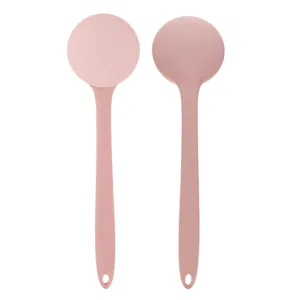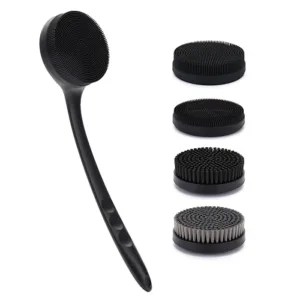
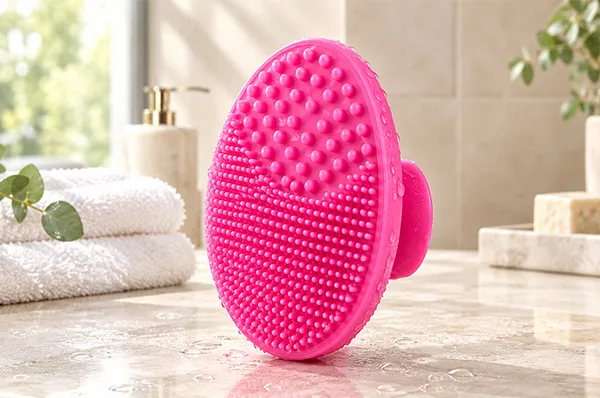
There is the possibility of expanding one’s line of skin care products and making a statement for the consumers via the use of private label silicone face scrubbers. As skincare retailers continue to increase due to competition in e-commerce as well as professional and personal skincare products, there should be products that are functional yet have a distinct brand identity.
For a skincare business, there can be a lot more to a silicone face scrubber than just being an inexpensive cosmetic tool. If used properly, such a product can fit within a skincare regime as well as gift sets and lines of products that work alongside face washes and masks among others.
However, success is not attained merely by putting a brand logo on a standard item. Brands need to know their consumers, identify differences in design, measure product quality, determine the total cost of ownership, and select a supplier that can cater to both initial and subsequent needs.
This article highlights how skincare brands can manufacture, source, and market private label silicone face scrubbers, as well as how Beaut-Lohas can help with OEM and ODM production for overseas business-to-business clients.
1. What are Private Label Silicone Face Scrubbers?
Private label silicone face scrubbers are facial cleansing devices produced by a manufacturer for a retailer, skincare brand, or distributor that sells them using its own brand name.
Compared to usual wholesale items, which come with generic or already branded identity, private label items give businesses a chance to provide customers with a more uniform brand experience thanks to the ability to customize the logo, colors, packaging, and selected product features.
Usually, the non-electrical silicone face scrubber consists of the flexible silicone body and tips used to apply facial cleanser and massage face while cleansing it. In some cases, such device also includes the textured surface at the back, ergonomic handle, finger loop, or a special shape for easy carrying.
The most popular private label items include:
- Manual silicone facial cleansing brushes
- Compact silicone face scrubbers for beauty kits
- Dual-sided facial cleansing tools
- Ergonomic handheld cleansing brushes
- Mini face scrubbers for gift sets
- Silicone facial cleansing accessories
From the brand’s perspective, one of the biggest benefits is that the process gives you flexibility. Rather than setting up a completely new production facility for your manufacturing needs, the company can work with an established silicone manufacturer to create a product which fits their positioning and consumer needs.
The key difference between private labeling and an all-new design is that the former may start out with an already designed product made by an existing manufacturer, while the latter could incorporate new geometry, custom mold, or other product-specific features.
2. How Private Label Face Scrubber Is a Market Growth Potential
Skin care brands operate in a very competitive environment in which product differentiation, customer experience, and brand identity play a crucial role. Offering complementary beauty instruments is another way to get customers engaged in their brands beyond skin care formulas.
There are several commercial advantages in offering face scrubs that deserve considering.
First, they are complementary to current skin care offerings. The brand that offers facial cleansers can create a cleansing brush as an additional product line.
Second, they help to achieve visual differentiation through the design and coloring.
Third, they allow for offering the product at various price points. The basic manual scrubber can work for an affordable accessory range, and the unique design, finishing, and presentation for a more upscale product.
Fourth, they can be sold through various sales channels depending on the specifications of the product and the commercial requirements. Private label face scrubbers can be sold through online stores, specialty beauty stores, salons, spas, subscription kits, and distribution channels.
Lastly, there is an opportunity to expand the product line. It is possible for a brand to launch one product initially and then offer complementary products in a silicone beauty collection within the same design concept.
The above opportunities are simply the possibilities and not guarantees. The success will depend on many factors including market analysis, product development, pricing, distribution, consumer reaction, and branding.
3. What Skincare Brands Would Be Best to Consider Private Label Silicone Face Scrubbers?
Not only well-known makeup brands are open for private label manufacturing; there can be many other kinds of businesses that would profit from this method of manufacturing, yet with their own specifics.
Well-known skincare brands
Businesses with already established customers will be able to use silicone face scrubbers along with cleansers, facial masks, and everyday care routine. Same colors and designs will help them keep up the integrity of the brand in all categories.
New beauty brands
Young brands will be able to enter new category with the help of private label manufacturing as they won’t have to reinvent all manufacturing processes by themselves; it might be easier to start from something that already exists.
Online stores (Amazon, Shopify)
Companies which operate online always need products that are easily noticeable and distinct among others on their listings; that’s where custom colors, shapes, packaging, and photos come in handy.
Wholesalers and Distributors
The distributor can create exclusive product lines for its customers. The private label products could be useful in providing something that retailers would like to offer as accessories.
Salons, Spas, and Professional Beauty Businesses
Branded cleansing accessories might be considered for sale in retail, promotional purposes, and even gift packages by professional organizations. This decision depends on the type of usage, cleaning process, and regulations.
It is important for each organization to evaluate its audience, selling methods, ordering volumes, price, and control of the stock before selecting any product.
4. Private Label Products as Means for Creating Brand Distinction
The biggest mistake one can make while sourcing is to assume that having a logo alone makes a great private label product. In order to create distinction, all aspects of the product experience need to be taken into consideration.
Take two facial cleansing brushes which have similar functionality. The first brush is in an ordinary shape, unrelated color and has plain packaging. The second brush is chosen using an optimal silhouette, matching colors, an ergonomic handle and communicates the key product features through its packaging, which matches the rest of the brand’s skincare line.
Though the two products might have similar functionality, one might find it easier to recognize it and understand as a part of a brand.
Brand differentiation can be achieved by taking into account four aspects.
Identity of the product: Select a distinctive silhouette, handle, texture layout or design language of the product.
Visual identity: Match the colors of silicone, logo, typography and packaging to the brand’s style.
Customer experience: Feel of the silicone, handling comfort, ability to rinse and store.
Product Brand Communication: Describe what the product is meant to do, how to use it, how to clean it, and why the design fits the product’s targeted audience.
Differentiation should be substantive, not just superficial. A product whose design is visually distinctive but not easy to hold and clean will not give consumers the experience they need.
Finally, brands should make sure their choice of design does not raise any intellectual property issues.
5. Selection of Silicone Face Scrubber Design
Designing the product starts from the intended audience and purpose of the product rather than from the most beautiful form in a catalog of the supplier.
The compact and flexible scrubber will be suitable for the travel skincare line, but larger and hand-held one would be better for the customers paying attention to their convenience and control over the product.
Possible design concepts are:
- Pebble shapes: Rounded shapes will allow to get a minimalist and modern look of the product.
- Leaf shapes: Organically-shaped outlines can go well with the nature-themed brands.
- Teardrop shapes: Tapered ends allow to play with the variation of sizes of cleansing tips.
- Ring-shape: The integrated ring can help to hold the product more comfortably, depending on its shape and flexibility.
- Two-sided: Different textures of the surface of scrubbers can give different experiences of using them.
- Mini scrubbers: Miniaturized version can fit in the travel sets or in gift packs.
This is only to suggest some design ideas but does not guarantee better cleaning efficacy. Each idea is to be tested physically for its viability.
In the development stage, care should be taken of the size, thickness, height, spacing between tips, flexibility, edge finish, grip, and storage needs.
The ideal design is the one that offers a perfect balance between usability, manufacturing ease, brand image, and the target price.
6. Custom Colors, Textures, and Branding Possibilities
Customization is one of the most useful benefits of the production of private-label silicone face scrubs. It enables brands to make sure the product corresponds to the positioning without requiring a whole new mold to be created.
Custom silicone colors
Brands are free to choose colors that correspond to an already-existing identity or create a new color scheme for a new line of products. Pantone numbers or physical samples of the color can help to specify expectations to the producer.
Color approval must take into account the material itself, the manufacturing process, as well as the look of the product upon completion under standard lighting.
Custom cleansing tips
The design of silicone tips influences the feel of the product and its usability greatly. This part of the product should be designed based on the planned usage and tested via samples.
Customized logos
Some options for branding may be:
- Silk screen printing when applicable to both the product and design
- Laser engraving when applicable to both the material and manufacturing process
- Embossed logos
- Debossed logos
- Molds with brand information
It will depend on logo complexity, available space, expectations for durability, volume, and product design chosen by the buyer.
Custom packaging
Packaging can consist of printed boxes, sleeves, inserts, product labels, and any other retail presentation. Brands need to check packaging size, barcode location, languages, and shipping protection prior to mass production approval.
Not all customizations are possible on each current design. Purchasers need to consult a case-by-case evaluation.
7. Private Label vs. OEM vs. ODM: Which One Is Best?
Understanding the manufacturing model helps brands balance speed, investment, and product uniqueness.
| Factor | Private Label | ODM | Custom OEM |
|---|---|---|---|
| Starting point | Often an existing product | Manufacturer’s existing design | Buyer-defined concept or specifications |
| Logo and packaging | Usually customizable | Usually customizable | Customizable |
| Design freedom | Low to moderate | Moderate, depending on the supplier | High |
| Development investment | Often lower | Often lower than new OEM development | May be higher |
| Development time | Often shorter | Often shorter | May be longer |
| Mold development | Usually unnecessary for basic branding | Depends on requested changes | May be required |
| Best suited for | Brands launching a branded accessory | Businesses seeking a faster launch | Brands seeking distinctive product designs |
Such groups may sometimes intersect. Private label refers to branding and distribution, and OEM/ODM refers to manufacturing and product development.
For instance, if a cosmetic brand decided to use a ready-made silicone face scrubber from ODM, change the color and packing design, and offer it as its own private label.
Or if the brand was looking for some specific silhouette and tip configuration, then it would need to initiate an OEM development project.
Recommendation: In case your primary objective is market validation with minimal development complexity, start by checking out existing solutions. When product differentiation plays a significant role in your strategy, consider OEM development afterwards.
8. How to Assess Silicone Material and Product Quality
Product quality is an indicator that directly impacts customer experience, uniformity, and potential returns or complaints. Customers should look into the real product material and quality and not be guided only by such terms as “premium silicone” in describing their products.
The following assessment criteria are especially important.
Material data: Ask for related material information and supporting documents for the intended application. In case of special regulatory or marketing requirements, check compliance with the product and material in question.
Material hardness and flexibility: Check if the silicone tips and the material itself are flexible enough.
Material surface: Look for any visible defects, contamination, irregularities in the surface, excess flashing, sharp edges, and any other flaws.
Tip uniformity: Look if tip height, tip-to-tip distance, tip design and alignment is uniform throughout the sample.
Color uniformity: Ensure the samples are viewed under consistent lighting and set up an approved standard for production.
Odor and cleanliness: Inspect the completed product for any unusual odor, deposit, and contamination.
Shape retention and durability: Determine if the product has been able to maintain its intended shape even after use and whether the structure is durable as agreed.
Package integrity: Verify if the package ensures safe transportation and displays the product in a suitable manner for its intended market place.
In the context of private labeling, it is recommended that the buyers approve the reference sample and ensure the essential specifications are known before mass production of the item.
9. Choosing the Right Private Label Silicone Face Scrubber Manufacturer
The choice of manufacturer can affect product development period, product consistency, cost control, and the possibility of extending product lines.
Competitive quotations are good to have but not sufficient for making a decision.
Consider selecting the supplier able to offer:
- Experience in manufacturing silicone personal care products
- OEM/ODM product development skills
- Availability of suitable existing molds and/or custom mold development
- Product specifications management
- Ability to produce samples and modify them
- Consistency in logo and color customizing
- Quality control process definition
- Realistic manufacturing schedule planning
- Good communication and export experience
- Ability to work with repeat orders when the demand grows
Inquire how the manufacturer deals with sample approval, manufacturing revisions, product rejections, packing problems, and quality issues. These questions can help to evaluate supplier’s risk management.
Another point is to find out what processes are done in the factory and what processes are done by other companies. Factory does not always controls the whole manufacturing chain but coordinates the activities of several companies.
For additional background, Beaut-Lohas has published a guide to auditing a silicone face scrubber manufacturer.
10. MOQ, Price, and Total Cost of a Private Label Project
The minimum order quantity (MOQ) and the unit price are very important, but even the lowest offered price does not guarantee the lowest total cost of a project.
In a private label quotation, several components can be considered to be involved:
- Basic product production
- Custom color creation
- Logo imprint or mold imprinting
- New mold or tooling charges
- Sample creation and modification
- Custom packaging and printing setup
- Quality control and testing
- Packing into boxes and related shipping charges
Some costs will vary based on the quantity of orders, but some can be fixed and charged separately.
For instance, although the custom mold will require a higher initial investment, it will result in more distinctive products being made during multiple rounds of manufacturing. If there is an existing design, it may take less effort to prepare for manufacturing, making it better for a brand that is trying out an unknown category.
Before analyzing any quotes, make sure that your suppliers will present the one-time charges separately from the unit costs.
Find out the MOQs for the product itself, custom colors, logos, packaging, etc. It is possible that all these values will differ for one project.
Do not forget to estimate the landed cost of the product, which includes the cost of shipping, duties, and import charges. You will get a more realistic cost base after calculating it.
An effective sourcing approach involves comparing at least two different options: the simpler launch with an existing design and the more distinctive one with more customization.
11. How to Properly Launch Private Label Silicone Face Scrubber Product
Proper launch starts from a clearly established business strategy rather than from placing an immediate bulk order.
Step 1: Determine your target customers
Define what audience you will most probably address. There could be several options: fans of cosmetics, beauty stores, salon clients, people purchasing gifts, internet users.
Step 2: Determine your product positioning
Decide whether your product should be cost-effective, minimalistic, premium-looking, easy for transportation, a gift option, or an addition to other skincare accessories.
Step 3: Analyze competing products
Examine how much other products cost, what size, packing, reviews, and complaints exist for competing products. Focus more on the unfulfilled needs rather than copying other successful products.
Step 4: Choose the development path
Compare existing products with your own custom ODM and OEM product.
Step 5: Ask for product samples
See how the product looks like physically, try to use it in regular conditions and clean it, and make sure that the product corresponds to your positioning.
Step 6: Approve branding and packaging
Set final colors, logo placement, printing artwork, product labels, and packaging.
Step 7: Verify Production Requirements
Make a list that covers the approved sample, material standards, inspection, packaging, delivery schedule, and testing requirements.
Step 8: Create Sales Materials
Create product photos, instructions, description, and marketing copy. Do not make unsubstantiated claims regarding skin benefits or material safety.
Step 9: Analyze Product Launch Performance
Keep track of sales, comments from customers, reasons for returns, reviews, and inventory turnover. This information will be helpful when creating the next batch of production.
Following these steps will help to eliminate avoidable mistakes and provide the brand with more grounds for expanding the product line.
12. Marketing Strategy for Private Label Silicone Face Scrubbers
The creation of a unique product is just one aspect of establishing a successful company. The brand needs a reason why consumers should pay attention and consider using it.
Create a cohesive product bundle
Match the scrubber with a cleanser, cleansing headband, reusable skincare accessory, or package in which combining the two would be commercially logical.
A cohesive bundle could assist the brand in presenting the whole skincare routine rather than just an accessory.
Use consistent visual branding
Use a consistent color scheme, imagery, packaging, and website appearance for the product. Consistent visual elements might allow the consumer to make a connection between the accessory and the brand.
Detail product attributes
List the product dimensions, materials used, tip construction, how to use and clean it, and its intended purpose. Concrete facts will be more helpful than vague marketing language like “revolutionary cleansing technology.”
Create channel-specific content
When it comes to e-commerce, focus on images, benefits, measurements, and FAQs.
But for wholesale and distribution, offer technical specifications, packaging, customization possibilities, MOQ information, and the inquiry process.
For salon and pro shops, tell about its usage and maintenance and where it fits into their portfolio.
Leverage customer feedback to create the next iteration
If the customer says it’s hard to hold, store, and not soft enough, review design and specifications before ordering again.
Marketing and product development should work together. Not only is customer feedback useful for marketing but also for creating the next production.
13. Compliance, Packaging, and Quality Control Issues
Your private label products will be branded as yours, so supplier selection and product verification are key components of brand risk management.
There are different requirements for destinations, product claims, ingredients, and marketing channels. The buyers need to determine the relevant requirements specific to their particular product and not rely on one certificate for all the markets.
When you prepare to purchase a bulk quantity of the product, please consider the following issues:
Suitability of the material: Make sure that the chosen material is suitable for the purpose and collect relevant documents.
Market specific requirements: Determine applicable safety requirements, labeling requirements, chemical restrictions, packaging, and responsibilities of the importer.
Product claims: Don’t make medical, antibacterial, hypoallergenic, and other claims without proper substantiation and permission.
Accuracy of logo and packaging: Check spelling, design, color codes, barcodes, and languages used before the product is manufactured.
Quality control requirements: Determine acceptable parameters of appearance, dimension, tip design, color, branding, packaging, and other features of the product.
Batch consistency: Have an approved reference sample as well as specifications on hand for comparing future orders to.
If there is anything that the buyer needs such as a report or certificate, make sure you have clarified the requirements with the manufacturer and the appropriate expert when necessary.
Quality control needs to be set before the start of manufacturing, not as a remedy after the issue occurs.
14. Beaut-Lohas Silicone Face Scrubber Development Projects for Private Labels
Beaut-Lohas caters to B2B clients looking for silicone beauty and personal care products, which includes skincare companies, wholesalers, distributors, and e-commerce firms.
In cases where there is interest in developing a silicone face scrubber, the project will start with either an existing design or will proceed to more customized development as per design requirements and business needs.
Existing product choice
The existing design could help the buyer assess the available products without having to start with a new mold design. Depending on the product selected, issues such as branding, colors, and packaging could be explored.
OEM & ODM product development
In cases where extra differentiation is needed, buyers can discuss product ideas, shape designs, dimension, tip design, coloring, and more.
Logo and coloring customization
Branding customization is possible through silk screen printing, laser marking, embossed or debossed logos, and matching colors depending on product suitability.
Packaging design
Depending on the sales channel, presentation, brand, and logistics, packaging can be developed.
Coordination of manufacturing and quality
Product specifications, sample approval, production planning, and inspection standards facilitate the buyer’s coordination during the product development and mass manufacturing phases.
The company Beaut-Lohas provides OEM/ODM services and silicone products development assistance for international B2B customers. It is necessary to clarify the suitable process, MOQ, tooling needs, lead time, and customization options for each individual project.
When choosing a sourcing strategy for the brand, the Beaut-Lohas wholesale silicone face scrubber buying guide will provide additional insights for the product choice and supplier evaluation.
Private labeling project planning? Share your target market, estimated order size, desired design, logo, and packaging preferences with the Beaut-Lohas team to choose the right product and move further.
15. FAQs Regarding Private Label Silicone Face Scrubbers
What is a private label silicone face scrubber?
A silicone facial scrubber which is produced by a supplier and resold under a specific brand name is called a private label silicone face scrubber. The product may be customized in terms of its logo, color, packaging, and features depending on the project.
Can I customize my silicone face scrubbers with a logo?
In many cases, there are manufacturers who will allow you to print, laser mark, emboss, deboss or add branding into the mold during the production process of your silicone face scrubbers.
What is the difference between private label, OEM, and ODM?
The private label means that you sell products under your own brand. ODM usually implies the development of the product based on the existing manufacturer design, whereas OEM implies the development of the product based on the customer design or specifications.
What is the MOQ for private label silicone face scrubbers?
It is determined by the chosen item, the volume of the order, color needs, the method of printing the logo, packaging, and the need for a new mold. The client is expected to ask for a quote according to his particular project.
How much time does the private label production take?
The time of production depends on sample approval, product availability, customization, tooling, order volume, packaging, and production schedule of the factory. Some of the products may be produced faster than others because of their existing design.
Is it possible to customize the color and packaging?
It is common practice to match the color and customize packaging according to the client’s requests but only if the manufacturer can do that and if there are no minimums set by him.
Are silicone face scrubbers good for all skin types?
No, not always. It depends on the material used in the product, its tip, handling, and personal features of the user’s skin. The brand should give all the information on that. People with sensitive or irritated skin need professional advise.
How does a brand create unique attributes for its silicone face scrubber?
The main emphasis should be put on unique features regarding the product design, handling properties, color palette, packing design, user-friendliness, and strong brand communications. Some customer research and analysis of physical samples will show what needs to be improved.
What criteria should I use to select an OEM manufacturer of silicone face scrubbers?
One should analyze the manufacturer’s experience with the products, material certificates, OEM/ODM possibilities, samples, customization, quality control, communication, delivery and re-ordering.
Is it possible to introduce a new face scrubber brand from scratch without a new mold?
Usually yes. Using an already existing design, a startup company could make changes to the brand logo, color, and packing without spending money on a new mold development.
Conclusion: How to Make a Silicone Face Scrubber a Private Label Product?
Silicone face scrubbers as private label products can be a great way for skincare brands to grow their product range and strengthen their brands in a more effective way.
Good projects involve the right choice of a product to manufacture, proper manufacturing, branding and customization, proper quality control, cost and sales planning, etc.
For a brand new to the market, an existing design branded differently might be a good option. For a company wanting to stand out in its market, custom OEM design might be a better one, although with enough investment and demand for the products.
Beaut-Lohas is a company that will assist you in developing your silicone product, OEM/ODM manufacturing, customization of your brand and packaging of your products. With all this information known from the start, you can make the best sourcing decisions.
Contact Beaut-Lohas to discuss your private label silicone face scrubber project, request suitable product options, and explore customization for your skincare brand.