
There are always new marketing possibilities for beauty brands, skincare boutiques, wholesalers, and private-label manufacturers when summer is coming. In warm weather, consumers often modify their skincare routines and seek solutions to easily wash away sweat, sunscreen, excessive skin oils, and other pollutants.
The season is an opportunity for B2B purchasers to create a unique silicone face scrubber with a well-defined market niche. But mentioning “summer” in the product description will be not enough for developing a competitive offer. In order to sell a product successfully, you need to provide consumers with certain advantages, appealing features, and packaging.
At Beaut-Lohas, we offer silicone personal care products manufacturing services and OEM/ODM solutions for our clients who want to add new tools to their beauty tool collections.
Below you can find recommendations on how to develop a summer silicone face scrubber successfully.
1. Why Summer Is a Time to Offer Silicone Face Scrubbers
Seasonal marketing activities allow companies to launch innovative products, arrange gift sets, and update their product lines. Summer is especially suitable as the topic of facial cleansing tools because people will have to clean themselves from sweat, sun creams, makeup, and other accumulated impurities.
However, customers have to differentiate between a personal need and product benefits. While a silicone face scrubber is helpful in the process of cleansing skin, it does not regulate sebum production or eliminate acne and oils for a long period of time.
Product developers can take advantage of the necessity to make the process of cleansing more comfortable.
Provide solutions for popular summer skincare routines
Customers may want to buy products which are easy to clean and store in a bathroom. They are also suitable for traveling.
Create seasonal product lines
The summer facial cleansing line can consist of a silicone face scrubber, bag, and headband.
Differentiate the retail positioning of your brand
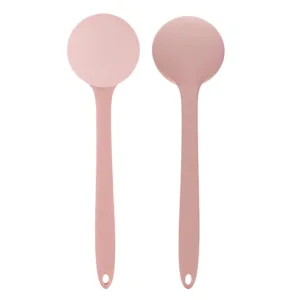
Your brand can differentiate its product through the bristles design, ergonomics design, color design, two sided texture, or summer themed packaging of its product.
The trick with wholesalers and distributors is coming up with a product that provides tangible value rather than focusing on seasonal terms only.
2. Determine the Primary Consumer Concerns Prior to Designing
Prior to choosing features of the product, identify the target consumer base as various consumers would benefit from various features and the product design would depend on its consumers.
Surface oils and shine
For consumers who have oily skin, they might be looking for a cleansing device that would work well with their chosen facial cleanser and not necessarily help in reducing the production of oil in the skin.
Sunscreen and daily grime
In summers, some consumers apply sunscreen regularly and would like an effective way to clean their skin after the application of sunscreen and thus could make the soft silicon brush an accessory that is used in conjunction with their facial cleanser.
Gentle cleaning
Some consumers may require soft and pliable bristles that do not provide harsh experience and therefore need to be considered while designing the product.
Hygiene and Maintenance
Consumers may appreciate a scrubber that is easy to rinse and store in a manner that enables it to dry between use periods. The surface design, drainage and storage accessories can help convey this attribute.
Convenience of Travel
Small size, light weight, and packaging can assist in making it convenient to pack a face scrubber into the skincare kit for travel.
Product Differentiation
Retailers of beauty products require goods which differentiate themselves through visual appearance in product listings and retail display racks. Shape, color, texture, and packaging are aspects of differentiation.
These customer requirements serve as the basis for feature selection.
3. Seven Selling Features of a Summer Silicone Facial Brush
Below are seven possible selling features for developing a product concept by beauty brands. Not necessarily all features are supposed to be used within one product prototype; choose those which are suitable for your target audience, budget, and brand positioning.
Selling Point 1: Soft Silicone Bristles for Comfortable Cleansing
Comfort of cleansing can be one of the major distinguishing features of facial cleansing tool products.
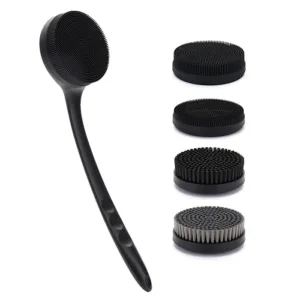
Think about soft flexible silicone bristles with rounded tips and bristle placement convenient for skin contact. Length of bristles, distance between them, thickness, as well as hardness of materials used can all affect the brushing experience.
When targeting the sensitive skin segment, the product design should focus on comfortable skin contact and appropriate usage instructions. Any claim about sensitivity of the product should be justified by proper product evaluation.
B2B sales pitch: “Soft Silicone Bristles for Comfortable Everyday Facial Brushing Routine.”
In case of private label products, this feature can be easily justified with close-ups of the product, detailed description of material properties, etc.
Selling Point 2: Textured Surfaces for Daily Facial Cleaning
Different bristle configurations will lead to different user experiences.
A fine, densely packed bristle design might give a softer experience, while a stiffer texture might please consumers seeking a stronger cleansing experience. The results are based on the entire design, rather than merely the number of bristles.
Consider these factors before deciding on a design:
- Length and thickness of the bristles.
- Shape and flexibility of the tips of the bristles.
- Spacing and coverage of the bristles.
- Easiness of rinsing after use.
- Comfort when used regularly with a right cleanser.
Do not label all designs of textured brushes as deep-pore cleansing. A silicone face scrubber is a cleansing device, not an alternative to scientific treatment of acne.
Business-to-Business Marketing Message: “Textures Thoroughly Considered for Better Facial Cleansing.”
Selling Point 3: Easy-to-Rinse Design for Daily Hygiene Needs
Products that are easy to maintain have appeal among consumers that desire an uncomplicated skin care routine.
Silicone-based products can be manufactured in a way that makes their surface and bristles easy to rinse after using the tool. Consideration must be given to whether the product has any features which could retain some water or cleansing agent residue in certain parts of it.
Some useful design ideas could include:
- Accessible bristle surface.
- Few extra crevices, if any.
- A practical hanging hole or storage option, as needed.
- Instructions about cleaning and drying the tool.
- Effective packaging to safeguard the product during transportation and storage.
Do not promise that the silicone material is totally bacteria-proof or that no microbial contamination can occur to the product. Hygiene will depend on product design, its cleaning and drying, storage and usage.
B2B marketing approach: “Easy to Rinse, Easy to Maintain.”
It can be used in product descriptions, packaging and retail listing information.
Selling Point 4: Compact and Easily Transportable Design
Travel convenience offers an obvious seasonal positioning option.
A small-sized silicone facial scrubber would fit into a toiletries bag, gym bag or travel skincare kit. It should be designed in such a way that it would be easy to handle and convenient to store.
Possible features:
- Lightweight and palm-sized.
- A hanging hole or a compact storage box.
- A special travel pouch.
- Small dimensions that would allow carrying in a toiletries bag.
- Consistent color matching for travel collections.
Dimensions and weight should be determined after checking a physical sample of the product. Shipping cost savings promise should be made only based on correct packaging dimensions, carton arrangement and freight calculations.
B2B marketing positioning benefit – “Compact Face Scrubbing at Home, Gym and During Travel.”
For distributors, this benefit would serve well for travel collections, holiday collections and promotional packages.
Selling Point 5:Two-sided Face Scrubber for More Versatility
The two-sided face scrubber may offer two textures or functionalities in one product.
For instance, one side may have fine bristles that serve as cleansers, while the second side has another texture for a massage-like experience. It should be clear which surface is which and should be tested for convenience and comfort.
In developing a two-sided model, it is worth considering:
- If there is a clear purpose behind the two sides.
- If the product is comfortable in holding.
- If the textures can be easily cleaned.
- If the design provides value to customers compared to the regular one-sided design.
- If the costs of additional tools for manufacturing justify the cost of manufacturing such products.
Remember that the massage surface does not necessarily improve blood circulation, puffiness, and skin absorption on its own. Claims like those need proof.
Marketing angle to B2B companies: “Two Textures In One Facial Care Tool.”
Such an approach may work for gift packs and versatile product lines.
Selling Point 6: Custom Colors & Private Label
The appearance of the product could affect its ability to fit into the whole brand collection.
Customized silicone face scrubs could be created in specific colors which will match existing skin care products packaging or retailer’s brand guidelines.
Customization could be performed in terms of:
- Colors according to brand specifications.
- Custom shapes of products (if feasible).
- Application of logo.
- Coordinated colors of product and packaging.
- Retail boxes or gift packaging branded.
Logo process available depending on the surface of the product and material used. Artwork, colors, positioning of the logo, labeling and other information have to be confirmed prior to mass production.
When it comes to seasonal collections, brands could choose to redesign packaging for the same product structure rather than order a new mold for each collection.
Business to business marketing proposition: “Custom Colors & Private Label Silicone Face Scrubbers.”
It is especially pertinent to cosmetic brands, distributors and online sellers who need to create recognizable product line.
Selling Point 7: Design for Reusability and Efficient Packaging
Design for reusability can become an important aspect of product positioning through the right choice of materials and practical instructions for caring about the item.
The silicone face scrubber can be positioned as an alternative to disposable cleansing devices. At the same time, any environmental claims should be clear and backed up by data. A reusable product is not necessarily biodegradable, easily recyclable or environmentally superior at all stages of its lifecycle.
Another way to differentiate a product is efficient packaging. Depending on the needs of the buyer, packaging solutions can include paper packaging boxes, printing on sleeves, box-like packaging, or minimal packaging.
While choosing the packaging, you should take into consideration the following aspects:
- Protection of your product during transportation.
- Presentation in retail settings.
- Dimensions of packaging and logistics efficiency.
- Requirements for labeling and language.
- Availability and characteristics of materials used in packaging.
B2B Marketing Idea: “Facial Care for Reuse with the Right Packaging for Your Brand.”
Brand sustainability claims must be substantiated.
4. Selecting Appropriate Features for Your Target Market
In order to build a successful product, you do not necessarily have to add all possible features. The inclusion of too many features might lead to an increased cost and the loss of simplicity of the product itself and its main benefits.
Instead, choose features according to the customer, channels, and your target retail price.
For beauty products
Distinctive shape, unique coloration, logo placement, product uniformity, and packaging in line with the overall skin care collection should be considered.
For wholesalers and distributors
Commercially efficient design, repeatable product ordering, packaging choices, and cost structure per various orders should be taken into account.
For e-commerce retailers
Appearance in search results and product pictures should be considered. Visible difference between bristles, product dimensions, colors, and benefits description could help convey the product’s value.
For travel and gift assortments
Small size, protection in storage, coordination of colors, and appropriate packaging might be more important than complex product design.
The product brief should include information about the customer, benefit, required features, target price range, packaging requirements, and market for the product prior to the supplier’s quotation.
5. OEM and ODM Customization of Silicone Face Scrubber
In general, OEM and ODM services will be able to transform product ideas into a tangible product.
Customization with OEM
OEM will generally be used when there is already a design, a sample with approval, or specifications set out by the buyer.
Customization will vary depending on the manufacturing capability but can include choosing colors, applying logos, packaging, sizes, and agreed-upon specifications of the product.
Development of ODM
ODM will generally be used if the buyer requires assistance in developing a new product idea or altering an existing design.
This will generally involve the design consultation, technical feasibility study, prototype making, mold making, sample checking, and production planning.
Product development through private labeling
It might be easier for brands venturing into the market to start with private labeling rather than coming up with a completely new structure.
This will depend on the complexity of the design, investment, timing of the launch, order quantity, and the level of differentiation needed.
Beaut-Lohas will be able to discuss any potential customization options dependent on the product selected.
6. Quality Control Factors for Custom Face Scrubber
A good set of selling features needs to be backed up by manufacturing quality control.
It is important that before beginning manufacturing, the buyer defines the requirements for the final product and the method of inspection of the goods.
Materials confirmation
Make sure that the silicone material agreed upon, supplier’s documentation and all material requirements for the product agreed upon are fulfilled.
If a special grade or compliance certificate is required, ask for documentation that specifies it.
Appearance and sizes
Inspection can include surface appearance, molding consistency, size, weight, color, and any other agreed features.
Brushing quality
Make sure that brushing quality (consistency, flexibility, finish, comfort, etc.) corresponds to the approved sample and criteria.
Logo and packaging
Check the artwork, color, position of logo, printing quality, labels and packaging specifications before starting the production run.
Sample approval
The approved sample should be taken as the base for final order. Any changes in materials, designs, substitutes, etc., should be agreed upon according to the terms of purchase.
These practices help buyers define expectations and reduce avoidable misunderstandings during production.
7. How to Develop a Summer Silicone Face Scrubber Step by Step
The structured development process will help the brand to manage scope, understand the cost, and be ready for the seasonal launch.
Step 1: The concept of the product. Identify who is your target customer, what type of product would you prefer to work with, its selling point, the price range, and sales channel.
Step 2: Selection of appropriate base model. Research the existing products and find out whether the existing model meets your needs.
Step 3: Customization requirements identification. Identify color options, bristle set, placement of logo, packing, dimension, and any additional documentation needed.
Step 4: Checking of quotation. Make sure that the supplier separates the cost of the product, customization, mold, sampling, packaging, testing, and shipping if there is any.
Step 5: Evaluation of the sample. Test usability, dimension, bristle touch, appearance, branding, and packing. Ask for changes if required.
Step 6: Specification approval. Approve the design, artwork, material, inspection criteria, quantity, and delivery date of your product.
Step 7: Production and inspection arrangement. Ensure that the production follows the quality control process and the final products meet the requirements.
Step 8: Prepare the product listing. Use accurate descriptions, original product photographs, clear instructions, and substantiated claims. Make the primary product benefit easy for buyers to understand.
Starting early is especially important for seasonal collections because product development, packaging approval, manufacturing, and international shipping all require planning.
8. Common Errors to Make When Marketing
A well-thought-out silicone face scrubber will be hard to promote if there is no proper promotion and supporting arguments.
Overclaiming about oil regulation
A cleansing tool can help get rid of the surface residue provided it is used correctly, but it shouldn’t be promoted as an oil regulator and something that will keep your skin matte for the exact period.
Unsubstantiated antibacterial claims
Don’t market the product as being able to kill bacteria, prevent acne, and stay germ-free at all times without any evidence or a reasonable basis for the claim.
Generic description of the product
Generic phrases like “high-quality” or “the best design” cannot make much difference by themselves. Describe real features, materials, dimensions, customizations, and the purpose of using the product.
Adding more without paying attention to the cost
Additional textures, accessories, complicated forms, and special packaging can affect the cost of manufacturing the product. Think about what features are really important for your potential customer.
Neglecting product photography
It is essential that buyers know the dimensions, physical characteristics, and branding of the product. Include high-quality images in your listing and do not include concepts in the images of existing products.
Failing to address the needs of the B2B buyer
The business buyer may be looking for data on minimum order quantity, customization, sampling, lead times, packaging, and quality control. Provide the necessary information.
9. Why Partner with Beaut-Lohas?
Beaut-Lohas specializes in silicone cosmetics and helps B2B clients who are interested in designing their own beauty equipment.
When developing a summer silicone face scrubber, clients may consult with Beaut-Lohas on product choice, customizing needs, logo placement, packaging, and manufacturing possibilities.
The optimal solution will depend on many factors, including the concept of the product itself, its target audience, design complexity, and order volume.
Explore our related resources:
When requesting a quotation, provide a reference image or product model, estimated quantity, preferred color, logo requirements, packaging details, and target market. This information helps the team evaluate the project more efficiently.
10. Frequently Asked Questions
Why is a silicone face scrubber fit for summertime?
Such aspects as easy-to-rinse surface, soft bristles, small size, ease of storage, and seasonal colors or packaging might be among useful features. The best set of features will vary depending on the specific target customer and the purpose of the item.
Is a silicone face scrubber capable of regulating oily skin?
A silicone face scrubber can help people to clean their faces because it allows applying a proper cleanser and removing dirt from the surface. It cannot be regarded as the means of regulating oil production.
Can I get the bristle design modified?
It is possible if the product structure and the process of manufacture allow such customization. Bristle length, thickness, pattern, and flexibility must be checked to see whether the modification is possible.
Can I put my logo on the product and order a personalized package?
It is possible to order a product with a logo and customized packaging depending on the product surface, structure, and order quantities.
What would be the MOQ of custom silicone face scrubber?
MOQ differs depending on the type of the item, branding needs, packaging and if there is a requirement for making new tooling. Get in touch with us with your desired design and quantity for confirmation of the MOQ.
How much time will it take to make a customized product?
It depends on if the customer goes for an already available model or wants to get the custom design and mold. Discuss about the sample and production time with the supplier before launching the product seasonally.
What is included in the wholesale inquiry?
Product code, Quantity estimate, Market, Color, Logo and packaging preferences should be included in the inquiry. Mention any special test reports needed from the very start of the process.
11. Conclusion: Transform Summer Trends into a Winning Product Strategy
Creating a successful summer silicone face scrubber starts from understanding the customer and choosing the right features that will provide real value.
Features such as soft bristles, carefully selected textures, rinseable design, travel-size dimensions, two-sided design, personalized branding, and effective packaging can all add up to a winning product proposition.
However, the best concept is not always the one that comes with many features. The winning concept is the one that strikes the right balance between customer needs, product performance, production feasibility, and brand message.
For beauty brands, wholesalers, distributors, and e-commerce retailers, collaborating with a seasoned silicone product manufacturing company may help to move their concept into a production project.
Beaut-Lohas invites inquiries about silicone face scrubbers, OEM/ODM service, private labeling, and wholesale orders.
Ready to develop your own silicone face scrubber? Contact Beaut-Lohas to discuss your product concept, customization options, and manufacturing quotation.
Product specifications, MOQ, customization availability, pricing, testing, and delivery schedules are subject to project requirements and written confirmation.