1. What Are Silicone Brushes and Scrubbers?
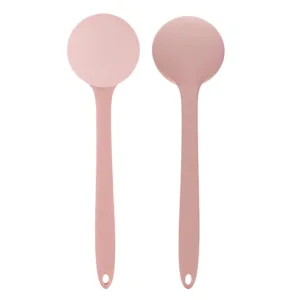
Silicone brushes and scrubbers are accessories of beauty and personal care that are produced from flexible silicone rubber. The items are widely applied in skin care, hair care, scalp massage, bathing, and body cleansing.
Contrary to classic brushes with natural or synthetic bristles and other materials, silicone brushes have flexible contact surfaces made from silicone rubber which allows creating various shapes, textures, and firmness of the products.
Typical products are:
- Silicone scalp massagers: Items produced with flexible massage tips allowing distributing the shampoo and providing comfortable scalp massaging.
- Silicone face scrubbers: Products that can be used for gentle cleansing of the face; soft silicone bristles and textures are applied to them.
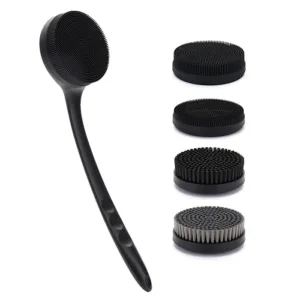
- Silicone body scrubbers: Designed for bathing and body cleansing, flexible surfaces and ergonomic shape are typical features of the items.
- Silicone bath brushes: Various items differing by sizes and textures suitable for everyday bathing.
- Silicone massage brushes: Multi-functional items uniting cleansing, massage, and exfoliation functions.
The possibilities of customization of silicone products for beauty brands and personal care companies are significant; it is possible to change the shape, hardness, surface, color, size, and package of the item. The silicone manufacturing process, however, plays a critical role in determining the final product’s flexibility, durability, appearance, and overall user experience.
2. What Materials Are Used in Silicone Brush Manufacturing?
Choosing the appropriate material is one of the most critical stages of silicone brush manufacturing.
Different materials offer different properties, and each application may require different properties. For instance, a soft silicone face scrubber should provide a different feel than a more firm body scrubber or scalp massage brush.
Silicone Rubber
The main material used in the manufacture of silicone brushes and scrubbers is silicone rubber.
The material has the following properties:
- Flexible and elastic properties.
- Resistance to changing temperatures.
- Waterproof.
- Recovery after multiple deformations.
- Cleanable surface properties.
- Flexibility in design of the molded product.
Solid Silicone Rubber (HTV)
This type of silicone is widely used in compression molding.
It is offered in a form of a solid rubber that can be combined with various colorants and formulations before being molded.
Suitable products include:
- Silicone scalp massagers.
- Silicone body scrubbers.
- Silicone facial cleansing brushes.
- Silicone bath accessories.
In many cases, it provides a good compromise between production costs, product longevity, and customization possibilities.
Liquid Silicone Rubber (LSR)
Liquid Silicone Rubber is a two-component material, which is blended and formed using a special injection molding technology.
LSR is especially suited for making items where there is a need for:
- Precise molding.
- Complex structure.
- Uniform dimensions.
- Detailed surface.
- Mass production.
The right material will depend on the application, performance characteristics, regulatory requirements, and the market segment.
Important: Food-grade, medical-grade, and general-purpose silicone are not equivalent types. The customer should ask for the corresponding documentation instead of buying silicone on its general safety properties.
3. How Are Silicone Brushes and Scrubbers Designed?
Prior to manufacturing, the company should convert the idea behind the product into a design.
A sound design contributes to increased functionality of the product, decreased manufacturing challenges, and product differentiation in the beauty and personal care industry that is highly competitive.
Product Structure and Shape
The design department makes the decision concerning the structure of the product first.
For instance:
- The scalp massager will have several massage heads and ergonomic handle.
- The face scrubber may be designed to have thin silicone bristles in various densities.
- The body scrubber may consist of softer cleansing areas and stiffer exfoliating areas.
- The multifunctional bath brush will have interchangeable or replaceable heads.
Silicone Hardness
Hardness greatly influences the feel and operation of silicone brushes.
It is possible to adjust the hardness of silicone according to the requirements for each specific product.
For example:
| Product Type | Design Consideration |
|---|---|
| Face scrubber | Soft, flexible contact points |
| Scalp massager | Balanced flexibility and support |
| Body scrubber | Medium or firmer texture options |
| Massage brush | Controlled elasticity and rebound |
Molding and Structural Considerations
The designer needs to consider the wall thickness, spacing between bristles, draft angles, parting lines, and flow of the material.
This will determine if the silicone is able to fill the mold cavity and if the finished design is able to come out of the mold undamaged.
For your brand at Beaut-Lohas, we offer product development and custom mold development services that may be useful for you.
4. What Equipment is Necessary for Making Silicone Brush?
A professional silicone manufacturing plant needs specific equipment to prepare, mold, finish, and inspect the silicone products.
The equipment layout varies according to the choice of silicone and process of production.
| Equipment | Main Function |
|---|---|
| Silicone mixing machine | Mixes silicone rubber and colorants |
| Silicone cutting machine | Cuts solid silicone into required weights |
| Precision weighing equipment | Controls material quantity |
| Mold-making equipment | Produces and modifies product molds |
| Compression molding machine | Shapes and cures solid silicone |
| LSR injection molding machine | Injects liquid silicone into molds |
| Trimming equipment | Removes excess silicone |
| Industrial oven | Performs post-curing when required |
| Inspection equipment | Checks dimensions and product quality |
The capability of the machinery in the manufacturer’s factory has an impact on the efficiency of manufacturing, product uniformity, and custom design capabilities.
In case of a business to business buyer, it is more effective to assess the production capabilities of the manufacturer rather than comparing the number of machines from the factory’s machinery list.
5. What Are The Processes Involving Silicone Brush Molding?
Various silicone brushes involve various silicone brush molding processes, and the choice of process will have an effect on production costs, mold costs, appearance, and efficiency.
There are three main molding processes: compression molding, liquid silicone rubber injection molding, and multi-color silicone molding.
1. Silicone Compression Molding
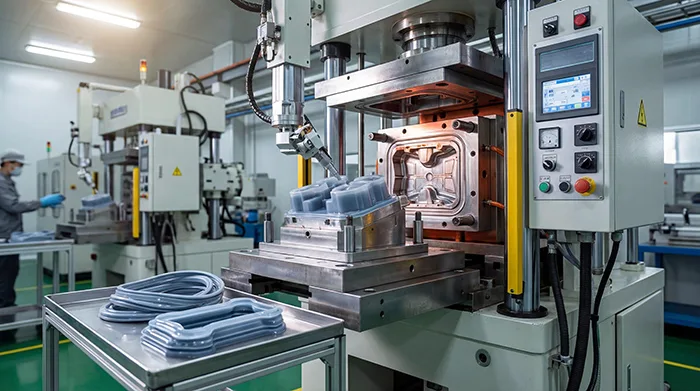
Silicone Compression Molding
Compression molding is the most popular method used in the manufacture of solid silicone items.
The main steps in the process involve adding a measured amount of processed silicone rubber to a hot mold. Then, the mold is sealed, and through pressure and heat treatment, the material flows into the mold and hardens.
Key benefits include:
- Suitable for a wide variety of solid silicone items.
- Fairly flexible for design customization.
- Applicable to various sizes and shapes of products.
- Potential to deliver cost-effective manufacture.
- Suitable for a range of hair, facial, and body care accessories.
Compression molding is especially suited for a number of traditional silicone scalp massagers and body scrubbers.
2. Liquid Silicone Rubber Injection Molding
Injection molding using liquid silicone rubber takes the place of silicone rubber.
The two materials are blended accurately and are poured into a special mold.
Advantages:
- Dimensional consistency is excellent if proper control is maintained.
- Can be used in case of complicated product shapes.
- Facilitates automation in production.
- Produces fine features and smooth surfaces.
- Can be used where precision is an issue.
But, generally, there is higher equipment and tooling cost in producing LSR products.
Hence, it is necessary to analyze the product design, volume of order, and cost target before proceeding.
3. Multi-Color Silicone Molding
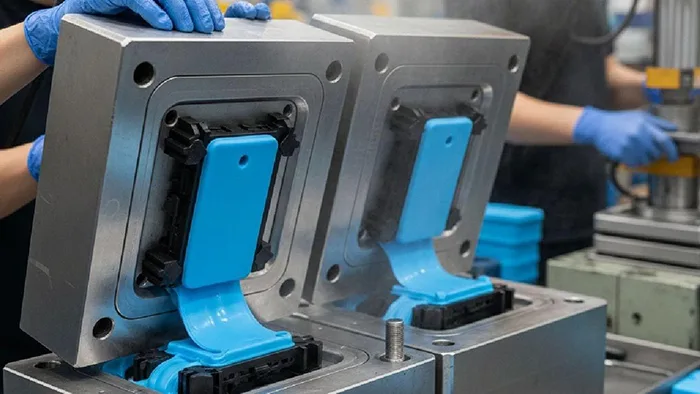
Multi-Color Silicone Molding
Multi-color molding makes it possible for manufacturers to produce various colors or types of silicone into one item.
In some cases, depending on the design, manufacturers could choose multi-stage molding, dispensing, and other compatible molding techniques.
They can produce:
- 2-colored silicone brushes.
- Silicone items with contrasting massage heads.
- 3D colored silicone designs.
- Multi-colored brand-specific products.
- Differentiation of functions using zones.
In case of beauty brands, multi-color silicone molding provides the chance for manufacturers to design recognizable items without the need for printing on the surface.
It is not necessary to produce all designs through multi-color molding. The manufacturer must consider several factors before advising on the process.
6. Step by Step: What Are The Processes of Making Silicone Brushes and Scrubbers?
Though there are slight differences in manufacturing processes of individual products, solid silicone brushes generally undergo specific steps of manufacturing.
Step 1: Preparation of Raw Materials
The manufacturing team chooses silicone rubber based on the specifications of the products.
The material is tested for appropriateness prior to manufacturing.
Step 2: Mixing of Silicone with Colorants
For solid silicone products, the raw material is mixed with the additives and colorants needed.
This step ensures consistency of material properties and desired product color.
In case of custom orders, Pantone color codes or physical samples can be used as references for color matching.
Step 3: Cutting and Weighing of Raw Material
The selected raw materials are cut and weighed based on the mold cavity and product specifications.
Consistent weighing contributes to uniform product dimensions and minimizes waste.
Step 4: Mold Preparation
Production specialists install the selected mold and examine its state.
The mold should be cleaned and correctly positioned to minimize production defects.
Step 5: Silicone Molding and Vulcanization
The material is put into the mold.
In the case of compression molding, heat and pressure are applied by a machine to form and vulcanize the silicone.
When producing LSR, liquid silicone is injected into the mold and vulcanized based on the process parameters.
Step 6: Demolding
After the curing cycle ends, the mold is opened, and the produced silicone part is demolded.
Proper demolding allows avoiding deformation, breaking, and damaging of silicone bristles.
Step 7: Initial Quality Control
Molded products are inspected for visible defects, partial filling, contamination, dimensional defects, and other manufacturing errors.
Products failing to meet the specified criteria should be sorted out.
Step 8: Trimming and Surface Finishing
Excess silicone, flash, or unwanted material around the product edges is removed.
Depending on the product, additional cleaning and finishing may be required.
Step 9: Post-Curing When Required
Some silicone formulations and production processes require secondary vulcanization or post-curing.
This treatment helps meet the specified material performance and processing requirements.
However, post-curing is not automatically necessary for every silicone product. The material supplier’s instructions and validated manufacturing process should determine whether it is required.
Step 10: Final Quality Control
Finished products undergo final inspection according to the agreed quality standards.
Depending on the product, this may include appearance, dimensions, hardness, elasticity, and functional testing.
Step 11: Printing of Logo and Branding
Any approved branding process can be used where necessary.
Such processes can include screen printing, laser engraving, or inclusion of logo into the mold design.
Step 12: Packaging and Shipping
Products are packed as per the buyer’s packaging instructions.
Packaging can involve customized boxes, label printing, product inserts, barcode labels, and other private labeling processes.
The finished products are then prepared for shipping.
This is an illustrative manufacturing process flowchart. The actual manufacturing processes can vary depending on the product design and molding technique.
7. How Are Silicone Brushes Customized for Private Label Brands?
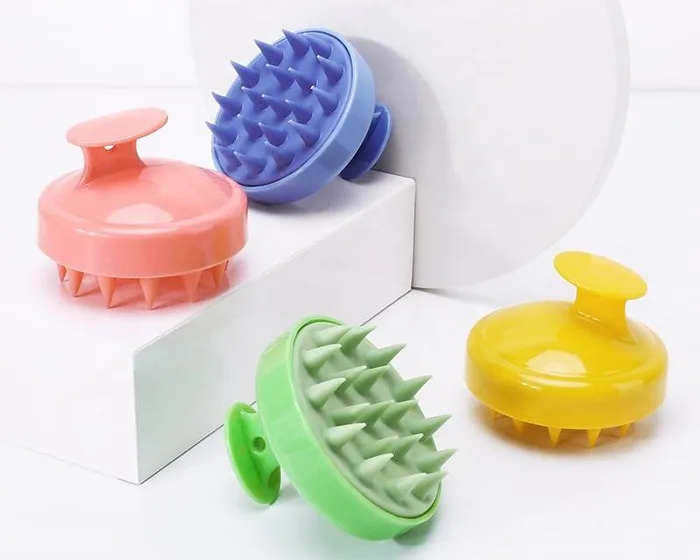
Silicone Brushes Customized for Private Label Brands
Customization is essential in the process of silicone brushes manufacturing. It is crucial for brands and wholesalers that want to create distinctive products.
The good OEM/ODM manufacturer should provide customization opportunities in several areas.
Shape and Size Customization
Buyers can provide already existing product samples, design sketches or ideas.
The manufacturer can customize dimensions, structure of the product, handle design and its functions.
Color Customization
It is possible to produce silicone brushes of various colors based on Pantone color charts or approved samples.
Among the most popular there are neutral colors, pastels, and brand-specific color combinations.
Hardness and Texture Customization
Products with various hardness and texture can be developed in compliance with the intended purpose of the item.
Thus, face cleaning brush needs softer touch-points while a body scrubber requires more rigid construction.
Custom Logo Printing
Available methods of brand printing may be as follows:
- Screen printing.
- Laser engraving/marking.
- Debossed logos.
- Embossed logos.
- Injection-molded branding.
Custom Packaging
Private label packaging is helpful to make the brand complete its presentation in retail stores.
These options are available:
- Printed boxes.
- Hangtags.
- Labels.
- Instruction cards.
- Barcodes.
- Customized product sets.
For the clients of Beaut-Lohas, OEM/ODM services can provide assistance in designing the products, developing custom molds, applying logos, matching Pantone colors, and designing packaging.
8. What Are the Methods Used by Manufacturers to Guarantee Silicone Brush Quality?
Quality control must be part of the manufacturing process and not just the end process.
Consistency in quality becomes critical for international B2B buyers as quality defects may result in customer complaints, returns, and tarnished reputation.
Inspection of Raw Materials
Before manufacturing begins, manufacturers must check on the specifications of the materials and other documents from the suppliers.
The following become important:
- Grade and composition of the material.
- Hardness of the material.
- Color consistency of the material.
- Identification of the batch.
- Relevant documentation.
Inspection During Manufacturing Process
While molding, producers should take into account the following factors:
- Mold temperature.
- Pressure used while molding.
- Curing period.
- Quantity of material used.
- Dimensions of the product.
- Surface appearance of the product.
Process parameters should be documented and controlled to reduce variations between production batches.
Finished Product Inspection
Finished silicone brushes should be inspected for:
| Inspection Item | What to Check |
|---|---|
| Appearance | Bubbles, stains, cracks, contamination |
| Surface | Uneven texture and rough edges |
| Dimensions | Length, width, thickness, tolerances |
| Hardness | Consistency with approved samples |
| Elasticity | Flexibility and recovery |
| Structure | Incomplete filling and deformation |
| Logo | Position, clarity, adhesion where applicable |
| Packaging | Correct labels, quantities, and specifications |
Performance and Compliance Testing
Based on the market and claims, the buyer can ask for related tests.
Some examples include identification testing, restricted substances testing, and compliance testing for chemicals that are relevant.
Beaut-Lohas will assist customers with quality management and test documentation as needed, including those relevant to CE, RoHS, REACH, and California Prop 65 regulations.
It should be noted that there is a difference between the support provided by the manufacturer for testing versus certifications for products. Compliance should be established based on the specific product.
9. What Are the Factors Determining the Production Cost of Silicone Brushes?
Several factors determine the manufacturing cost of silicone brushes and scrubbers.
Knowledge of such factors will enable consumers to consider quotations from manufacturers carefully.
1. Silicone Material
Material specifications, formulation, hardness, color, and desired functionality determine raw material cost.
Speciality materials may need extra care or testing.
2. Mold Design Costs
A custom mold needs design, engineering, tooling material, and manufacturing.
A complicated structure will demand more tooling and greater upfront costs.
3. Manufacturing Process
Processes like compression molding, LSR injection molding, and multi-color molding come at different prices.
The most modern manufacturing process does not always prove to be the most economical.
4. Product Size and Weight
The bigger the product, the larger the amount of silicone used.
Certain intricate designs may need a higher molding time and further finishing.
5. Order Quantity
The number of production units affects materials, machinery, manpower usage and unit prices.
Large quantities may enjoy economies of scale although the exact price is dependent on the product and production capabilities.
6. Special Requirements
Colors, logos, unique textures, and packaging may add to the cost of production.
Buyers need to determine their needs before getting quotation.
10. What is the Duration Required for Manufacturing of Silicone Brushes?
The duration for manufacturing will vary depending on whether the customer goes for an existing design or creates a totally new product.
A normal course of action during custom manufacturing includes:
| Production Stage | Main Activities |
|---|---|
| Design confirmation | Product requirements and drawings |
| Sampling | Prototype and sample approval |
| Mold development | Custom tooling when required |
| Material preparation | Silicone and color matching |
| Mass production | Molding and finishing |
| Quality inspection | Product and packaging checks |
| Packaging and shipment | Final preparation and dispatch |
If the product uses an old mold design, then the development cycle is likely to be fairly easy.
New mold designs take more time due to engineering, mold building, sampling, and iterations.
It is imperative for buyers to verify the manufacturing schedule, sampling, and delivery date with the company prior to placing an order.
11. What Criteria Should Buyers Consider for a Silicone Brush Manufacturer?
Selecting a proper manufacturer is as significant as the selection of a proper product design.
It does not necessarily imply better value if you receive a low quotation. Buyers should consider the capabilities of the supplier’s engineering, manufacturing, quality control, and communication.
The following is a list of seven criteria to take into consideration.
1. Manufacturing Experience
Seek those manufacturers who have relevant experience in silicone personal care products, and not only in silicone manufacturing.
2. OEM and ODM
See if the manufacturer can offer both customization and development capabilities for your product.
3. Mold Development Capabilities
Having either internal or effectively managed tooling capabilities can facilitate the communication process.
4. Material Choice
The manufacturer needs to know the distinction between HTV, LSR, and other silicone materials.
5. Quality Assurance System
Inquire on incoming material inspection, in-process inspection, final inspection, and testing process.
6. Customization Capability
Ensure the supplier is flexible with regard to color choice, hardness level, logo, product structure, and packaging.
7. Exporting and Communication Expertise
A good export supplier will have good communication skills for specification, sampling, documentation, and shipping.
In B2B transactions, the best manufacturing supplier is the one who can convert product specifications into finished products on a consistent basis.
12.Why Partner with Beaut-Lohas to Make Custom Silicone Brushes & Scrubbers?
As a company focused on silicone-based products for the beauty industry, Beaut-Lohas is able to offer OEM & ODM products for foreign brands, wholesalers, distributors and private label companies.
We know that customers seeking B2B business would not only want someone who can manufacture their products but also a partner that can help them develop, manufacture, and deliver their products.
Our Manufacturing and Development Advantages
15+ Years of Silicone ODM Experience: Practical experience in developing customized silicone products for different applications.
50+ R&D Staff: Product development and engineering support for new product concepts.
Custom Mold Development: Support for customized shapes, dimensions, and product structures.
Flexible OEM/ODM Solutions: Assistance with product design, logo customization, and packaging development.
Pantone Color Matching: Customized colors to align with brand identity.
Quality Management: Quality inspection throughout the manufacturing process.
Testing Support: Assistance with applicable product testing and compliance requirements.
Product development and manufacturing services provided by us include scalp massage devices, face scrubbers, body scrubbers, silicone eye masks, and other personal care accessories.
If you are starting out in the beauty industry, adding to your product lineup, or looking for silicone accessories for resale purposes, Beaut-Lohas can help bring your vision into reality.
Check out the personal care product lineup at Beaut-Lohas.com.
13. What Are the Common Defects Found in Silicone Brushes Manufacturing?
Defects can be found in the process of silicone brush manufacturing despite the availability of proven manufacturing processes.
This will help buyers choose their supplier and set more specific quality standards.
Incomplete Filling of Molds
Improper filling of molds by insufficient amount of material or improper molding conditions might result in defective products.
Prevention: Optimize the molding process.
Flash or Uneven Edges
The excess amount of material at the seam point of the molds can form flash or uneven edges.
Prevention: Make sure that there is no problem with mold accuracy, alignment, and conditions.
Uneven Coloring
Coloring problems due to improper mixing of colors or colorants.
Prevention: Stick to the standard formulas and compare with color samples.
Bubbles and Surface Defects
Air inclusion, contaminations, or improper processing conditions may impact product aesthetics.
Prevention: Ensure good material handling, mold venting, and process control.
Uneven Hardness
Different material batches or mixing conditions may lead to flexibility variance.
Prevention: Ensure proper material specification and hardness testing during manufacture.
Pungent and Unwanted Smell
Smell may depend on the material composition, processing conditions, and post-cure needs.
Prevention: Choose the appropriate material and perform validation of the curing process when needed.
A reputable manufacturer is expected to have measures to address these manufacturing defects.
14. What Is the Future of Silicone Brush and Scrubber Production?
There is still potential for innovative silicone items in the beauty/personal care market.
Producers and brands look for new ways to structure the products and add new functions to them.
Here are a few trends that can be noted.
Multifunctional Product Design
Consumers expect their products to have more than one function.
Therefore, brands try to include cleansing, massaging, and exfoliating functions into the same item.
For instance, there could be a body scrubber with a few interchangeable heads for various purposes.
Increased Need for Specialized Scalp Products
It is becoming a separate category of haircare.
Thus, producers can find a market for specialized scalp massagers with varied tips and grips.
Appearance Customization for Products
The use of color, unique shape design, and brand texture helps products to distinguish themselves in competitive categories.
Environmentally-Friendly Product Development
Companies are increasingly focusing on product lifecycle, packaging, material declaration, and manufacturing.
The labeling of silicone products as biodegradable or eco-friendly may not be automatic. Evaluation of the complete lifecycle of the products and evidence are key considerations.
Private Label and OEM Development
Companies are increasingly interested in pursuing the private label concept for personal care product differentiation without establishing their own manufacturing plant.
Manufacturers with flexible product development and customization options are well placed to help pursue such initiatives.
15. Frequently Asked Questions Regarding Silicone Brush Fabrication Process
Q1: How are silicone brushes manufactured?
Generally, silicone brushes are manufactured through material preparation, mold development, silicone mixing, molding, curing, demolding, trimming, quality inspection, branding, and packaging. The exact process depends on the silicone material and molding technology.
Q2: What type of silicone is best for making silicone brushes?
The appropriate material depends on the product’s intended application and performance requirements.
Q3: What is the difference between compression molding and LSR injection molding?
Compression molding uses prepared solid silicone rubber placed into a heated mold. LSR injection molding uses liquid two-component silicone injected into a specialized mold. Meanwhile, both processes have different tooling, equipment, production costs, and application advantages.
Q4: Is it possible to make custom colors of silicone brushes?
Yes, you can customize the color according to Pantone references or approved samples. Multi-color designs and two-tone silicone brushes might be available subject to the molding technique.
Q5: Is it possible to customize the shapes and logos of silicone scrubbers?
Yes. The customized shapes, dimensions, surface texture, and customization processes can be supported by the OEM/ODM manufacturers.
Q6: How can I assure the quality of custom silicone brushes?
It is important to demand approved pre-production samples, the certificates of materials, the agreed-upon product specifications, and the quality control procedures. Important quality inspection items include dimension, hardness, appearance, elasticity, and functionality.
Q7: What is the MOQ of custom silicone brushes?
MOQ is different for different product designs, materials, molding techniques, tooling costs, and packaging requirements. It is necessary to ask for quotation according to specific product specifications and order quantities.
Q8: Is it possible to make customized silicone brushes for private labels at Beaut-Lohas?
Yes. Beaut-Lohas offers OEM/ODM services for the development, custom molding, Pantone color matching, logo design, and packaging of silicone brushes and other cosmetics.
Conclusion: Selecting the Right Silicone Brush Manufacturer
Creating premium quality silicone brushes and scrubbers is not just about injecting silicone into molds.
Every step involved, from selecting material to designing its structure and forming, curing, finishing, and quality control, impacts the resulting product’s performance.
It helps beauty brand owners, wholesalers, and distributors to evaluate manufacturers, compare quotations, and come up with products that satisfy their market expectations.
If you want to work with an experienced OEM/ODM manufacturer of customized silicone scalp massagers, face scrubs, or body scrubs, Beaut-Lohas can assist you in this.
Contact Beaut-Lohas today to discuss your silicone product ideas, request samples, and receive a customized manufacturing quotation.