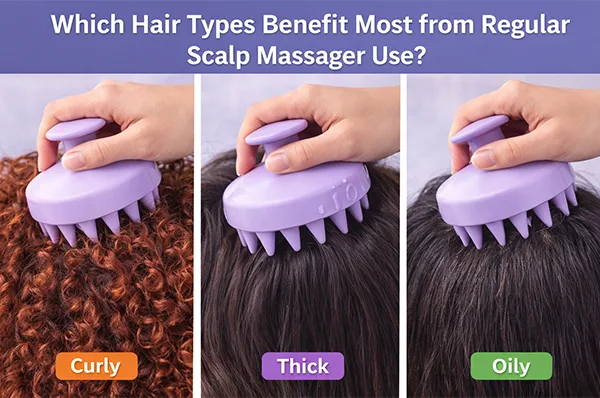
A Professional Guide for Curly, Thick, and Oily Hair | Beaut-lohas.com
Scalp massagers have transitioned from being mere relaxation devices to essential product categories in modern hair-care routines. They are now voted by salons, trichologists, and beauty brands as the best method for scalp cleansing, increasing shampoo’s effectiveness, and assisting in the development of healthier hair.
At the same time, the benefits are not distributed equally among the hair types. From the point of view of manufacturers and wholesalers, it would be the brands that develop targeted product lines by just knowing the reactions of the curly, thick, and oily hair types to regular scalp massager use.
As a professional silicone scalp massager manufacturer and an OEM/ODM supplier, beaut-lohas.com offers this extensive analysis to distributors, retailers, and private-label brands so that they can match the right scalp massager designs with the right consumer needs.
1. Why Hair Type Matters When Using a Scalp Massager
The scalp is a complex ecosystem affected by:
Sebum production
Hair density
Curl pattern
Product buildup
Washing frequency
Different hair types require different levels of stimulation, flexibility, and cleaning power. When scalp massagers are correctly matched to hair type, users experience:
Improved scalp cleanliness
Better shampoo and treatment penetration
Reduced itching and flaking
Enhanced overall hair appearance
2. Curly Hair: One of the Biggest Beneficiaries
2.1 Common Challenges of Curly Hair
Curly and coily hair types often face:
Dry scalp due to uneven sebum distribution
Product buildup from creams and gels
Difficulty cleansing the scalp without disrupting curls
Because natural oils struggle to travel down curled strands, scalp health becomes critical.
2.2 How Scalp Massagers Help Curly Hair
Regular use of a soft silicone scalp massager offers several benefits:
Gently loosens product buildup without frizz
Helps distribute natural oils more evenly
Stimulates blood flow to the scalp
Enhances scalp treatment absorption
From beaut-lohas.com’s OEM experience, flexible, rounded silicone bristles are most effective for curly hair users, preventing tugging or curl disruption.
2.3 Recommended Design for Curly Hair
Soft, food-grade silicone
Medium-length, flexible bristles
Manual or low-vibration electric models
Ergonomic grip for shower use
Curly hair consumers strongly prefer manual scalp massagers, especially for co-wash routines and sulfate-free shampoos.
3. Thick Hair: Maximum Impact from Scalp Stimulation
3.1 Thick Hair Scalp Issues
Consumers with thick or dense hair often struggle with:
Shampoo not reaching the scalp
Excess buildup at hair roots
Heavy product usage
Without proper scalp contact, even high-quality shampoos underperform.
3.2 Why Thick Hair Responds Well to Scalp Massagers
Scalp massagers:
Penetrate dense hair layers
Ensure shampoo reaches the scalp surface
Provide deeper mechanical cleansing
Improve circulation in covered scalp areas
From wholesale feedback, thick-hair users report noticeably cleaner scalps after just 1–2 weeks of consistent use.
3.3 Ideal Scalp Massager Features for Thick Hair
Based on beaut-lohas.com product testing:
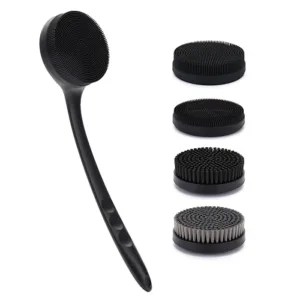
Slightly firmer silicone bristles
Taller bristle design
Wider contact surface
Anti-slip handles
Both manual and battery-powered scalp massagers perform well in this segment, with electric models favored in premium hair-care brands.
4. Oily Hair: Fast and Visible Results
4.1 Why Oily Hair Needs Extra Scalp Care
Oily hair types experience:
Overactive sebaceous glands
Greasy roots within 24 hours
Frequent washing cycles
Without proper exfoliation, oil and residue accumulate quickly.
4.2 How Regular Scalp Massager Use Helps Oily Scalps
When used 2–3 times per week, scalp massagers:
Help remove excess sebum
Reduce buildup around follicles
Improve shampoo foaming efficiency
Extend the time between washes
This makes scalp massagers particularly attractive to oily-hair consumers seeking longer-lasting freshness.
4.3 Best Designs for Oily Hair Users
Medium-firm silicone bristles
Compact brush head for precise control
Waterproof construction for shower use
Easy-clean, hygienic design
Beaut-lohas.com data shows oily-hair users are more open to battery-powered scalp massagers, especially those with rotating or vibrating functions.
5. Are Scalp Massagers Suitable for Fine or Sensitive Hair?
Yes—when designed correctly.
Fine or sensitive hair users benefit from:
Ultra-soft silicone
Short, rounded bristles
Manual pressure control
This segment emphasizes comfort and safety, making material quality critical for brands targeting sensitive scalps.
6. Usage Frequency by Hair Type
| Hair Type | Recommended Frequency |
|---|---|
| Curly | 2–3 times per week |
| Thick | Every wash |
| Oily | 2–4 times per week |
| Fine/Sensitive | 1–2 times per week |
7. Product Development Insights from beaut-lohas.com
As a long-term scalp massager OEM & wholesale supplier, beaut-lohas.com supports beauty brands by:
Customizing bristle softness for different hair types
Developing multiple SKUs under one product family
Offering private-label logo, color, and packaging solutions
Ensuring US & EU compliance standards
Many successful partners create hair-type-specific marketing using one base mold with adjusted silicone hardness and packaging messaging.
8. Final Conclusion: Which Hair Types Benefit Most?
While curly, thick, and oily hair types all benefit significantly, the strongest visible improvements are seen in:
Curly hair – better moisture balance and scalp cleanliness
Thick hair – improved shampoo effectiveness and scalp access
Oily hair – reduced greasiness and longer-lasting freshness
For beauty brands and distributors, aligning scalp massager design with hair type is no longer optional—it is a competitive advantage.
With professional manufacturing support from beaut-lohas.com, brands can confidently deliver targeted scalp care solutions that meet real consumer needs.