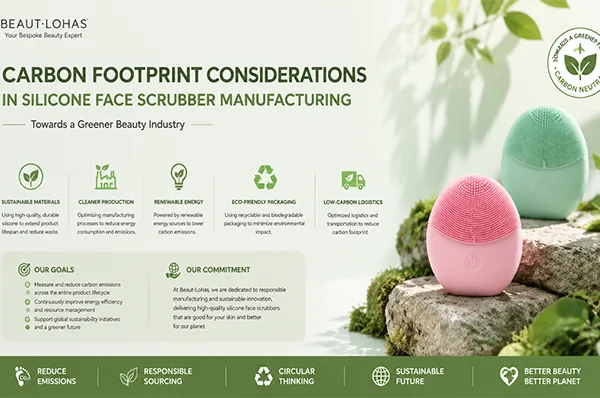
The Importance of Carbon Footprint in Silicone Skincare Tools
Consumers in Europe and North America have been moving towards sustainable products for a while. Now, B2B purchasers of silicone face scrubbers are also factoring the environmental impact into their purchasing decision. The main drivers of carbon footprint within silicone scrubber manufacturing are:
- Resource acquisition (silicone resin, additional chemicals)
- Energy consuming mold and production processes
- Packaging and transportation
- Waste removal
Beauty brands optimizing their manufacturing process to emit lower carbon will become more appealing within the eco-conscious beauty sphere.
Lifecycle analysis of Silicone Face Scrubber Production
To get a true grasp of its carbon footprint, consider the product’s lifecycle:
1. Raw material acquisition
Silicone comes from silica, which is reacted through chemical process, to create Polydimethylsiloxane (PDMS).
Carbon impacts:
- Silica mining, refining and processing all are energy consuming, and require some sort of heating and thus emit carbons.
- Shipping of the raw materials from their suppliers create an emissions impact.
- Opting for BPA free silicone limits chemical impact
2. Manufacturing Process
A silicone face scrubbers manufacturing process will require various steps:
a. Mold Design & Prototyping
- Energy consumption during the 3D printing or CNC machining process for the mold
- Using the most effective design to minimize scrap and re-work
b. Injection Molding & Curing
- High temperature is required to cure silicone. This adds to the energy consumption.
- Using energy efficient molding machines or using renewable energy source can reduce the carbon footprint.
c. Trimming and Finishing
- Low energy consumption if it is manual. Increased usage of electric powered machines will increase energy consumption.
- Minimizing excessive scrap reduces material waste.
3. Quality Control & Testing
Quality assurance is crucial to ensure the safety and performance of the product.
- The testing method is to use inspection equipment or conduct small heating/vibration tests.
- Batch testing is used in favor of a 100% power-consuming testing process to minimize the carbon footprint.
4. Packaging Considerations
Packaging has a high impact on the environmental cost.
- It is advisable to not have excessive use of plastic blister packs.
- Instead, use recyclable kraft boxes and paper inserts, or use less/no packaging.
- Printing ink, usingsoy based printing to emit fewer chemicals
5. Distribution & Shipping
Carbon footprint associated with global distribution due to:
- Air shipping (significant emissions)
- Road shipping (fossil fuel consumption)
- Weight of packaging affect shipping efficiency
Solutions:
- Ship in bulk to lower carbon footprint per unit
- Ship from localized warehouses to reduce long-haul distance
- Use carbon neutral shipping and logistics suppliers
Strategies to Reduce Carbon Footprint
1. Optimize Materials
- High-quality and low-emission silicone should be selected.
- The amount of energy intensive additives should be reduced.
- Where applicable, scrap silicone can be re-utilized.
2. Optimize Energy Efficiency
- Replace existing LSR injection molding machines with newer and more energy efficient models.
- Upgrade lighting systems to energy efficient LEDs in production areas.
- Consider the possibility of switching to renewable energy sources, such as solar and wind power.
3. Waste Reduction
- Incorporate new mold designs to decrease flash and trimming waste.
- Institute a process to recycle rejected products.
- Train employees on production processes to minimize waste.
4. Optimize Packaging
- The usage of recycled or kraft paper and corrugated board, or to minimize plastic.
- Packaging dimensions can be minimized so the shipping weight is lower.
- Display eco-certifications on packaging.
5. Optimize Carbon Offset
- Invest in afforestation and renewable energy programs or choose a carbon neutral shipping provider.
- Share efforts with B2B customers and end consumers.
Advantages of Eco-Positioning for Silicone Face Scrubbers
When brands lead with low-carbon silicone face scrubbers, the benefits include:
- Improved B2B traction (as retailers and distributors look for eco-conscious products)
- Higher value perception (as green consumers will pay premium prices)
- Risk mitigation (as markets like the EU increasingly penalize for carbon footprint)
B2B Buyer’s Focus for Silicone Face Scrubbers OEM
When buying a silicone face scrubbers OEM, look for the following:
- Transparency in materials (get data on energy consumption and origins)
- Optimization of process (inquire about low-energy machinery and water savings)
- The influence of packaging (assess how it impacts carbon footprint and presentation at retail)
- Supplier certification (check for eco-credentials such as ISO 14001 and RoHS)
Beaut-lohas.com offers extensive resources and document templates to help you achieve a carbon conscious OEM.
Low-Carbon Technologies used for the production of Silicone face scrubbers
1. Renewal energy used for production
Solar, wind, or hydro-electricity to power the production facilities, avoiding consumption of fossile fuels.
2. Recycled silicone used for production
Including recycled silicone in the production process will lessen the use of virgin materials and promote a sustainable B2B branding.
3. Modular design of the product
Having dual-sided or multiple functions of the silicone face scrubber will decrease the number of tools needed, resulting in less material used and less weight to ship.
Marketing the low-carbon silicone face scrubber:
To make B2B and final consumers aware of the eco-friendly manufacturing, all carbon-aware information should be shared with them:
- Low-carbon production process and materials used
- Use of eco-certifications and eco-icons for the product package and website page.
- Showing the results of life cycle assessment for the distributors.
Beaut-Lohas.com Business Partnership Offer
Beaut-lohas.com are an OEM & environmental focused manufacturer of Silicone face scrubbers:
- 🏭 Custom designed & multi/dual function scrubbers
- 🌿 Eco-responsible raw material sourcing
- 📦 Environmental friendly packing design
- ⚡ High energy efficiency & carbon conscientious transport
Our team helps brands lower its environmental footprints & offers a readily available premium product: Silicone face scrubbers ready for market.
Eco-Friendly Skincare Tools of the Future
- More and more plastic-free & zero-waste products on the market
- More sustainable private label skincare solutions available
- More green certification available on products
- Higher customer awareness regarding the product carbon footprint
Brands that can demonstrate manufacturing with carbon consciousness will perform best in both online and offline settings.
Conclusion
For manufacturers of OEM silicone face scrubbers, considering the carbon footprint has evolved from an added benefit to a strategic must. Embracing sustainable materials, energy-efficient production, green packaging, and offsetting are methods by which brands can:
- Decrease their carbon impact
- Entice environmentally-minded B2B buyers
- Improve brand equity and gain a competitive advantage
When you work with beaut-lohas.com you ensure not only high quality and customization but also that your silicone face scrubbers are in line with global sustainability trends to support your brand in eco-friendly markets.
👉 Contact us to begin development of low-carbon, high-quality silicone face scrubbers.