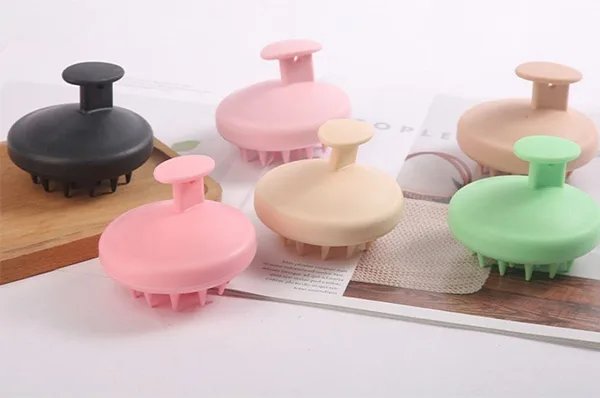
Choosing the right silicone scalp massager manufacturer is an important decision for beauty brands, hair care companies, wholesalers, distributors, and e-commerce sellers. The right supplier should do more than manufacture a basic scalp brush. It should help buyers select suitable materials, customize product designs, develop private-label packaging, maintain consistent quality, and scale production as market demand grows.
Beaut-Lohas provides silicone personal care product development and manufacturing solutions for B2B buyers seeking OEM, ODM, private-label, and customized silicone scalp massagers. From product selection and logo printing to packaging and mass production, our team supports buyers in developing products that fit their brand positioning and target markets.
This guide explains how to evaluate a silicone scalp massager supplier, compare customization options, understand MOQ considerations, and prepare for a more efficient sourcing process.
1. What Is a Silicone Scalp Massager Manufacturer?
A silicone scalp massager manufacturer produces scalp massage brushes designed to help users distribute shampoo, massage the scalp, and incorporate scalp-care tools into their hair-washing routines.
Unlike a trading company that primarily resells existing products, a manufacturing partner may provide additional capabilities such as product design, material selection, mold development, sampling, logo application, quality inspection, and customized packaging. The exact scope depends on the factory’s equipment, engineering resources, and service model.
For B2B buyers, working directly with a qualified manufacturer can improve communication, simplify product development, and provide greater control over product specifications.
A professional supplier should be able to discuss:
- Silicone material options and intended applications.
- Bristle shape, flexibility, density, and length.
- Handle design, grip, hanging holes, and ergonomics.
- Available colors and logo application methods.
- Packaging specifications and retail presentation.
- Production capacity, inspection procedures, and lead times.
- Documentation required for the destination market.
These details are important because a scalp massager designed for a premium hair care brand may require different specifications from a low-cost promotional item or a multipack product for online retail.
2. Why Source Silicone Scalp Massagers for Your Brand?
Silicone scalp massagers are a practical addition to many hair care and personal care product ranges. Their appeal comes from their simple design, reusable construction, and compatibility with a variety of hair-washing routines.
For retailers and distributors, these products can complement shampoo, conditioner, scalp-care treatments, hair brushes, and other beauty accessories.
Product differentiation
A scalp brush does not need to compete on price alone. Buyers can differentiate their products through ergonomic shapes, distinctive colors, bristle configurations, branded packaging, and coordinated hair care collections.
Flexible positioning
Depending on the design and specifications, scalp massagers can be positioned as everyday bathroom accessories, salon tools, promotional gifts, or components of branded hair care kits.
Private-label opportunities
Custom colors, logos, and packaging allow businesses to develop a consistent brand identity instead of selling an entirely generic product.
Potential for product line expansion
Brands already selling silicone face scrubbers, body scrubbers, or other personal care accessories may consider adding scalp massagers to create a more complete silicone beauty tools collection.
The most suitable product depends on your target customers, retail channel, price point, and intended use. Market demand should be validated before committing to large production volumes.
3. OEM vs. ODM: Which Manufacturing Service Do You Need?
Understanding the difference between OEM and ODM helps buyers choose a manufacturing model that matches their development resources and budget.
OEM silicone scalp massagers
OEM is generally suitable when a buyer already has a product design, specification, or clearly defined requirements and needs a factory to manufacture it.
Depending on the supplier’s capabilities, OEM projects may include:
- Manufacturing to an approved drawing or reference sample.
- Specifying dimensions, silicone properties, and bristle configuration.
- Selecting colors and logo placement.
- Developing custom packaging.
- Producing approved samples before mass manufacturing.
OEM is often a suitable option for established beauty brands, distributors, and sellers who already understand their target market and product requirements.
ODM silicone scalp massagers
ODM is appropriate when a buyer needs greater assistance with product design or development.
Depending on project scope, ODM support may include:
- Product concept development.
- Shape and ergonomic design.
- Material and structure recommendations.
- Mold development where necessary.
- Prototype production and sample revisions.
- Customization for a specific market or brand position.
ODM projects generally require more development time and upfront investment than selecting and branding an existing product.
Private-label customization
Private labeling usually involves applying a buyer’s branding to an existing product design. It may include logo printing, custom colors, branded labels, and retail packaging.
For businesses testing a new product category, private labeling can be a practical starting point because it may avoid the cost of developing a completely new mold.
How should you choose? If your design is ready, consider OEM. And If you need a new product concept, discuss ODM. If your priority is brand identity with limited structural changes, ask about private-label customization.
4. Custom Silicone Scalp Massager Options
Customization should improve usability, brand recognition, or market positioning. Before requesting a quote, identify which product characteristics are essential and which are optional.
Shape and ergonomic design
Possible design directions include compact palm-held brushes, rounded massage brushes, ergonomic grip designs, and models with integrated handles.
The preferred shape should be evaluated for grip comfort, ease of cleaning, storage, and intended use.
Bristle design
Bristle length, tip shape, spacing, thickness, and flexibility influence the feel of a scalp brush.
Softer configurations may suit buyers targeting a gentle massage experience, while firmer configurations may appeal to customers who prefer a more pronounced sensation. Actual performance depends on the complete design and should be evaluated through physical samples.
Avoid making universal claims about hair growth, dandruff treatment, or medical benefits without appropriate evidence and authorization.
Silicone material and product color
Buyers should discuss material grade, hardness, durability, surface finish, and applicable compliance requirements with the manufacturer.
Custom colors can be selected to match brand guidelines. Pantone references may help communicate the intended color, but final approval should be based on an agreed physical sample or production color standard.
Logo and packaging
Available branding options depend on the product surface, material, and manufacturing process. Options may include silk-screen printing, laser marking where suitable, or other approved logo application methods.
Packaging can include individual bags, printed cartons, gift boxes, inserts, and other retail-ready formats, subject to production feasibility and order quantity.
For the most reliable result, approve the product, logo artwork, color, and packaging specifications before mass production begins.
5. Low MOQ for Silicone Scalp Massagers: What Buyers Should Know
Minimum order quantity, or MOQ, affects inventory investment, unit pricing, and the feasibility of launching a new product.
There is no universal MOQ for all silicone scalp massagers. Requirements depend on whether the buyer selects an existing product, requests simple branding, changes the product structure, or commissions a new mold.
Existing products
Choosing an existing model usually involves fewer development requirements. The available MOQ depends on stock status, color availability, packaging, and the manufacturer’s production policy.
Logo and packaging customization
Adding a logo or custom packaging may require setup costs, printing preparation, or packaging minimums. Ask the supplier to specify the MOQ for each customization component rather than assuming that the product MOQ covers every item.
New product development
A new design may require engineering work, mold investment, prototype evaluation, and additional testing. These factors can increase the initial project cost and may make a larger order more economical.
How to evaluate a low-MOQ offer
Compare the total project cost rather than the unit price alone. Include samples, printing setup, mold fees, packaging, inspection, freight, duties, and any applicable testing costs.
A useful approach is to request a quotation at several quantities, such as an initial trial order and one or two larger production volumes. This helps you assess how unit costs change as the order scales.
For current MOQ and pricing information, contact Beaut-Lohas with your preferred model, customization requirements, and estimated quantity.
6. How to Evaluate a Silicone Scalp Massager Supplier
Selecting a supplier based only on the lowest quotation can create problems later in product development or production. Buyers should evaluate manufacturing capability, communication, quality assurance, and commercial transparency together.
Manufacturing capability
Ask whether the supplier manufactures the product directly, which production processes are handled in-house, and which operations are outsourced.
Where relevant, request factory information, production photographs, process descriptions, or a video meeting to understand the supplier’s capabilities.
Product development support
Confirm whether the supplier can support sample evaluation, material selection, custom colors, logo application, and packaging development.
For new designs, clarify ownership of drawings, molds, and approved specifications in the written agreement.
Quality management
Ask how incoming materials, molded parts, finished products, and packaged orders are inspected. A clear inspection plan should identify acceptance criteria and the process for handling nonconforming products.
Communication and documentation
A reliable supplier should provide understandable quotations, written specifications, sample approvals, production updates, and shipment documents as agreed.
For overseas buyers, clear communication is particularly important when requirements involve different languages, product standards, and delivery arrangements.
7. Quality Control for Silicone Scalp Massagers
Consistent quality is essential for brands that want to protect customer satisfaction and maintain repeat orders.
A practical quality-control plan should cover the entire production process rather than relying only on a final visual inspection.
Incoming material checks
Verify the agreed material specification, supplier documentation, and material traceability where applicable. Any food-contact, medical, or other special-grade designation should be supported by appropriate documentation for the intended use.
In-process inspection
During production, inspect critical characteristics such as dimensions, molding consistency, bristle formation, surface finish, and visible defects.
Acceptance limits should be agreed in advance, particularly for custom designs or products with tight dimensional requirements.
Finished-product inspection
Depending on the product specification, inspection may cover:
- Visual appearance and surface defects.
- Dimensions and weight where specified.
- Bristle consistency and flexibility.
- Handle strength and grip characteristics.
- Logo placement, clarity, and adhesion where applicable.
- Packaging accuracy and labeling.
- Carton quantities and shipment identification.
Sample approval and batch consistency
The approved sample should serve as a reference for production. Buyers should confirm the final specification, color, logo artwork, packaging, and applicable acceptance criteria before manufacturing.
If third-party testing or inspection is required, clarify the scope, cost, sampling plan, and responsibility for arranging it before the order is confirmed.
8. Compliance and Documentation for International Markets
Silicone scalp massagers sold in different countries may be subject to different product-safety, chemical, labeling, and consumer-protection requirements.
Buyers should identify the destination market and intended product claims before production begins.
For example, European and US buyers may need to assess applicable chemical restrictions, product safety obligations, packaging requirements, and local labeling rules. The specific obligations depend on product composition, use, claims, and sales channel.
When discussing compliance with a supplier, ask for:
- Material specifications and relevant declarations.
- Available test reports for the actual material or finished product.
- Information about the testing laboratory and test scope.
- Traceability and production documentation where applicable.
- Support for additional testing requested by the buyer or destination market.
FDA, LFGB, REACH, RoHS, and CE are not interchangeable certifications, and not every designation applies to every scalp massager. A document should only be presented as evidence of compliance when its scope and applicability have been verified.
Beaut-Lohas can discuss the documentation and testing support available for a proposed project. Buyers should confirm the applicable requirements with their compliance team or qualified testing provider.
9. From Product Inquiry to Mass Production
A structured sourcing process helps reduce misunderstandings, avoid unnecessary revisions, and keep a project moving.
Step 1: Define your requirements
Provide the target market, sales channel, estimated order quantity, preferred product style, colors, branding requirements, and packaging expectations.
If you do not have a finalized design, reference photographs or similar products can help communicate your initial concept.
Step 2: Review product and quotation options
The supplier should clarify which existing models are suitable, what customization is feasible, and whether tooling or additional testing is needed.
Request an itemized quotation that identifies product costs, customization fees, mold charges, sample costs, packaging, lead time, and shipping terms as applicable.
Step 3: Confirm the sample
Evaluate the sample against your requirements. Check usability, bristle feel, dimensions, color, logo quality, and packaging.
For custom development, record revisions and obtain approval of the final specification before authorizing mass production.
Step 4: Confirm production requirements
Document the product specification, approved artwork, order quantity, payment terms, inspection criteria, delivery schedule, and any required compliance documentation.
Both parties should agree on the conditions that must be met before shipment.
Step 5: Inspect and ship the order
Complete the agreed quality checks, confirm packaging and shipping marks, and arrange shipment according to the contract.
Keeping the approved sample and final production records helps support future repeat orders and product consistency.
10. Why Work with Beaut-Lohas?
Beaut-Lohas focuses on silicone personal care product development and manufacturing, supporting buyers who need more than a standard off-the-shelf product.
Our capabilities are intended to help brands and distributors move from product selection to customization and production with a clearer process.
Product development and customization
We support discussions around product appearance, specifications, colors, branding, and packaging. For projects that require additional development, our team can assess the feasibility of custom design and tooling.
OEM, ODM, and private-label support
Different businesses have different levels of product-development experience. We work with buyers to identify an appropriate manufacturing route based on their design readiness, project scope, and target order volume.
Quality-focused production
Product specifications and inspection requirements should be established before production. Our quality-control approach is designed to help buyers define expectations and review products against agreed requirements.
Support for international B2B buyers
Beaut-Lohas works with overseas customers seeking silicone personal care products for brand development, wholesale distribution, and retail channels.
To learn more about our capabilities, visit the Beaut-Lohas Manufacturing Solution, Product Design, and Quality Control pages.
11. Frequently Asked Questions About Silicone Scalp Massager Sourcing
Can I order silicone scalp massagers with my own logo?
Yes, logo customization may be available for suitable existing products. The available printing or marking method depends on the product surface, material, design, and order quantity. Share your logo artwork and preferred placement to confirm feasibility.
What is the MOQ for custom silicone scalp massagers?
MOQ varies by product model and customization scope. Existing products with simple branding may have lower minimums than products requiring structural changes or new molds. Contact Beaut-Lohas for the current MOQ for your specific project.
Can I develop a completely new scalp massager design?
Custom development may be possible depending on the design, technical requirements, tooling needs, and expected order quantity. Provide sketches, reference images, dimensions, or a product brief so the team can assess feasibility.
How long does production take?
Lead time depends on product availability, order volume, customization, sample approval, tooling, and production scheduling. New product development generally requires additional time. Confirm the production schedule in writing before placing an order.
Can the supplier provide product testing documents?
Available documents depend on the material, product specification, destination market, and tests already completed. Specify your market and compliance requirements so the supplier can identify relevant documentation and any additional testing needed.
What information should I include in a quotation request?
Include your intended market, product reference or design, estimated quantity, preferred colors, logo requirements, packaging, and target delivery date. If you have a target price or required testing standard, include that information as well.
Is OEM or ODM better for a new beauty brand?
OEM or private-label customization may be more suitable when you want to launch an existing design under your brand. ODM may be more appropriate when you need a differentiated design or additional product-development support. The best choice depends on your budget, launch timeline, and product strategy.
12. Request a Quote from Beaut-Lohas
Looking for a silicone scalp massager manufacturer for your next hair care or personal care product line?
Beaut-Lohas welcomes inquiries from beauty brands, wholesalers, distributors, salon suppliers, and e-commerce businesses seeking silicone scalp massagers with OEM, ODM, private-label, or customized specifications.
To help us prepare a more relevant proposal, please share:
- Product model or reference image.
- Estimated order quantity.
- Preferred color and logo requirements.
- Packaging and labeling requirements.
- Destination market and applicable compliance needs.
- Target delivery date.
Our team can review your requirements and discuss suitable product options, customization possibilities, MOQ, sample arrangements, and quotation details.
Contact Beaut-Lohas to discuss your silicone scalp massager project and request a tailored manufacturing quotation.
Website: https://www.beaut-lohas.com/
Email: admin@beaut-lohas.com
WhatsApp / Phone: +86 19574832024
Final product specifications, MOQ, pricing, certification support, and delivery schedules are subject to project evaluation and written confirmation.