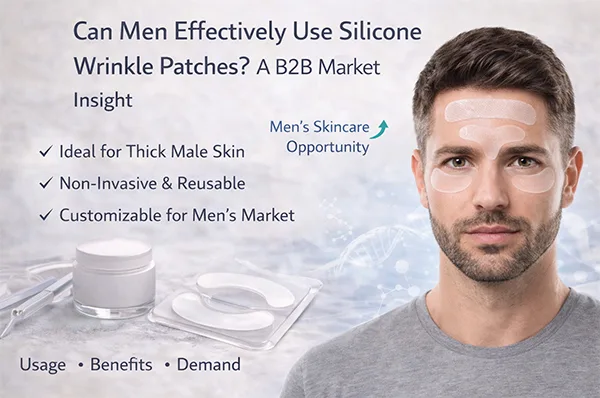
Silicone Wrinkle Patches for Men
The global skincare market is now accessible to all genders. The last ten years have seen rapid expansion of men’s grooming and anti-aging products because social norms and professional image standards and skincare education through social media and dermatologist content have become more widespread.
Silicone wrinkle patches have emerged as a new product category which now provides both genders with a non-surgical method to treat aging signs. This raises an important question for brands and B2B buyers:
Can men use silicone wrinkle patches effectively, and is this a viable segment for product expansion?
The answer confirms that all men can use silicone wrinkle patches effectively while the product works best for male skin types. This article provides brands with information about silicone wrinkle patches through three main areas which include scientific information and usage differences and design elements and business potential.
Understanding Male Skin: How It Differs from Female Skin
To evaluate effectiveness, it’s essential to understand biological differences between male and female skin.
Key Differences in Men’s Skin
20–25% thicker epidermis and dermis
Higher collagen density (but faster collagen breakdown with age)
More active sebaceous (oil) glands
Deeper expression lines, especially on the forehead and between brows
Frequent exposure to shaving-related irritation
These factors influence how anti-aging products perform—and how silicone wrinkle patches should be designed for optimal results.
How Silicone Wrinkle Patches Work (and Why They Suit Men)
Silicone wrinkle patches are medical-grade silicone sheets that adhere directly to the skin without glue. Their effectiveness is based on several mechanisms:
1. Occlusion and Hydration Retention
Silicone forms a semi-occlusive barrier that:
Reduces transepidermal water loss (TEWL)
Increases skin hydration
Temporarily plumps fine lines
Men’s skin, often dehydrated due to shaving and harsh cleansers, responds particularly well to this hydration boost.
2. Mechanical Line Smoothing
Silicone patches physically flatten and stabilize skin creases, especially during:
Sleep
Facial expressions
Repetitive movements
This is especially relevant for men, who tend to develop deeper static lines in areas such as:
Forehead
Glabella (frown lines)
Nasolabial folds
3. Wrinkle Prevention, Not Just Correction
While silicone patches don’t replace injectables, they are highly effective for:
Preventing sleep wrinkles
Reducing crease depth over time
Supporting post-procedure recovery
For men who prefer low-maintenance, non-medical skincare, this is a strong value proposition.
Are Silicone Wrinkle Patches Effective on Beards and Facial Hair?
One common concern is whether silicone patches work on areas with facial hair.
Practical Reality:
Silicone patches adhere best to clean, hair-free skin
Forehead, under-eye, neck, and chest areas are ideal
Beard areas may require trimming or are less suitable
This means male-focused product design should prioritize:
Forehead patches
Between-the-brows patches
Under-eye patches
Neck and chest wrinkle pads
Brands that guide male consumers toward appropriate application zones see fewer complaints and better reviews.
Male Usage Habits: Design and Instruction Matter
Men typically prefer skincare products that are:
Simple
Functional
Time-efficient
Clearly explained
Implications for Silicone Wrinkle Patch Brands
1. Simplified Instructions
Minimal steps
Clear diagrams
No exaggerated beauty language
2. Shorter Recommended Wear Time
Overnight use
1–2 hours post-shaving
After gym or shower routines
3. Neutral Branding and Packaging
Clean, minimal aesthetics
Gender-neutral or male-oriented colors
Avoid overly feminine visuals
These factors don’t affect efficacy—but they dramatically affect adoption.
Should Silicone Wrinkle Patches Be Customized for Men?
From a B2B and OEM perspective, the answer is yes.
Recommended Customization for Male Markets
Larger patch sizes for broader foreheads
Slightly higher silicone firmness for thicker skin
Matte or micro-textured surfaces to reduce slipping on oily skin
Neutral packaging and branding options
Multi-area kits (forehead + eye + neck)
Manufacturers that offer male-specific molds or adjustable sizing gain a clear competitive advantage.
Effectiveness vs. Other Male Anti-Aging Solutions
| Solution | Invasiveness | Maintenance | Appeal to Men |
|---|---|---|---|
| Botox / fillers | High | Medical visits | Low–Medium |
| Anti-aging creams | Low | Daily use | Medium |
| Devices (LED, RF) | Medium | Time-consuming | Low |
| Silicone wrinkle patches | Very low | Simple & reusable | High |
Silicone wrinkle patches fit perfectly into the “low-effort, visible result” category preferred by many male consumers.
Market Opportunity: Why Brands Should Target Men
The global men’s grooming market is projected to grow steadily, with anti-aging becoming a key subcategory. Silicone wrinkle patches offer:
Low manufacturing complexity
High perceived value
Reusable, eco-friendly positioning
Strong cross-selling potential
For B2B buyers and private-label brands, this means:
Expanding existing wrinkle patch lines with minimal R&D
Launching male-focused SKUs with customized packaging
Differentiating from competitors still focused only on female consumers
Common Concerns from Male Users—and How Brands Can Address Them
| Concern | Brand Solution |
|---|---|
| “Will it look strange?” | Emphasize overnight/private use |
| “Does it really work?” | Use education-based marketing |
| “Is it safe?” | Highlight medical-grade silicone |
| “Is it complicated?” | Simplified instructions |
Proactive communication reduces friction and improves conversion rates.
Final Conclusion: Yes—Men Can Use Silicone Wrinkle Patches Effectively
Silicone wrinkle patches are not only effective for men—they are exceptionally well-suited to male skincare needs when properly designed and positioned.
For beaut-lohas.com and its B2B partners, the male market represents:
A fast-growing opportunity
A natural extension of existing silicone patch lines
A chance to lead in gender-inclusive anti-aging solutions
With the right customization, education, and branding, silicone wrinkle patches can become a core product category in men’s skincare worldwide.