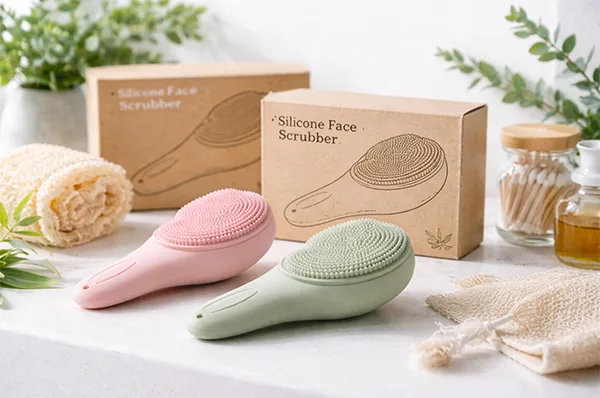
Custom Silicone Face Scrubber Manufacturer for Private Label Brands
As global beauty industry customers start to select products based on sustainability brands now reevaluate every single product element. People have used traditional loofahs since ancient times to clean their bodies. However, developing worries about hygiene and product longevity and environmental effects create demand for better products. B2B buyers find that marketing silicone face scrubbers as ecological substitutes for loofahs provides both practical benefits and business growth potential.
For brands sourcing from beaut-lohas.com this shift creates a chance to connect with eco-conscious customers while enhancing their product lifespan and profit margins and market distinction.
The Sustainability Challenge of Traditional Loofahs
Loofahs are often marketed as natural and biodegradable, but the sustainability story is more complex.
1. Hygiene and Replacement Frequency
Natural loofahs retain moisture, creating a breeding ground for bacteria and mold. Dermatologists frequently recommend replacing them every 3–4 weeks. Synthetic mesh sponges have similar issues and may degrade even faster.
Frequent replacement increases:
Product waste
Packaging waste
Carbon emissions from repeated manufacturing and shipping
In contrast, silicone face scrubbers can last several months—or longer—when properly maintained.
2. Resource and Supply Chain Concerns
Natural loofahs depend on agricultural cycles, water use, and land resources. Synthetic mesh options rely on petroleum-based plastics that shed microplastics and are rarely recyclable.
Silicone, especially high-grade food-grade or medical-grade silicone, offers:
Long lifecycle performance
Chemical stability
Reusability
Resistance to degradation
When positioned correctly, durability becomes a sustainability advantage.
Why Silicone Face Scrubbers Support Eco Positioning
1. Long-Term Reusability
One silicone scrubber can replace multiple loofahs over time. For brands, this supports messaging around:
“Reduce waste”
“Reusable skincare tool”
“Low-maintenance hygiene”
“Long-lasting alternative”
Consumers increasingly understand that sustainability is not only about materials—but also about product lifespan.
2. Improved Hygiene = Reduced Waste
Silicone is non-porous and quick-drying. Unlike fibrous loofahs, it does not trap moisture deeply within layers.
Benefits include:
Easier cleaning
Faster drying
Lower bacterial retention
Extended usable life
This improves user safety and decreases the need for frequent replacement.
3. Microplastic Awareness
As microplastic awareness grows in Western markets, brands are under scrutiny. Mesh bath sponges can shed small plastic fibers over time.
Silicone scrubbers:
Do not fray
Do not shed fibers
Maintain structural integrity
This makes them easier to position as cleaner alternatives in product listings and advertising.
Aligning With the “Low-Waste Bathroom” Movement
Sustainability trends in the US and Europe show increasing interest in:
Refillable products
Multi-use tools
Minimalist routines
Zero-waste packaging
Silicone face scrubbers align well because they:
Require no replacement heads
Are compact and durable
Pair easily with refillable cleansers
For B2B brands, bundling silicone scrubbers with refill pouches or sustainable cleanser lines strengthens positioning.
Packaging Opportunities for Stronger Eco Messaging
Sustainable positioning goes beyond the product itself.
Beaut-lohas.com buyers can enhance eco credibility through:
Recyclable kraft packaging
Soy-based ink printing
Plastic-free outer cartons
Minimalist branding design
QR codes explaining durability benefits
Clear messaging such as:
“Replace 6 loofahs with 1 reusable silicone scrubber”
helps quantify sustainability impact.
Consumer Education as a Competitive Advantage
Many consumers still associate “natural” with “more sustainable.” Education is essential.
Brands can emphasize:
Hygiene comparison charts
Replacement frequency comparisons
Durability testing visuals
Before-and-after bacterial growth demonstrations
Educational infographics on Amazon listings or DTC websites increase trust and conversion rates.
Premium Perception and Sustainability
Sustainability often overlaps with premium branding. Silicone face scrubbers can be positioned as:
Professional-grade tools
Dermatologist-inspired
Spa-quality
Long-term skincare investments
Loofahs, by contrast, are typically low-cost and disposable. Elevating the category improves perceived value and average order value.
Cost Efficiency for B2B Buyers
From a wholesale perspective, sustainability can also improve margins.
Reduced Returns
Silicone tools are more durable and less likely to fall apart.
Higher Perceived Value
Consumers accept higher pricing for reusable, eco-conscious products.
Lower Logistics Complexity
Silicone products are lightweight, compact, and stackable—reducing shipping costs.
For bulk buyers, long-lasting products reduce customer complaints and increase brand reputation.
Addressing End-of-Life Concerns
While silicone is not biodegradable, it is highly durable and does not break down into microplastics like conventional plastics.
Brands can address this by:
Offering take-back programs
Partnering with silicone recycling initiatives
Highlighting extended lifespan as the primary environmental benefit
Transparent communication strengthens credibility.
Marketing Angle Examples for Western Markets
When positioning silicone scrubbers as loofah alternatives, effective messaging includes:
“A cleaner, longer-lasting alternative to traditional loofahs”
“Designed for durability, not disposal”
“Upgrade your routine—reduce your waste”
“Non-porous silicone for a more hygienic cleanse”
“Reusable skincare essential”
Lifestyle visuals featuring:
Minimalist bathrooms
Natural light settings
Neutral color palettes
reinforce eco-friendly perception.
Social Media and Influencer Positioning
Eco-conscious influencers often discuss:
Reducing bathroom waste
Simplifying skincare routines
Replacing disposable tools
Silicone face scrubbers fit naturally into these conversations. Brands can collaborate with sustainability-focused creators to demonstrate durability and cleaning ease.
Product Innovation for Future Growth
To further strengthen sustainable positioning, brands may explore:
Dual-texture designs for multifunctionality
Travel-friendly compact versions
Earth-tone color collections
Recyclable retail-ready packaging
Educational inserts about durability
Continuous innovation helps maintain relevance in a competitive Amazon and Shopify environment.
Strategic Takeaways for Beaut-Lohas B2B Buyers
Positioning silicone face scrubbers as sustainable alternatives to loofahs is not just a trend—it reflects a broader industry shift toward durability, hygiene, and mindful consumption.
Key advantages include:
Long product lifespan
Reduced replacement frequency
Strong hygiene benefits
Microplastic-free performance
Premium brand alignment
Better margin potential
The practice of sustainability enables wholesalers and private label brands who purchase from beaut-lohas.com to create distinct market identities which match the changing values of Western consumers.
The future of skincare tools belongs to products designed to last—not disposable accessories. Silicone face scrubbers, when marketed strategically, can lead this transformation.