Custom Silicone Body Scrubber Manufacturer for Private Label Brands
The current competitive situation in the bath and personal care accessories market requires product success to depend on factors beyond product appearance and pricing. The long-term growth of brands and distributors who sell silicone body scrubbers depends on their ability to keep customers who use their products and make repeat purchases while providing recommendations about their products.
Customers normally achieve satisfaction from products when designers create ergonomic designs which they normally forget after they finish their development work.
A well-designed silicone body scrubber provides multiple benefits because it cleanses skin while enhancing user satisfaction throughout their daily activities. Customer reviews and repeat purchases and brand loyalty depend on these elements. The success of Western market products for OEM buyers and private-label brands depends on their need to comprehend ergonomic design fundamentals.
1. Why User Retention Matters More Than Initial Sales
Many bath accessories achieve strong initial sales due to attractive marketing or trending materials. However, poor usability quickly leads to negative reviews and product abandonment.
In Western e-commerce markets, retention affects:
Average product rating on Amazon and Shopify
Repeat purchase behavior
Brand trust and recommendation rates
Long-term product lifecycle value
A silicone body scrubber that feels uncomfortable or difficult to use may still sell initially—but customers stop using it after a few weeks. This results in lower perceived value and reduced brand credibility.
Ergonomic design helps transform a one-time purchase into a daily habit.
2. Understanding Ergonomics in Silicone Body Scrubber Design
Ergonomics refers to designing products that naturally fit human movement and physical behavior. In shower environments, ergonomics becomes even more critical because users deal with:
Wet and slippery hands
Limited visibility
Repetitive arm motion
Sensitive skin contact
An ergonomic silicone body scrubber minimizes effort while maximizing comfort and efficiency.
Key ergonomic principles include:
Natural grip alignment
Balanced weight distribution
Flexible movement adaptation
Reduced wrist strain
Comfortable pressure control
When these elements are optimized, users experience less fatigue and greater enjoyment during use.
3. Handle Design and Reachability: A Major Retention Driver
One of the most common complaints about body scrubbers is difficulty reaching the back.
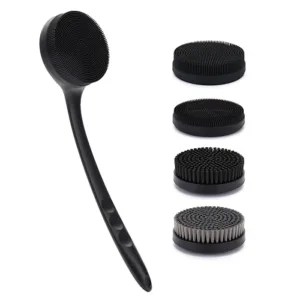
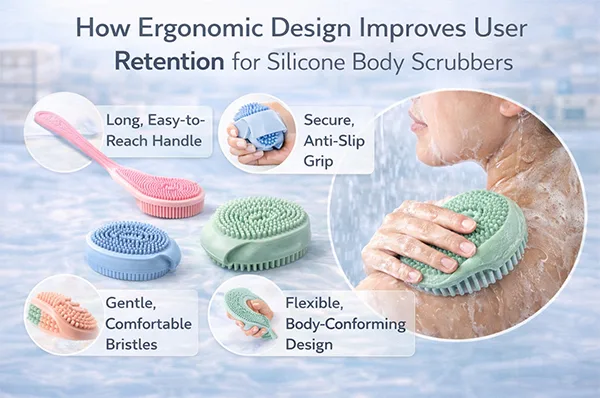
Ergonomic Long Handle Design
An effective ergonomic handle includes:
Slight curvature matching shoulder movement
Proper length for full back coverage
Anti-slip texture for wet environments
Lightweight yet stable structure
If users struggle to reach certain body areas, they quickly abandon the product. A properly engineered handle transforms usability and increases daily usage frequency.
For Western consumers—especially older users or wellness-focused buyers—ease of reach is a decisive factor.
4. Grip Comfort and Anti-Slip Performance
Bathrooms are high-moisture environments, making grip security essential.
Poor grip design leads to:
Product dropping during use
Reduced control over pressure
Frustrating user experience
Ergonomic silicone body scrubbers often include:
Finger grooves or palm contours
Textured silicone grip zones
Flexible body structures that adapt to hand pressure
These details may seem minor from a manufacturing perspective, but they dramatically improve perceived quality and usability.
A secure grip increases confidence, encouraging consistent daily use.
5. Pressure Distribution and Skin Comfort
Retention is strongly linked to how the scrubber feels on the skin.
Too soft:
Users feel ineffective cleansing.
Too hard:
Causes discomfort or irritation.
Ergonomic bristle engineering solves this problem through:
Multi-density silicone bristles
Tapered tip structures
Zoned exfoliation areas
These designs distribute pressure evenly across the skin, preventing discomfort while maintaining cleansing performance.
Comfortable exfoliation encourages long-term adoption rather than occasional use.
6. Flexibility and Body Contour Adaptation
Unlike rigid plastic brushes, silicone allows controlled flexibility.
An ergonomic silicone body scrubber should:
Bend slightly along body curves
Maintain structural stability
Adapt to shoulders, arms, and legs
Flexible designs reduce the effort required during washing and improve foam distribution. Users perceive the product as “effortless,” which significantly increases retention.
Products that adapt to the body feel more premium and intuitive.
7. Weight Balance and Fatigue Reduction
User fatigue is rarely discussed but heavily influences long-term usage.
Heavy or poorly balanced scrubbers cause wrist strain, especially during back washing.
Ergonomic optimization includes:
Hollow internal structures
Even weight distribution
Lightweight silicone formulation
When a scrubber feels easy to maneuver, users are more likely to integrate it into daily routines.
8. Hygiene Perception and Psychological Comfort
Ergonomics also affects hygiene perception.
Design elements such as:
Hanging holes
Fast-drain channels
Quick-drying bristle spacing
make the product easier to store and maintain.
Western consumers strongly associate ease of drying with cleanliness. Products that appear hygienic are used longer and reviewed more positively.
9. Impact on Customer Reviews and Brand Loyalty
From a commercial perspective, ergonomic improvements lead to measurable results:
Higher average review scores
Lower return rates
Increased repeat purchases
Stronger brand differentiation
Customers often describe ergonomic products using emotional language such as:
“Easy to use”
“Comfortable”
“Feels premium”
“Perfect daily tool”
These emotional responses are powerful drivers of organic marketing through reviews.
10. Ergonomic Design as a Competitive Advantage for Brands
As the silicone body scrubber category becomes saturated, differentiation through color or price alone is no longer sufficient.
Brands that invest in ergonomic design can position products as:
Wellness-focused accessories
Spa-quality tools
Premium daily-care essentials
For OEM buyers, ergonomic innovation creates opportunities for private-label differentiation without dramatically increasing manufacturing costs.
11. How Beaut-Lohas Supports Ergonomic Product Development
At beaut-lohas.com, ergonomic design is integrated into the product development process through:
User-oriented structure optimization
Silicone hardness customization
Grip and handle prototyping
Functional testing for comfort and durability
By aligning engineering decisions with real consumer behavior, brands can launch silicone body scrubbers designed not just to sell—but to be used continuously.
Conclusion
Silicone body scrubbers require ergonomic design because it helps users stay engaged with the product. The handle design together with grip comfort and pressure distribution and flexibility features, create multiple ways to measure customer product usage, which leads to their continued product usage.
Western market brands and distributors achieve better customer outcomes through ergonomic optimization, which results in improved product reviews and increased customer loyalty and long-term product success.
A silicone body scrubber that feels natural in the hand becomes more than a bath accessory—it becomes part of a daily wellness routine.