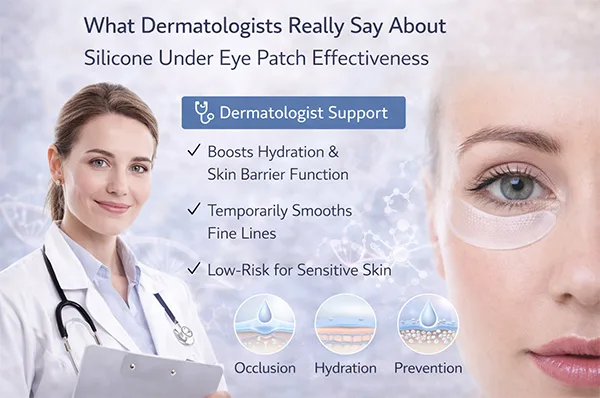
Silicone Under Eye Patch Effectiveness
The use of silicone under eye patches which are also known as pads has gained popularity as a reusable skincare treatment that helps to minimize fine lines and eye puffiness and skin dehydration in the sensitive area around the eyes. The skincare industry uses private label and OEM/ODM distribution methods to create patches which customers want to buy after they understand how dermatologists rate the patches’ actual effectiveness.
The B2B partners at Beaut-lohas.com our site for producing high-grade silicone skincare products ask us: Do dermatologists really endorse silicone under eye patches? Are the patches effective for longer than their immediate skin-smoothing effect?
The article presents scientific reasoning through dermatologist assessments and clinical information which provides brands with practical methods to demonstrate product advantages to their customers.
1. How Silicone Under Eye Patches Work — The Science Behind the Claim
The process by which silicone patches operate needs to be studied before we can analyze the opinions of dermatologists.
✔️ Occlusion: The silicone material creates a semi-occlusive barrier which permits limited airflow to the skin while maintaining skin moisture, thus decreasing transepidermal water loss (TEWL).
✔️ Hydration Retention: The skin achieves better hydration through water retention which also extends the effects of applied serums, resulting in enhanced skin texture and the elimination of fine lines.
✔️ Mechanical Smoothing: The material can use pressure to smooth out minor wrinkles because it applies gentle force to the skin, which works like sleep line reduction through pressure relief.
✔️ Microenvironment: The silicone material maintains direct skin contact to produce an ideal skin microclimate which enables natural skin regeneration.
The same principles which operate on under eye patches also function through silicone gel sheeting to treat scars, which doctors in dermatology use as their standard clinical method.
2. Dermatologists on Hydration and Fine Lines
Most dermatologists believe that silicone under eye patches can temporarily diminish fine line wrinkles which result from dehydration and dryness of skin.
⭐ Dr. Whitney Bowe, Board-Certified Dermatologist
Dr. Bowe explained that silicone patches function through their ability to create a moisture-blocking seal, which makes dehydrated skin appear more plump and smooth. The skin area around the eyes shows this effect because the skin there becomes dry more easily than other areas.
⭐ Dr. Shari Marchbein, Dermatologist
Dr. Marchbein has emphasized that while silicone doesn’t act like a retinoid or a peptide serum, it does help maintain hydration and protect the barrier function — both essential for minimizing the look of early expression lines.
Dermatologists view this mechanism as supportive rather than curative — silicone under eye patches don’t rebuild collagen or permanently erase deep wrinkles, but they enhance the skin’s visual quality when used consistently.
3. Temporary vs. Cumulative Effects
An important distinction dermatologists make is between temporary cosmetic improvements and long-term structural changes.
Temporary Effects
✔ More hydrated under-eye appearance
✔ Reduced visibility of fine lines after wear
✔ Smoother texture in the morning after overnight use
Long-Term (Cumulative) Effects
Dermatologists generally agree that:
silicone patches may support improved elasticity and resilience over time, primarily by consistently maintaining moisture
repeated occlusion can prevent dehydration and reduce deepening of lines
However, they also note:
silicone alone does not stimulate collagen synthesis like retinoids, peptides, or certain energy-based therapies
results vary based on individual skin type, lifestyle, and genetics
In clinical terms, silicone patches provide cosmetic benefit and prevention, not biological reversal.
4. Dermatologists on Safety and Tolerance
Silicone under eye patches are widely regarded as safe for most skin types, including sensitive skin, if used properly.
✔ Hypoallergenic Material
Medical-grade silicone is inert, meaning it rarely causes irritation or allergic reactions.
✔ Non-Comedogenic
Because silicone does not penetrate pores, it does not contribute to acne or milia in the under-eye area — a common concern with heavy creams.
✔ Suitable for Sensitive Areas
Dermatologists often recommend silicone as a low-risk alternative for delicate regions like under eyes, where stronger active ingredients (e.g., retinol) may cause irritation if not used carefully.
However, professionals also advise:
❗Do not apply over broken, open skin
❗Clean the patches properly after each use
❗Avoid excessive pressure or prolonged 24/7 wear
When used as directed, silicone under eye pads are considered one of the gentler options in anti-aging care.
5. How Dermatologists Recommend Using Silicone Under Eye Pads
Dermatologists often provide practical usage tips that enhance the pads’ effectiveness:
📌 1. Apply on Clean, Dry Skin
Oils, makeup residue, or thick creams reduce adhesion and impede hydration.
📌 2. Use Overnight
Silicone pads work best when in contact for several hours, especially during sleep — when the skin’s natural repair processes are active.
📌 3. Combine with Hydrating Serums
While the pads themselves don’t deliver ingredients, they enhance the performance of serums like:
Hyaluronic acid (HA)
Peptides
Ceramides
Skin-friendly antioxidants
Dermatologists caution against layering occlusive creams underneath patches that may trap unwanted residue.
6. Clinical Evidence and Analogous Practices
The effectiveness of silicone in improving skin appearance isn’t just anecdotal. Dermatology literature supports silicone gel sheeting in scar management. Although scars and wrinkles are not identical, both benefit from moisture retention and occlusion.
🔹 Silicone Gel Sheets
Used in scar therapy with documented results in flattening and softening scars.
🔹 Translating to Wrinkles
Same principles apply — keeping skin hydrated and under optimal micro-conditions supports smoother skin surface appearance.
This is why many dermatologists see silicone patches as a cosmetically beneficial, scientifically plausible product, particularly for fine lines and dehydrated skin.
7. Limitations Dermatologists Highlight
While dermatologists generally view silicone under eye pads as safe and supportive, they are clear about limitations:
❗ Not a substitute for medical treatments like fillers or Botox
❗ May not visibly reduce deep wrinkles
❗ Requires consistent use for best results
❗ Not a replacement for sun protection or healthy skincare habits
In other words, dermatologists see silicone pads as part of a holistic anti-aging regimen, not a stand-alone miracle cure.
8. B2B Opportunities: Communicating Dermatologist Support
For skincare brands and OEM buyers, dermatologist support provides credible marketing leverage:
✅ Position silicone under eye pads as hydration boosters
✅ Emphasize prevention and smoothing, not medical claims
✅ Use clean phrases like “supports skin’s barrier” and “enhances hydration”
✅ Reference general dermatologist opinions about silicone occlusion science
This provides responsible, compliant messaging that aligns with regulations in the U.S. and EU, while still being impactful.
Conclusion: A Dermatologist-Backed, Effective Cosmetic Tool
So, what do dermatologists really say about silicone under eye patches?
👉 They validate the mechanism — The mechanism gets validated through their results because silicone causes skin moisture improvement and temporary reduction of fine line appearance.
👉 They see consistent use as supportive — They consider regular application of the product as evidence that it will deliver skin improvements throughout different time periods.
👉 They warn against over-claiming — The experts recommend against excessive product claims because the pads only provide temporary results that do not restore collagen production or eliminate deep facial wrinkles.
👉 They support them as a safe, low-risk anti-aging tool — The researchers consider the product to be a safe anti-aging solution which causes low risks when used by people with sensitive under-eye skin as part of their normal skincare regimen.
Silicone under eye patches become marketable dermatologically endorsed cosmetic products which beauty professionals can use because the products provide high market value through their educational content and product safety claims.