- Have any questions?
- +86 19574832024
- admin@beaut-lohas.com

Silicone Face Scrubbers
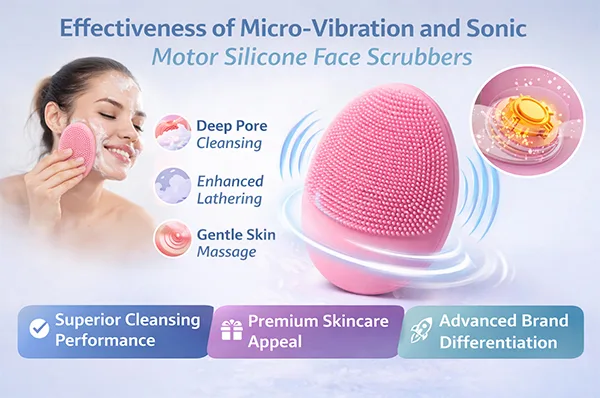
The silicone face scrubbers have come a long way and are not just manual cleansing accessories anymore as the global skincare tools market matures. Among the most important innovations of recent years, one is the use of micro-vibrations or sonic motors. It is vital for brands, retailers, and private-label buyers to comprehend the true potency of these technologies, not only for the performance of the product but also for pricing strategy, consumer positioning, and long-term brand differentiation.
At beaut-lohas.com, our strategy is to partner with international brands and retailers to manufacture custom silicone face scrubbers with or without electronic vibration systems. In this article, we present a very comprehensive and scientifically supported analysis of micro-vibration and sonic motors in terms of their performance, their contribution to value addition, and how brands can use them strategically to capture the market in vibrant competition.
1. What Is Micro-Vibration and Sonic Technology in Face Scrubbers?
Micro-vibration and sonic cleansing technologies refer to high-frequency mechanical oscillations generated by a compact motor embedded inside a silicone cleansing brush.
Typical Technical Characteristics
-
Frequency range: 6,000–10,000 vibrations per minute (varies by model)
-
Motor types: Eccentric rotating mass (ERM) motors or linear resonant actuators (LRA)
-
Power source: Rechargeable lithium battery (USB or Type-C)
-
Waterproof rating: IPX6 to IPX7 for bathroom safety
Unlike traditional rotating brushes, silicone scrubbers rely on vibration rather than friction, which aligns well with modern “gentle but effective” skincare philosophies.
2. How Micro-Vibration Improves Cleansing Effectiveness
2.1 Enhanced Foam Activation and Distribution
One of the most immediate benefits of vibration is improved cleanser performance.
-
Gel, foam, and cream cleansers lather more evenly
-
Micro-vibrations help emulsify oils and surfactants
-
Less cleanser is required to achieve the same cleansing result
For consumers, this translates to:
-
More luxurious feel
-
Lower product waste
-
Faster cleansing routines
For brands, it supports premium positioning and refill-friendly marketing claims.
2.2 Deeper Pore Cleansing (Without Aggressive Exfoliation)
Micro-vibration creates subtle fluid movement on the skin surface, which helps:
-
Dislodge excess sebum
-
Lift residual makeup and sunscreen
-
Reduce buildup in pores
Importantly, this happens without abrasive scrubbing. Compared to nylon bristles or rotating heads, silicone + vibration:
-
Reduces micro-tears
-
Is suitable for sensitive or acne-prone skin
-
Supports dermatologist-recommended routines
This makes sonic silicone scrubbers attractive to dermatology-aligned and clean beauty brands.
2.3 Improved Blood Microcirculation
Low-amplitude vibration stimulates the skin gently, contributing to:
-
Temporary increase in microcirculation
-
Healthy skin glow after cleansing
-
Reduced dullness over time
While not a medical claim, many brands position this as:
-
“Revitalizing cleansing”
-
“Spa-like facial massage”
-
“Energizing daily skincare ritual”
These claims resonate strongly in premium and wellness-focused markets.
3. Sonic Motors vs Manual Silicone Face Scrubbers
From a B2B perspective, the question is not whether vibration works, but when it is worth the added complexity and cost.
Manual Silicone Scrubbers
Advantages
-
Lower cost
-
Zero electronics
-
Easy compliance
-
Ideal for mass retail and entry-level SKUs
Limitations
-
Effectiveness depends on user technique
-
Limited differentiation in crowded markets
Sonic Silicone Scrubbers
Advantages
-
Clear performance upgrade
-
Higher perceived value
-
Strong gifting appeal
-
Supports premium pricing
Considerations
-
Higher BOM cost
-
Battery and charging compliance required
-
Longer development timeline
At beaut-lohas.com, many brands adopt a tiered product strategy:
-
Manual silicone scrubber for entry level
-
Sonic version for mid-to-premium lines
4. Consumer Perception and Market Demand
4.1 Premium Association
In the U.S. and European markets, sonic vibration is strongly associated with:
-
Professional skincare tools
-
Advanced beauty technology
-
Dermatologist-tested routines
Consumers are willing to pay 2–5× more for a sonic silicone scrubber when:
-
Design feels premium
-
Vibration is quiet and consistent
-
Waterproofing is reliable
4.2 Ease of Use and Habit Formation
Micro-vibration reduces the need for pressure, making cleansing:
-
More intuitive
-
Less tiring
-
Suitable for all ages
This improves daily usage consistency, which is a key factor in long-term customer satisfaction and repeat purchases.
5. OEM/ODM Considerations for Sonic Silicone Face Scrubbers
From a manufacturing and sourcing standpoint, sonic models require far more technical coordination than manual products.
Key Customization Areas
-
Vibration intensity levels (1–3 modes)
-
Motor noise control
-
Silicone thickness and hardness
-
Bristle length and density
-
Charging port type and placement
-
Button sensitivity and sealing
At beaut-lohas.com, we provide full OEM/ODM support, including:
-
Motor selection and testing
-
Waterproof structure design
-
Custom mold development
-
Safety and reliability testing
6. Compliance and Quality Requirements
Electronic silicone face scrubbers must meet stricter standards, especially for major retailers.
Common requirements include:
-
FCC / CE / UKCA (electronic compliance)
-
RoHS & REACH (material safety)
-
Battery safety reports
-
IPX waterproof testing
-
Drop and lifecycle testing
Reliable compliance documentation is often a make-or-break factor for Walmart, Target, Boots, and Amazon EU listings.
7. When Micro-Vibration Truly Adds Value (And When It Doesn’t)
Best Use Cases
-
Premium skincare brands
-
Gift-oriented product lines
-
Tech-driven beauty positioning
-
Dermatology-inspired routines
Less Suitable Scenarios
-
Ultra-low-cost promotions
-
Single-use or disposable markets
-
Regions with strict battery import restrictions
A well-designed sonic scrubber must justify its technology, not simply add vibration for marketing.
8. Strategic Takeaway for Brands and Buyers
Micro-vibration and sonic motor integration does improve the effectiveness of silicone face scrubbers—but its real power lies in brand differentiation, perceived value, and consumer trust.
When executed correctly, sonic silicone scrubbers:
-
Elevate cleansing performance
-
Support premium pricing
-
Increase shelf and online competitiveness
-
Strengthen brand authority in skincare tools
At beaut-lohas.com, we help brands decide whether, when, and how to integrate vibration technology—ensuring performance, compliance, and commercial success are aligned.