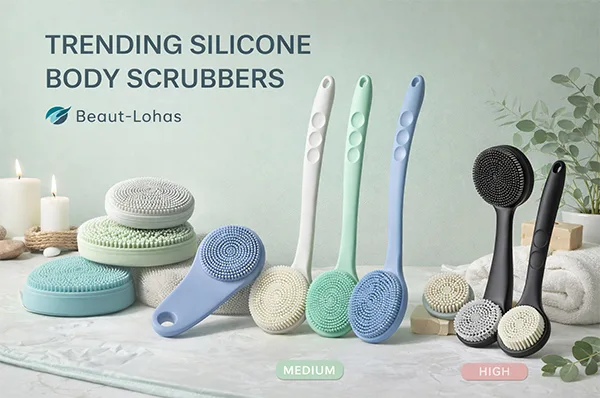
Silicone Body Scrubbers
For brands, wholesalers, and private-label buyers that are looking for silicone body scrubbers in China, the mold cost is one of the most misunderstood—and also the most—decisive factors in the whole product development process. While unit price is still the most discussed issue, the structure, complexity, and lifecycle of the mold are the factors that directly affect long-term profitability, speed to market, and scalability.
At Beaut-Lohas, more than 10 years of experience with silicone OEM/ODM, and an inventory of 1,000 existing molds, we often assist our international clients in determining which scrubber designs will need new tooling and which ones can use existing molds. This article explains the cost structures of molds in different silicone body scrubber designs, thereby allowing buyers to make more informed and cost-efficient decisions.
1. Why Mold Cost Matters in Silicone Body Scrubber Development
Unlike injection plastics, silicone body scrubbers are typically produced using compression molding, which relies on precision metal molds. Mold investment affects:
Upfront project budget
MOQ feasibility
Customization flexibility
Production stability
Product consistency over time
A poorly planned mold strategy can increase costs by 20–40% over the product lifecycle, while a smart mold decision can significantly improve margins.
2. Core Factors That Determine Silicone Mold Cost
Before comparing specific scrubber designs, it’s important to understand the main variables that influence mold pricing.
2.1 Mold Structure Complexity
Cost increases with:
Multiple cavities
Moving parts
Replaceable inserts
Fine texture detailing
2.2 Product Size & Thickness
Larger scrubbers or thick long-handle designs require:
Larger steel blocks
Higher tonnage presses
Longer curing cycles
2.3 Surface Texture & Detail
Dense bristles, micro-textures, massage nodes, or dual-texture surfaces increase machining time and precision requirements.
2.4 Number of Components
One-piece designs are the most cost-effective.
Multi-part or modular scrubbers require:
Multiple molds
Assembly fixtures
Additional QC steps
3. Mold Cost Comparison by Silicone Body Scrubber Design Type
Below is a practical breakdown of typical silicone body scrubber designs and their relative mold cost structures.
3.1 Flat Palm Silicone Body Scrubber (One-Piece)
Design Characteristics
Compact, flat structure
Single texture surface
No handle or simple grip
Mold Cost Structure
Single cavity compression mold
Minimal machining complexity
Short development time
Typical Mold Cost Range
Low (baseline category)
Best For
Entry-level products
Promotional items
High-volume, price-sensitive markets
Beaut-Lohas Insight
Many palm scrubber designs can be produced using existing molds, eliminating mold fees entirely for private-label buyers.
3.2 Double-Sided Silicone Scrubber (Dual Texture)
Design Characteristics
Two functional surfaces (soft + exfoliating)
Symmetrical or layered structure
Mold Cost Structure
More complex cavity design
Higher precision alignment
Potential for insert-based tooling
Typical Mold Cost Range
Low to Medium
Cost Drivers
Texture complexity
Surface depth variation
Best For
Mid-range retail brands
Amazon private-label sellers
Wellness-focused positioning
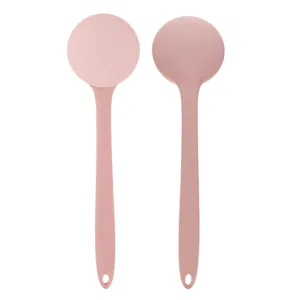
3.3 Long Handle Silicone Back Scrubber (One-Piece)
Design Characteristics
Extended handle
Ergonomic curves
Integrated hanging hole
Mold Cost Structure
Large mold size
Higher steel usage
Longer curing cycles
Typical Mold Cost Range
Medium
Cost Drivers
Product length
Handle thickness consistency
Anti-slip surface detailing
Beaut-Lohas Insight
Long-handle scrubbers often share handle geometry across multiple SKUs, allowing cost optimization through shared mold platforms.
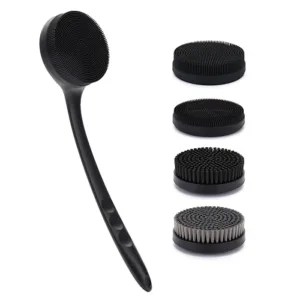
3.4 Modular Scrubber with Removable Heads
Design Characteristics
Separate handle + brush heads
Click-in or screw-lock structure
Multiple interchangeable components
Mold Cost Structure
Multiple molds required
High precision for locking mechanisms
Tighter tolerance control
Typical Mold Cost Range
Medium to High
Cost Drivers
Number of brush heads
Connector mechanism complexity
Durability requirements
Best For
Premium brands
Gift sets
Multi-function bath tools
Trade-Off
Higher upfront mold cost, but strong differentiation and higher retail pricing potential.
3.5 Silicone + PBT Hybrid Body Scrubber
Design Characteristics
Silicone base with PBT bristles
Hybrid material construction
Mold Cost Structure
Silicone compression mold + plastic injection mold
Secondary assembly fixtures
Typical Mold Cost Range
High
Cost Drivers
Dual-process tooling
Assembly labor
QC complexity
Best For
Premium exfoliation tools
Professional or spa-grade positioning
4. Cavity Count and Its Impact on Unit Cost
Mold cavity count significantly affects per-unit cost:
| Cavity Count | Mold Cost | Unit Cost | Best Use |
|---|---|---|---|
| 1 cavity | Low | Higher | Small test runs |
| 2–4 cavities | Medium | Balanced | Mid-volume brands |
| 6–8 cavities | High | Lower | Large wholesale orders |
Strategic Tip:
For new product launches, Beaut-Lohas often recommends starting with lower cavity molds, then scaling up once demand is validated.
5. Existing Mold vs. New Mold: Cost-Benefit Analysis
Using Existing Molds
Pros
Zero or minimal mold cost
Faster time to market
Lower MOQ
Cons
Limited shape differentiation
Developing a New Mold
Pros
Full design ownership
Strong brand identity
Higher long-term value
Cons
Higher upfront investment
Beaut-Lohas Advantage
With 1,000+ existing molds, many clients achieve semi-custom solutions—custom textures or colors without full tooling cost.
6. Hidden Costs Buyers Often Overlook
When budgeting mold costs, buyers should also account for:
Mold maintenance & lifespan
Engineering modification fees
Sampling iterations
Design revisions after testing
A reliable manufacturer will explain these transparently before production begins.
7. How to Optimize Mold Cost Without Sacrificing Product Quality
Reuse core mold structures with interchangeable inserts
Simplify non-essential textures
Standardize handle designs across product lines
Avoid unnecessary undercuts
Validate ergonomics digitally before cutting steel
Beaut-Lohas engineers work closely with buyers to balance design ambition and commercial reality.
8. When Higher Mold Cost Is Actually the Better Choice
In some cases, higher mold investment leads to:
Lower long-term unit cost
Reduced defect rates
Stronger product differentiation
Easier IP protection
Premium scrubbers with strong branding often recover mold costs within the first production cycle.
Conclusion
Mold cost structuring is a matter of concern from a technical perspective and from a business strategy perspective as well. This is because one thing that each silicone body scrubber design would require is its respective mold, and the knowledge of these distinctions would enable brands to budget their money wisely and hence powerful enough to enlarge their market share. Collaborating with an expert OEM/ODM partner like Beaut-Lohas prevents the buyers from incurring heavy losses, exploits the available mold resources, and creates innovative products that are at the same time cost-effective and market-friendly.