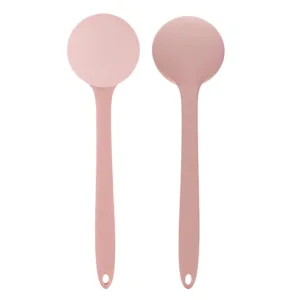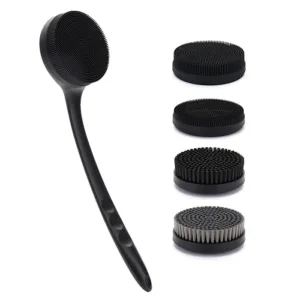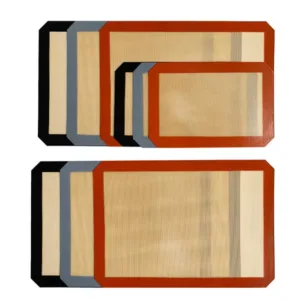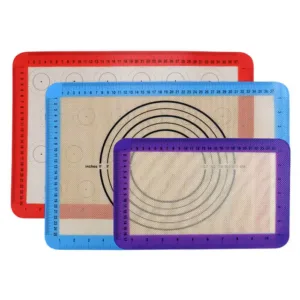
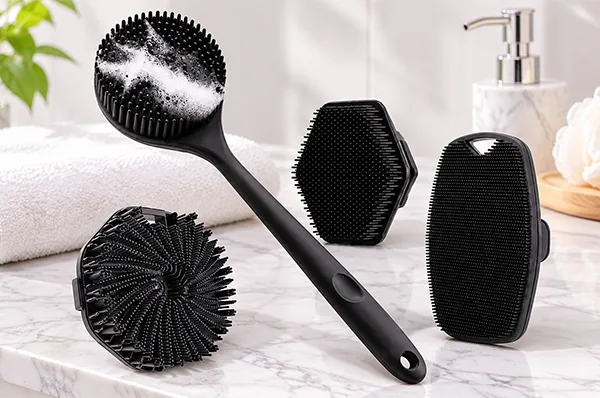
Choosing a silicone bath product supplier for any beauty company, wholesaler, distributor or retailer can be a very important step in the product purchase. No matter whether it is silicone body scrubber, bath brush, scalp massager or other personal care product that you are ordering from the supplier, it will directly affect the quality of purchased products, their price, shipping time and customer satisfaction.
The ever-growing worldwide demand for silicone bathing and personal care products provides numerous business opportunities for companies seeking to diversify their product range. However, choosing a reliable supplier can become a challenge since a lot of manufacturers and trading companies have similar catalogs of products, similar prices and customization options.
In some instances, the sourcing errors may only become apparent once production is underway or when the products reach their destination. Poor-quality silicone, wrong samples, late deliveries, poorly defined customization needs, and hidden costs are all factors that could potentially impact the operations of a buyer.
This article provides a comprehensive list of common errors made when selecting a supplier of silicone bath products and explains how buyers can avoid these pitfalls. In addition, we cover how to select an OEM/ODM manufacturer of silicone bath and personal care products.
1. The Supplier is Chosen Solely on the Basis of the Lowest Quotation
Price is the first parameter for comparison when sourcing silicone bath products. But making a decision based on the lowest quotation will lead to complications down the road.
A lower price doesn’t necessarily mean a lower purchasing cost of the goods. Suppliers can cut costs in different ways including the use of different material formulas, changes in the structure of the product, skipping quality control, etc., compared to the other quotations.
For instance, two suppliers can offer different prices for silicone body scrubbers. On the surface, both products can be similar. Yet, there might be some differences between the quotations in terms of the following aspects:
- Formula and grade of the silicone material
- Weight of the product and material consumption
- Density, shape, and size of bristles
- Quality of finishing and trimming
- Printing of a logo and other customization
- Packaging of individual items and cartons
- Quality inspection standards and sampling procedure
The product with poorly manufactured bristles, bad finishing, or inadequate material parameters will result in complaints from the customers.
Here are some tips on how to avoid such a mistake:
Do not compare unit prices only, but ask for a complete quotation of each vendor. Make sure the specifications, materials used, packaging, logo imprinting, quantities ordered, and inspection are the same in each case.
It would be wise to make an estimate of the overall landed costs, which include production, packing, transportation, duties, and other related costs.
The point should be to choose a supplier who will give you good value for money.
2. Not Verifying the Manufacturer’s Production Capacity
Another frequent mistake is the assumption that each manufacturer-supplier operates manufacturing facilities itself.
Some suppliers are trading companies, whereas others manufacture part or even all their products using outsourcing services. Trading companies are not necessarily untrustworthy, but a buyer needs to know about the nature of the company before ordering from it.
In case of customized silicone bath items, production capacity can play a role in product development, manufacturing, and delivery time.
An experienced manufacturer should be able to describe its production process and show how it performs the following actions:
- Preparation and treatment of silicone materials
- Development and maintenance of molds
- Forming and vulcanization
- Trimming and surface treatment
- Application of the logo
- Checking quality and packaging
- Scheduling production and managing orders
Another thing that a buyer should inquire is the manufacturer’s experience with similar products. A factory that specializes in silicone products for personal use might know more about these products than a general-purpose supplier.
Avoiding this mistake:
Make sure that you get factory data, factory photographs, product samples, manufacturing equipment and testing details.
If feasible, do a factory audit or take a video tour of the factory. Find out which operations are done internally and which are outsourced.
What is crucial here is not just whether the supplier has their own factory or not, but whether they have the know-how to manufacture your products.
3. Neglecting Silicone Material Quality
The quality of the silicone material is one of the most significant aspects to consider while procuring bath and personal care items.
While it is possible that two similar-looking products might have different material properties. Such variations can influence the flexibility, softness, strength, visual appeal, odor, and other characteristics of the product.
For instance, the silicone body scrubber needs to have the right mix of flexibility and rigidity. The material should neither be too rigid as to impair flexibility nor too soft as to distort its shape. In addition, the hardness of the material influences the tactile feeling of the bristles of the scrubber.
There are also other criteria to evaluate the material:
- Composition and consistency of the material
- Hardness and flexibility
- Consistency of the color
- Smoothness of the surface
- Odor and appearance
- Resistance to deformation under normal usage conditions
- Suitability for the specific application
One also needs to separate marketing terms from the true specifications of the material. For instance, food-grade silicone, medical-grade silicone, and premium silicone should not be used interchangeably.
The supplier should be able to provide detailed information about the material and relevant documents or test results.
How to avoid this mistake:
Always clearly state what you need from the materials beforehand. Ask the supplier to verify the material grade, technical parameters, and any test data that are available.
If you develop something for a specific market, let the supplier know the country where the product is supposed to be used and what requirements there are for that particular product.
Never accept a product just because of how it looks. Test the material and performance of the product through sample testing.
4. Not Evaluating the Sample
There are buyers who go straight from quotation to manufacturing the order in bulk since they aim at saving time. However, this could prove to be an expensive decision especially when buying customized silicone bath products.
The product image or even the computer graphic will not be able to give an adequate representation of its size, texture, weight, finish, and usability.
For instance, a silicone bath brush might appear beautiful in a product catalog but the sample may actually have:
- Short or dense bristles
- Uncomfortable handle
- Inconsistent surface finish
- Incorrect size
- Discrepancies in color
- Incorrectly placed logo
- Incorrect packaging
A sample gives the chance of finding these mistakes before making a bigger order.
How to avoid this mistake:
Always ask for a sample before making an order in bulk, especially if it is a new or customized product.
Evaluate the sample against a clear checklist:
| Evaluation Area | What Buyers Should Check |
|---|---|
| Appearance | Shape, color, surface finish, and overall presentation |
| Dimensions | Length, width, thickness, and product weight |
| Material | Flexibility, hardness, and consistency |
| Functionality | Comfort, handling, and intended product performance |
| Logo | Position, size, color, and printing quality |
| Packaging | Material, design, labeling, and protection |
In cases of custom-made products, maintain the approved reference sample or the specification sheet. This makes it easy for both parties to have an idea on what kind of standards is expected during the production process.
5. Underestimating OEM and ODM Customization Services
Most companies require more than just a standard silicone bath product. They need products which represent their company identity, customers, and market positioning.
A supplier who only provides catalog products might not give the sufficient flexibility to the buyers to create differentiated product lines.
Services like OEM and ODM would allow the buyers to design a better product line to suit their commercial needs.
OEM (Original Equipment Manufacturing) usually refers to the manufacturing of the product based on the design or requirements provided by the buyer.
ODM (Original Design Manufacturing) refers to the involvement of the supplier in the product design and development through their product development and manufacturing facilities.
When choosing silicone bath products, customization might involve:
- The shape and size of the product
- The hardness of the silicone and formulation of the material
- The arrangement and construction of the bristles
- Colors of the product using the Pantone reference system
- Printed or embossed logo
- Private-labeling and packaging design
- The creation of a new mold
- Combination packaging
For instance, a company that sells beauty products will require silicone body scrubbers that have a specific shape of the handle, certain colors, and its own logo. On the other hand, a wholesaler may need an existing product that has been personalized with a lower cost of development.
How to avoid making this mistake:
When choosing a supplier, first determine how much customization you would like.
Inquire if the supplier is able to modify an existing mold, create a new mold, match Pantone colors, print your logo, and design the package.
Inquire about the cost, tooling ownership, the process of samples production, and minimum order quantities.
A supplier with flexible OEM/ODM capabilities can support product differentiation while helping buyers manage development complexity.
6. Failure to Inspect Quality Control Procedures
The presence of a good sample cannot automatically ensure consistent mass production.
One of the most important risks associated with sourcing is the assumption that the production batch will be of the same quality as the sample without the verification of the quality control procedures practiced by the supplier.
Quality problems related to silicone bathroom products may involve the following:
- Irregular sizes of products
- Inconsistency in hardness of silicone material
- Incomplete molding
- Defects on the surface of the product
- Too much flash
- Differences in colors of different batches
- Badly printed logos
- Packaging mistakes
Such defects may influence the final product’s look and usability.
A good supplier should conduct quality inspections at certain points of production rather than performing final inspections only.
Typical inspection process might involve:
- Inspection of incoming material: Verification of material specifications and documentation from the supplier.
- Inspection of production process: Inspection of molding process and uniformity of products.
- Inspection during the process: Verification of dimensions, appearance, and other established criteria.
- Inspection of finished products: Evaluation of products based on established samples and specifications.
- Inspection prior to shipping: Verification of quantity, packaging, labeling, and established criteria of quality prior to shipment.
How to avoid this mistake:
Request the supplier to share its quality control process and examples of inspection documents if applicable.
With large volumes, consider establishing an inspection process prior to production based on the product and customer requirements, which may involve mutually agreed sampling levels, classification of defects, and acceptance criteria.
Do not settle for a “100% good quality” promise. Inspection process document is far more valuable than such a statement.
7. Neglecting Certifications and Compliance Requirements
There can be various legal requirements for manufacturing bath and personal care items in different countries and markets.
A frequent mistake when selecting a supplier of bath and personal care products is taking its general factory certificates as the guarantee that each of its manufactured products will meet the requirements in the destination market.
It is important to understand that factory management certifications are for different purposes than product compliance requirements.
For example:
- ISO 9001 is related to quality management systems.
- BSCI is related to social compliance auditing.
- CE marking is applied to products regulated by appropriate EU laws and is not an international certification of regular silicone bath products.
- RoHS is related to the prohibition of some hazardous materials used in products that fall into its scope.
Depending on the specific product, usage, target market, and regulations, additional testing and documentation may be required for some products.
How to avoid this mistake:
Understand the target market and usage before producing the item.
Ask your supplier:
- What management and social compliance certifications are available for the factory?
- What specific test reports do you have for the product?
- Is the test report relevant to the real materials and the product?
- Will the supplier arrange and pay for additional tests according to the destination market requirements?
For Europe and USA markets, buyers should check the requirements with compliance experts or testing labs if needed.
Do not expect any generic statement like “The product is fully certified.” Get the relevant documentation for your product.
8. Not Taking into Account MOQ and Flexibility of Production
Minimum order quantity (MOQ) can be very influential in procurement, especially for start-ups, young beauty brands, and online retailers.
Some suppliers provide appealing unit prices but require a big minimum order quantity. This could cause problems for the buyer if he is trying out a new product or entering a new market.
At the same time, too low MOQ is not always commercially viable for all customized projects, especially if new molds or customized packaging are required.
How to avoid this mistake:
To consider MOQ requirements at the beginning of the quotation process.
To ask whether the supplier provides different possibilities for ordering for:
- Catalog items
- Products with customized colors
- Products with logos
- Customized packaging
- New molds creation
- Re-orders
Also, it would be great to find out if the supplier is able to provide gradual order increment.
For example, a new company could place a small order initially in order to try out its popularity on the market.
A flexible supplier should explain which customization options are available at different order quantities and how MOQ affects pricing and production arrangements.
9. Failure to Verify Production Lead Times
The competitive quotation is not sufficient if the supplier cannot supply the goods according to your business timeline.
Production delays could affect your product launches, seasonality campaigns, promotions, and inventory management.
Depending on a few key aspects, your lead time might vary:
- The product’s use of an existing mold
- The necessity of developing a new mold
- Availability of materials
- Complexity of the product
- Quantity of orders
- Logo and packaging customization
- Sample approval time
- Production capacity at the factory
- Inspection and shipping logistics
It is very typical to request just lead time without fully comprehending the components of the estimate.
For instance, the supplier could provide you with the production lead time after sample approval, but you will think that the quoted period includes mold development, sampling, and packaging production.
How to avoid this mistake:
Request a clear project timeline that separates the main stages:
| Production Stage | What to Confirm |
|---|---|
| Design confirmation | Final product specifications and artwork |
| Mold development | Tooling schedule, if applicable |
| Sample production | Sample completion and approval |
| Mass production | Estimated manufacturing period |
| Quality inspection | Inspection schedule and acceptance |
| Packaging | Printing, packing, and final preparation |
| Shipment | Estimated dispatch date and shipping arrangement |
Ask your supplier for clarification on possible delays and how variations in the specification may affect the schedule.
A realistic timeframe with milestones is worth more than an unrealistic promise of delivery.
10. Inadequate Communication and Unclear Requirements for Projects
Ineffective communication is one of the most overlooked risks associated with international procurement.
The supplier may be well-equipped for manufacturing, but it will still be hard to deal with if it is not responsive, confirms technical details, or communicates about production changes effectively.
Misunderstandings may arise due to imprecise explanations used by the buyer and supplier in communications like:
- “Make silicone softer.”
- “Apply similar blue color.”
- “Maintain product size uniform.”
- “Print the logo in its usual place.”
- “Use high-quality packaging.”
- These descriptions may have different interpretations.
How to avoid this mistake:
Always give your instructions in writing if it is possible.
With customized silicone bath products, the specification sheet must contain:
- Product sketches or pictures
- Dimensions and tolerances
- Materials to use
- Color references
- Artwork for the logo and placement
- Specifications for packaging
- Acceptance standards of quality
- Schedule for deliveries
It is necessary to confirm the critical changes that are made to the writing rather than relying merely on spoken communication.
An effective vendor is expected to have an ability to give technical explanations, offer project updates, and indicate any problems that can arise.
11. Not Assessing Packaging and Branding Capabilities
In many cases, product packaging is not considered an important element in product sourcing. Yet it can affect the perceived value of your product and be necessary for certain sales channels.
While a silicone body scrubber ordered by a professional beauty brand will probably have a different packaging from the one that was purchased by a supermarket, beauty specialty store or ecommerce store.
The packaging can involve:
- Product boxes individually packaged
- Printed labels and instructions cards
- Logo packaging
- Bar codes and product details
- Retail display packaging
- Product sets
- Export cartons
If the supplier lacks capabilities for coordinating packaging and customization of the products, you may need to involve more suppliers into the process.
How to avoid this mistake:
Make sure that the supplier has capabilities for logo printing, color matching, designing and manufacturing of the packaging.
Get all the information on the format of artwork, print method, packaging materials and approval process before large scale production.
For e-commerce sellers, consider package size, protection of the goods, shipping efficiency, and unboxing experience.
A vendor that knows how to make the product and build the brand image could simplify the sourcing process.
12. Inability to Ensure Consistency of Supply in the Long Term
The supplier can do an excellent job at meeting the first order but find it difficult to cope with increased order size and variety.
Consistency of performance is usually valued more highly than low cost by expanding beauty brands and distributors.
The following are possible threats:
- Differences in the quality of products from different batches
- Limited production capacity
- Instable supply of raw materials
- Lack of order planning
- Lack of technical support
- Failure to produce according to the approved specification
- Lack of after-sales communication
Supplier should be selected on the basis of its ability to meet order demands and potential for further cooperation.
How to avoid this mistake:
Talk about the supplier’s capacity for production, product development capabilities, quality control system, and experience in handling repeat orders.
Inquire about its specification record-keeping process, approval samples, mold maintenance, and production scheduling.
In case you are considering expanding your product line range, it would be helpful to know whether the supplier can provide support for the other product types as well, including silicone scalp massagers and facial cleansing brushes, among others.
An ideal manufacturing partner should cater to the present as well as the future needs of a buyer.
13. Selecting Supplier without Considering Industry Expertise
Not all silicone manufacturers have the same industry expertise.
A silicone company specializing in the manufacturing of industrial silicone parts might not be the right partner for personal care applications that need certain surface finishes, ergonomic designs, soft-touch elements, and retail appeal.
Industry experience is important because each product type has its own challenges in terms of development and manufacturing.
The following list could be considered when looking for the appropriate expertise in case of silicone bath products:
- Manufacturing of body scrubbers and bath brushes;
- Bristle and texture design for silicone components;
- Handle and ergonomic structure design;
- Designing of custom molds;
- Matching colors and surface finishes;
- Development of private-label products;
- Packing of products for exports;
How to avoid the mistake:
Check the supplier’s product portfolio and look for relevant examples of projects.
Also, look for the supplier’s understanding of beauty and personal care brand needs and requirements, not only its capability to process silicone.
In case of appropriate industry experience, the supplier will have a better opportunity to spot design problems and make recommendations for improvement.
14. No Standard Evaluation Checklist for Comparison among Suppliers
Most buyers assess suppliers based on fragmented emails, quotes, catalogs, and product discussions. In the absence of a standard approach, key factors can easily be missed.
Standard evaluation checklist helps the buyer select a vendor in a more objective manner.
Here is a sample:
| Evaluation Criteria | Questions to Ask |
|---|---|
| Manufacturing capability | Does the supplier have relevant production resources? |
| Industry experience | Has it produced similar silicone bath products? |
| Material quality | Can it confirm material specifications? |
| Product development | Can it support OEM/ODM and mold development? |
| Customization | Does it offer colors, logos, and packaging options? |
| Quality control | Are inspection procedures documented? |
| Compliance support | Can it provide relevant certificates and test documentation? |
| MOQ | Are order quantities suitable for your business? |
| Lead time | Are production milestones clearly defined? |
| Communication | Are responses clear, accurate, and timely? |
| Pricing | Are quotations transparent and comparable? |
| Long-term reliability | Can it support repeat orders and product expansion? |
The buyer can also allocate weights for each criterion based on his or her own business priorities.
In some cases, a new brand will emphasize low MOQ and product development capabilities, whereas an existing distributor will value production capabilities, quality, and delivery.
This does not mean that the best supplier will always have the highest scores in all criteria. This is not the case. The supplier with capabilities matching purchasing strategy is the best.
15. Why Beaut-Lohas Is an Important Manufacturing Partner to Consider
For manufacturers and distributors seeking a supplier of silicone bath products, Beaut-Lohas offers OEM/ODM manufacturing services for silicone personal care products.
With more than 15 years of silicone ODM manufacturing expertise, Beaut-Lohas offers its customers assistance in developing their ideas into samples and then into production.
Some of its manufacturing and development capabilities include:
- 50+ R&D staff supporting product development
- A 3,000 m² factory
- More than 1,000 existing molds
- 50+ QC staff
- 50+ sales staff supporting customer communication
- An annual production capacity of 50 million
Customization support in the Beaut-Lohas organization is offered in the following categories:
Product Development and Mold Customization
The client can talk about the shape, construction, size, and functionality of the product. Existing molds can be taken into account when appropriate, whereas mold development will be helpful in developing unique product designs.
Private Label and Logo Customization
The customization options that can be considered include silk-screen printing, laser marking, and debossed logos depending on the product design and materials.
Color and Packaging Customization
The Pantone color matching and packaging customization options are available.
Support for Quality Management and Testing
Beaut-Lohas has ISO 9001, CE, BSCI, and RoHS certifications or relevant supporting documents within their respective scopes. They can also assist in establishing testing procedures for CPSIA, REACH, and California Proposition 65, among other standards, depending on the product and destination market.
Buyers should check the specific certificates and test reports needed for each project.
OEM/ODM Flexibility
Beaut-Lohas collaborates with clients to determine product specifications, sampling, order size, and production arrangements for both their existing silicone bath products and custom private label projects.
For companies looking for suppliers for their silicone body scrubbers, bath brushes, and similar personal care items, choosing one with experience and ability in customization will make it easier for them.
16. How to Begin a Silicone Bath Product Sourcing Project
Having found potential suppliers, it is important to follow a structured sourcing approach that helps minimize confusion and make the project more effective.
It should consist of the following stages:
Step 1: Describe your product requirements
Determine the category of the product, its target market, customers, order volume, and any customization requirements.
Step 2: Select suitable suppliers
Make comparisons of the manufacturers depending on their experience, production capacity, product range, and their OEM/ODM services.
Step 3: Ask for quotations and samples
Give identical specifications to shortlisted suppliers so that quotations and samples could be compared.
Step 4: Assess quality of the product
Assess materials, dimensions, design, functionality, execution of the logo, packaging.
Step 5: Clarify Specifications and Business Terms
Conclude with the approval of the sample, product specifications, MOQ, pricing, payment terms, production schedule, and inspection criteria.
Step 6: Production and Inspection Process Monitoring
Stay in touch while the order is being produced and set up product inspections as per agreement.
Step 7: Review the First Order
After receiving the order, assess the quality of the product, packaging, delivery, and communications. This information will be helpful for future specification improvements.
This procedure allows buyers to go beyond choosing suppliers based on price.
Frequently Asked Questions
1. What do I need to consider when selecting a silicone bath product supplier?
Relevant manufacturing experience, consistent quality of materials, quality control measures, OEM/ODM services, reasonable quotations, realistic lead times, good communication, and whether they can meet the applicable regulations of your target market.
2. Should I select a silicone bath product manufacturer or a trading company?
Either one can be a good option depending on your purchase requirements. Buyers should find out who will be responsible for manufacturing, quality control and after-sale service.
3. How can I inspect the quality of silicone bath products?
Ask for physical samples and compare them with written specifications regarding dimensions, hardness, flexibility, surface finishing, color uniformity, performance and packaging. For any particular material requirement or regulation, ask for relevant test reports from certified testing labs.
4. Can I add my brand logo to the silicone bath products?
Yes, most OEM/ODM suppliers offer private label services. Customization depends on the specific product structure and material type. Some common customization methods include silk-screen printing, laser engraving, debossed logos, special color choices and customized packaging.
5. What should be the rational MOQ for custom-made silicone bathroom items?
The MOQ depends on whether the item has been previously made, needs a new mold, custom colors or packing, etc. The buyer needs to get information about the MOQ separately for standard and custom-made products.
6. Why do I need a sample before making a large order?
It will allow evaluating the product, not just looking at its photo or reading the description, because a sample helps to discover potential problems with material, size, design, operation, location of the company’s logo, packing, etc.
7. How long does it take to produce custom-made silicone bathroom products?
Lead time depends on product specifics, mold creation, sample approval, number of items to be ordered, material procurement and packing arrangement. The buyer needs to get a project schedule that distinguishes all phases of the work.
8. Is it possible for the company providing bath products made of silicone to support international brands?
Yes, but experienced suppliers must be checked for their practical export experience, since there are many things to consider for international clients, such as OEM/ODM production, private labeling, packaging, documents, and exporting process.
Conclusion: Selecting a Supplier Beyond the Quotation
The wrong supplier of silicone bath products could mean poor product quality, unforeseen expenses, production delays, and scaling problems.
Common mistakes include concentrating solely on cost, not assessing the manufacturer’s capabilities, disregarding materials quality, not checking the samples, forgetting about quality control, and not knowing how to make customizations.
A better way is to consider each supplier from a number of angles, such as production capacity, technical expertise, quality management, communication, MOQ adjustment, and growth potential.
For cosmetic brands, wholesalers, and distributors buying silicone bath products, the correct manufacturing company will be more than a quotation. It will convert product specifications into quality products.
Looking for a reliable silicone bath product supplier?
Beaut-Lohas welcomes inquiries from beauty brands, wholesalers, distributors, and private-label businesses. Contact our team to discuss your silicone bath product ideas, OEM/ODM requirements, custom colors, logo printing, packaging, and sampling needs. Visit Beaut-Lohas.com to explore our silicone personal care product range and discuss your next sourcing project.