Introduction
For skincare brands, beauty distributors, importers, and wholesalers, ordering silicone under eye patches in bulk involves more than approving a sample and arranging transportation. Before a shipment leaves the factory, buyers need to confirm that the finished products meet the agreed specifications, the packaging is correct, and the order is ready for delivery. It is at this stage that pre-shipment inspection for silicone under eye patches proves crucial to the purchasing process.
While a product sample may look great during its creation, when the products are manufactured on a large scale, there is always the possibility that discrepancies will arise in the form of wrong thickness, shape, surface texture, color, logo positioning, and packaging. The discovery of such discrepancies in the delivered batch will cause headaches and extra costs.
For foreign buyers, the possible repercussions may range from delayed launches of the product to additional sorting costs, client complaints, inventory shortages, and conflict with suppliers.
In a properly planned pre-shipment inspection, all these issues will be detected beforehand. This allows checking product quality, quantity, packing and labels, inspection reports, and making a responsible decision whether to approve the shipment.
Pre-shipment inspection is very useful for B2B sellers purchasing silicone under eye patches in large quantities, creating a private label, using custom colors, or reordering from a foreign supplier.
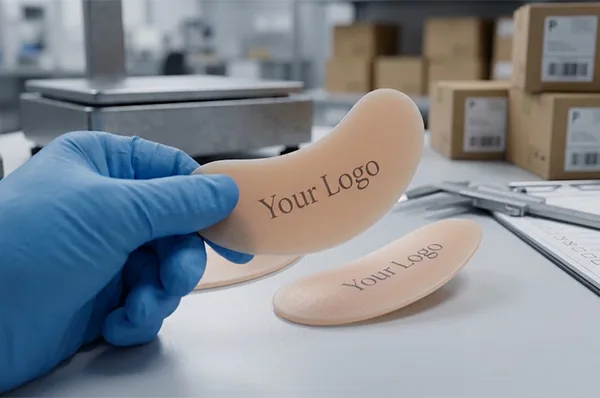
In case of OEM and ODM product development at Beaut-Lohas, customization may include specific shapes, brand names, colors, and packing. When planning customized silicone beauty products, setting up the terms of inspection from the beginning is a good way to link design and sample approval with production standards.
This guide describes the way to plan a pre-shipment inspection, what to check during the process, how to apply sampling, and what to check before shipment authorization.
1. Definition of Pre-Shipment Inspection and Its Importance
Pre-shipment inspection refers to an inspection process carried out when the goods have been manufactured and properly packed or are ready for inspection, but before the products are shipped.
Its aim is to establish whether the goods are in accordance with what was specified during the agreement between the buyer and the seller.
For silicone under eye patches, examples of items to be inspected include:
- Product appearance and construction
- Material and product uniformity
- Size and thickness
- Finish and color
- Functionality
- Correctness of logo and customization
- Packaging and labeling
- Quantity of cartons and shipment marking
- Applicable inspection documents
It all depends on the nature of the product, value, use, and quality requirement of the buyer.
Why is it recommended to inspect before shipment?
It will help identify defects before the items are shipped from the factory. In many cases, it is easier to fix a problem in the factory than arranging a rework after the item arrives to another country.
It proves that the items were made according to the buyer’s requirements. The buyer can confirm that the shipment matches the approved sample, purchase order, and packaging requirements.
It minimizes unnecessary disputes in business. Inspection reports and photographs are used as the evidence that shows the condition of products.
It assists in inventory planning. The buyer can make a better decision regarding shipment readiness and possible corrections.
It is especially useful for keeping the quality level consistent in case products are sold in retail shops, Amazon, Shopify, beauty industry, and distributors.
Nevertheless, PSI has some weaknesses. It confirms the condition and characteristics of the inspected products at a specific time. It doesn’t mean that all products are defect-free.
2. When Should Inspections Before Shipment Be Scheduled by the Buyers?
Timeliness is very important. The inspection made at too early a stage might not give the full picture of the order, whereas at too late a stage, there may not be enough time left for rectification of defects.
For most bulk orders, the inspection should be scheduled after the production is completed and the proportion of the products, which was pre-agreed, is packed or prepared for packing.
This schedule must be discussed with the seller in advance prior to production.
Before the inspection
Buyer should ensure that:
- The purchase order and specifications are agreed.
- Production sample/golden sample is available for reference.
- Completion date is known.
- Inspection scope and sampling method are agreed.
- Packaging materials and labels are available.
- Supplier has carried out internal inspections.
- The inspector has access to the finished goods and records.
Risks associated with early inspection
In case of partial completion of the order, the items subjected to inspection do not guarantee the quality of the rest of the production.
For instance, the first lot of silicone under-eye patches might have the right color and surface treatment while another lot might differ in its properties because of the change of the materials or process.
In addition, an early inspection of the items before completing the custom packaging does not ensure that the final packaging will meet the requirements.
Therefore, the buyers need to establish the percentage of production that must be completed and packed before inspection starts.
Time for correction
It is important to provide enough time for investigating the problem, substituting defective items, fixing packaging, and conducting re-inspection.
In no case should you set PSI too late so that it overlaps with the shipment date.
3. Preparation of the Inspection Documents and Acceptance Criteria
A good inspection begins with proper documentation.
It is the responsibility of the buyer to provide the necessary documentation before the inspection to the factory.
Essential inspection documents
| Document | Purpose |
|---|---|
| Purchase order | Confirms ordered products and quantities |
| Approved product specification | Defines required product characteristics |
| Technical drawing | Provides dimensional requirements |
| Golden sample or approved reference | Supports appearance and tactile comparison |
| Color reference | Defines the approved color where applicable |
| Logo artwork | Confirms branding details |
| Packaging specification | Defines pack configuration and packaging materials |
| Inspection checklist | Identifies the characteristics to inspect |
| Sampling plan | Defines sample selection and acceptance rules |
| Applicable test reports | Provides evidence for specified requirements, where relevant |
Not every order requires every document. The inspection package should be proportionate to the product and its risks.
Establish acceptance criteria prior to manufacturing
Avoid using ambiguous criteria such as “premium quality” or “no apparent defects.”
Rather, use measurable criteria where feasible.
As examples:
- Dimensions need to conform to the drawing tolerances.
- Color needs to match the reference color under agreed-upon inspection parameters.
- The logo needs to match the reference artwork and location.
- Surface needs to be free of forbidden defects.
- Packaging needs to be in conformity with the reference design.
- Quantity needs to conform to the packaging list.
Defect classifications and consequences of failure of the inspection need to be agreed upon by both parties.
A clear acceptance criteria eliminates controversies due to subjective interpretation after the manufacture of the products.
4. Examine the Appearance, Surface Finish, and Workmanship of the Products
Appearance checking is one of the key steps of pre-shipment quality control of silicone under eye patches.
As this type of products is worn on the face and usually promoted as an accessory for skin care, visual defects may affect consumer perception despite the right dimensions of the product.
Examine the general appearance
- Examine the sample products for:
- Bubbles or voids
- Scratches and damage to the surface
- Foreign particles
- Surface roughness
- Unnecessary gloss difference
- Molding marks exceeding the approved standard
- Deformation
- Flash or excess
- Inconsistency in color and transparency
All molding marks are not necessarily defects. The criteria of inspection need to differentiate between acceptable and unacceptable difference
Surface finish evaluation
Comparing the inspected items to the approved samples and surface specifications.
For instance, if the buyer has approved the smooth contact surface, the inspector should inspect for any undesirable roughness, surface damage or texture inconsistency.
For matte and textured items, the inspector should verify if the texture is consistent and in accordance with the approved design.
Edges inspection
The perimeter area needs particular attention as it might influence product comfort, handling and overall quality perception.
Inspect the items for any rough cutting, flash, tears, deformations and other edge problems.
Since you use the product near the eyes, you shall consider and evaluate any edge features that may pose a hazard according to the appropriate specifications.
Consistent lighting
The transparent, translucent and glossy silicone items may change their appearance depending on lighting conditions.
Maintain the consistent inspection environment and compare the products to the approved samples. Capture all defects on the photographs and discuss with the supplier.
5. Inspect for Dimension, Thickness, Shape, and Consistency of Material
The under eye patch made of silicone may appear appealing but fail to meet the requirements for conformity with the approved design of the product.
Inspection of dimensions ensures that the product being produced conforms to the specifications stated in the technical drawing.
Dimensions and shape
Depending on design, you need to take the following measurements:
- Length
- Maximum width
- Thickness at specific points
- Curvature
- Shape edges
- Symmetry of shape, if applicable
- Dimensions and positioning of logos
This needs to be done in a reliable manner using appropriate measuring instruments.
Silicone is flexible, and pressure may cause deformation when being measured.
Thickness uniformity
Any changes in thickness can influence flexibility, handling, appearance, and fit.
One measurement of the point may be not enough to determine any local variation. The specification shall state at what points thickness should be measured.
In case of a thin flexible patch, apply a proper thickness gage and a specific measurement pressure or technique, if required.
Material and hardness uniformity
When hardness is part of the specification, a proper hardness test should be applied depending on the material and product geometry.
We cannot directly compare the hardness value obtained from a thin finished patch with the hardness value from a standard test sample. An appropriate measuring technique should be used.
When material identity or its composition is critical for an application, visual inspection will not be sufficient. And you should do some additional documentation about the material or testing.
Comparison with the golden sample
The golden sample should serve as a guide for the shape, feel, and general appearance of the patch, but you should use specifications for objective characteristics.
The aim is to confirm that the finished order meets the agreed requirements rather than simply that it looks similar to a sample.
6. Test Functional Performance and Reusability
Functional testing is useful in evaluating the functional performance of the product.
In case of reusable silicone under eye patches, functional characteristics include flexibility, fit, retention, ease of removal, ease of cleaning, and reusability.
It is important that the exact tests to conduct are known prior to production and should depend on the intended function.
Fit and Positioning
Test the fit and positioning of the patch against the agreed design specification.
For novel designs, conducting a structured user evaluation may prove useful in determining fitting problems not evident in dimensional measurements.
Retention
Where the patch is supposed to stay on its own without the use of any extra adhesive, retention should be evaluated as per the agreed test conditions.
Skin moisture, skincare residue, surface state, silicone properties, and product geometry influence test results.
An ideal test procedure includes defining application conditions, wearing time, movement conditions, and acceptance criteria.
Flexibility and Handling
Ensure that the item is flexible and manageable without unacceptable tearing, cracking, or any kind of permanent deformation.
Cleaning and Repeated Use
If the product is meant to be reused, ensure that the proposed method for cleaning does not affect the item in terms of surface, form, color or flexibility.
Durability test may need to be conducted if repeated use is a requirement of the product.
But, a short pre-shipment performance evaluation can never replace the durability testing regime which must be carried out at an appropriate stage in product development and testing cycle.
No unsupported claims
PSI should validate the product features rather than making any assumption about the inherent features of the silicone material or surface that will offer skincare advantage to the consumers.
The claims of product performance must be based on proper evidence.
7. Inspect Custom Logos, Packaging, Boxes, and Cartons
Packaging and branding discrepancies may render an otherwise acceptable order unsuitable for sale.
This becomes particularly significant when purchasing private label silicone under eye patches because customers might have spent money on custom logos, storage boxes, printing on cartons, and country-specific labeling.
Inspect custom branding
Confirm:
- Correct logo art
- Accuracy of text spelling
- Size and placement of the logo
- Positioning
- Color, if applicable
- Legibility and clarity
- Consistency among sampled items
For molded or debossed logos, confirm their definition and depth to match the approved sample. For printed logos, confirm alignment and quality.
If a separate test for print durability is needed, then it will need to be confirmed independently of this test.
Check product packaging
Based on your order specifics, check:
- Individual product packaging
- Case/carton packaging
- Internal packaging
- Instructions cards
- Labels on the products
- Barcodes
- Retail packaging
- Protective packaging
Make sure that use the correct packaging version in accordance with the artwork specification.
Check labeling
Make sure that all required information on the products, spelling, barcodes, and any other required label information are present.
Labeling requirements will vary depending on the destination markets, product categories, claims, etc. It is always good for buyers to understand their requirements in advance before approving artwork.
Check shipping cartons
Check the markings on the cartons, pack quantities, product information, and any other shipping information that was agreed upon.
For multi-channel products, having correct carton/pack information will help you reduce problems at the receiving/fulfillment stages.
8. AQL Sampling Properly
In cases of large shipments, the buyer may not want to check each unit. In that case, he can use the acceptance-sampling method to evaluate if the production batch satisfies the set quality criteria.
AQL or the Acceptance Quality Limit is connected to acceptance-sampling standards like ISO 2859-1.
However, AQL does not assure you that all items in the shipment are good. The sampling plan uses this statistically as just one aspect to decide if the batch is acceptable.
Set up the sampling plan in advance
The agreement between the buyer and the supplier includes:
- Definition of the inspection batch
- Sampling standard and plan
- Inspection level
- Sample size
- Classification of defects
- Acceptance and rejection criteria
- Steps to take if the inspection fails and needs to be repeated
The size of the sample and acceptance criteria vary depending on the chosen plan and batch size. You can not guess and use them for all shipments.
Classification of defects
A common inspection system classifies defects into critical, major, and minor categories.
Critical defects can relate to safety or regulation issues, for example, an unsafe sharp edge on a product designed for use close to the eye.
Major defects significantly impact functionality, purpose, dimension, or sales.
Minor defects represent smaller deviations which do not impact intended use and fall under the agreed minor defect definition.
The parties need to define those categories for the particular product.
The categorization of a defect depends on its properties and impact, rather than on its visibility.
Be aware of sampling limitations
Sampling can overlook defects appearing outside the tested units. Sampling efficiency depends on proper sample selection and correct execution of the plan.
Some safety-related characteristics may necessitate special controls, tests, or acceptance criteria other than regular AQL sampling.
In case of high-risk requirements, do not depend solely on a general sampling plan.
9. Check Order Quantity and Shipment Readiness
Quality assurance is but one component of a pre-shipment inspection process. It is equally important for buyers to ascertain that the right amount and packaging configuration are available for shipping.
Verification of quantities
Ensure that the completed shipment matches the purchase order and packing list agreed upon.
This would depend on the particular order but may include verification of:
- Total number of retail packs
- Number of patches per pack
- Number of packs per carton
- Total number of cartons
- Any agreed spare or replacement amounts
The verification procedure must suit the particular shipment and contract stipulations.
Verification of packing configuration
Pack the products in the proper arrangement, and verify that the packaging will not damage the products during normal shipping and handling.
For the reusable silicone patches, this may require ensuring that the products are not over-compressed or damaged by the packaging materials.
Review shipping marks
You shall verify all required carton marks, product markings, destination information, and handling instructions supplied by the buyer for accuracy.
Document consistency
Ensure consistency of the purchase order, packing list, carton marks, and other shipping documents.
You need to sort out any inconsistencies prior to shipment approval.
Shipment preparedness
Product inspection does not imply that every aspect of the shipment is covered.
Buyer needs to ensure that proper shipping, customs, labeling, and other shipping document requirements are met.
10. What to do when a pre-shipping inspection fails
Failure of the inspection does not automatically mean rejection of the entire batch. The course of action will depend on the extent of the failure.
What is important is to ensure that shipment is not released before the conditions are fully satisfied.
Step 1: Report the failure
The inspection report will highlight the failing parameters, sampling quantity, observed defects, and the acceptance criteria.
Pictures and measurements can assist in the understanding of the problem by the factory.
Step 2: Isolate the affected products
The supplier isolates the affected products where necessary so that non-conforming products cannot be mixed with conforming ones.
Step 3: Identify the cause of the problem
Potential causes can include different types of problems including material differences, mold problems, unstable process settings, trimming issues, wrong packaging or an unauthorized change.
Step 4: Agree to take corrective measures
Depending on the nature of the problem, corrective measures might consist of rework, segregation, replacement, re-packing, testing or manufacturing another batch of the item in question.
The buyer and the vendor must agree on the suggested correction measures as well as the standards they will use to determine the effectiveness of those measures.
Step 5: Re-inspect where necessary
Once the measures have been taken, the agreed verification or re-inspection should take place.
Re-inspection must confirm that all the applicable requirements have been complied with. The two parties must not merely rely on the rework and segregation processes having resolved the problem.
Step 6: Record the final decision
Note whether the items are accepted, rejected, conditionally accepted on agreed terms or put on hold pending any action.
All parties shall agree on and record any change to the original requirement prior to shipment of the consignment.
This process creates a clearer record and helps prevent recurring quality problems on future orders.
11. How to Select a Pre-Shipment Inspection Service
Teams can perform inspection services using an in-house quality department, a certified agent, or an unbiased third-party company.
You decide the best approach depending on the nature and size of the order, complexity of products, risks involved, location, and resources of the organization.
Evaluate the experience of the agency
In case of silicone under eye patches, check the experience with molded silicone products, flexible consumer products, cosmetic accessories, or similar products.
Such experience helps inspectors know which features they must measure and which defects they need to analyze.
Inspect the scope of the inspection
Povide the specification and confirm the agreed inspection scope prior to booking.
A general visual inspection may not be sufficient if the buyer needs dimensional measurements, functional tests, or document verification.
Review the reporting quality
An effective inspection report should include:
- Product and purchase order
- Date and place of inspection
- Lot and sample details
- Method of inspection
- Comparison to acceptance criteria
- Issues detected
- Photos where applicable
- Outcome or recommendation
Review independence and reporting
If you request third-party independent inspection, make sure you understand the affiliation between the inspection party, the buyer, and the supplier, the reporting procedure, and how to report the bad result.
Do not confuse PSI with factory quality control
Although the inspector is able to detect any issues in the finished product, the responsibility for controlling the manufacturing process belongs to the manufacturer.
The most efficient result is obtained by combining reliable factory quality control and proper pre-shipment verification.
12. Frequently Asked Questions
What is pre-shipment inspection for silicone under eye patches?
Teams perform this inspection before shipping to make sure final products conform to the mutually agreed specifications. This type of inspection usually includes evaluation of appearance, dimensions, functionality, branding, packing, quantity, and some selected documents.
When should I organize pre-shipment inspection?
Complete this step after you finish the products and get them ready to inspect per the mutually agreed plan. Do it also in advance in order to have time to make corrections if needed. Check the timing with the supplier beforehand.
Is AQL inspection required for all bulk orders?
No. Inspection procedures will depend on the requirements of the buyer, risks of the products, order volume, and agreement between the buyer and the supplier. AQL inspection can be helpful, but you need to use it properly.
Can I trust pre-shipment inspection report completely?
No. PSI will give you information concerning inspected goods and their characteristics at certain time. It does not substitute for materials inspection, proper lab testing, regulatory inspection, and quality factory process control.
What should I do if the inspection is failed?
Record findings, quarantine impacted products if necessary, determine the cause of non-conformity, take remedial actions, conduct verification or re-inspection as needed, and then decide on shipping.
Do I need to inspect packaging along with the silicone patches?
Yes. It’s necessary to inspect packaging, labels, logos, barcodes, packaging quantity, and even shipping boxes. Improper packaging can render a qualified order unsuitable for sales.
How can I make my repeat orders consistent?
It’s possible by establishing specifications, golden sample approval, tolerances, material traceability, change control, and inspection processes. Analyze defects and remedies from each order.
Will pre-shipment inspection ensure no defects?
No. It will depend on the coverage, methodology, sampling process, and criteria for accepting products. Sampling means we cannot inspect every single unit, so this risk always exists.
Conclusion: Make Pre-Shipment Inspection a Common Practice for Sourcing
When it comes to bulk orders of silicone under eye patches, it is a practical method for international buyers to ensure compliance with the established product and packaging requirements before shipping.
Such an inspection involves more than just visual verification. You should consider dimensions, thickness, material uniformity, craftsmanship, performance, branding, packaging, order quantity, and shipping readiness.
The best way is to start planning the inspection before production starts. You shall set specifications, gain sample approval, develop inspection criteria, agree on a sampling plan, and allow enough time to handle possible failures.
During the inspection process, you make comparisons with the established requirements. If necessary, you isolate affected products, carry out root cause analysis, and verify corrective actions before you ship the order.
This approach is especially useful for private label products, wholesalers, and distributors.
Beaut-Lohas provides product customization in OEM/ODM for B2B silicon-based beauty products. The buyer will be able to share his product specifications and quality expectations during the product development stage, which ensures inspectors carry out the inspection according to the product specifications.
Planning a bulk order of silicone under eye patches? Contact Beaut-Lohas to discuss your customization requirements, approved samples, and quality expectations before mass production and shipment.