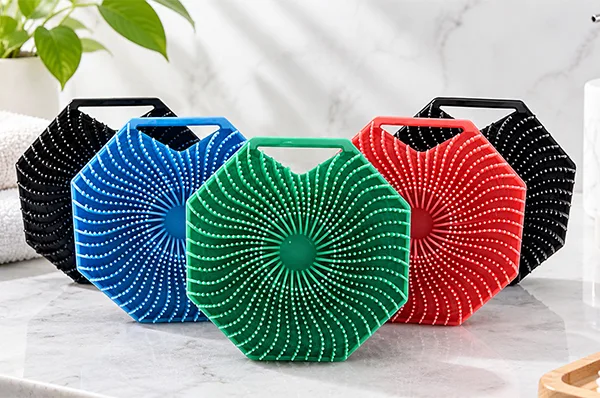
Introduction: Importance of Inventory Risk in Importing Silicone Body Scrubbers
For beauty brands, retailers, distributors, Amazon sellers, and personal care companies, the importing silicone body scrubbers could be an interesting strategy. They have features such as being portable, durable, reusable and applicable to private label and customization program.
Nevertheless, importing the product is not all about obtaining a low price from the manufacturing plant.
The greatest problem in the importation process is inventory risk.
Too much purchase of the product would use up working capital and increase storage costs and the brand might end up with excess inventory. On the other hand, too little purchase might lead to stock out and incur extra shipment cost.
This becomes very critical at the stage of importing new silicone body scrubbers because there would be no sales records indicating the level of demand in the market.
The most important question here is:
How do you measure demand, limit your purchasing quantity and develop a flexible supply chain while maintaining product quality and customization?
An effective inventory process normally consists of a number of stages:
- Determine your target audience.
- Assess the realistic demand.
- Set a suitable MOQ.
- Begin with a controlled market experiment.
- Do not over-diversify SKUs.
- Cooperate with a manufacturer who works with flexibility.
- Analyze sales performance before making follow-up orders.
- Ensure proper safety stock without overproduction.
- Improve packaging and logistics.
- Formulate your long-term supply strategy with your OEM/ODM partner.
The manufacturer Beaut-lohas offers OEM and ODM services for creating silicone body scrubbers for global brands of any stage of development and various order quantities.
This article demonstrates how you can minimize your inventory risks from the product choice stage to repeat purchasing.
1. Inventory Risk While Importing Silicone Body Scrubbers
market, it leads to inventory risk.
Let us assume that there is a new brand producing a silicone body scrubber, which places 10,000 units of goods based on the optimistic prediction of sales.
However, the product sells 1,000 units in the forecasted time. Thus, 9,000 products will be excess inventory for the company. In turn, it can experience:
- Expensive warehousing
- Low cash flow
- Discounts
- Problems with warehousing spaces
- Changes in product packaging
- Increased working capital needs
Conversely, if a small amount of 500 units of goods is ordered but there is higher demand, it may mean:
- Lack of products
- Loss of sales
- Extra production
- Higher transportation costs
- Customers’ delays
In conclusion, inventory risk concerns making a trade-off between the supply and ordering of goods.
This issue becomes especially important for new products due to assumptions of demand forecasts.
2. Why New Silicone Body Scrubber Brands Have More Inventory Risk
Existing brands already have sales history that could aid in predicting demand.
This is not the case with new brands.
Before launching their product into the market, the buyer does not have the answers to:
- Which color would appeal the most
- What form of product is preferred by the buyers
- At which price level should it be launched
- How soon the product would be sold out
- Through what channel would demand be generated
- Which design would appeal to the consumers
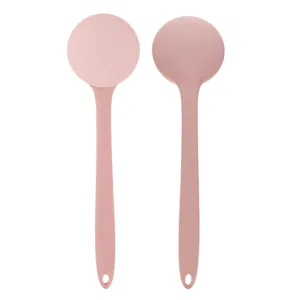
For instance, one might assume that the pink-colored silicone body scrubber would be the most demanded model.
However, after the launch, customers may prefer:
- Neutral colors
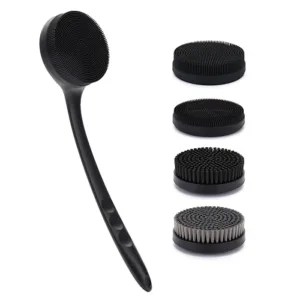
- Long-handled forms
- Softer bristles
- Multifunctional items
- Minimal packaging
This is why it is important to test the market before making inventory commitments for new products.
3. Do Your Market Research Before Ordering in Batches
Demand forecasting is one of the most efficient methods for inventory reduction before the process of manufacturing starts.
Market research should cover the following:
Target Customer
Define who the product is made for:
- Customers interested in beauty products
- Spa-goers
- Men
- Women
- Consumers with sensitive skin
- Wellness customers
- Businesses providing professional beauty services
Various consumers may have different demands and requirements.
Target Price
Find out the retail and wholesale price before choosing the product.
The design of the product should comply with the target price positioning.
For a premium body scrubber:
- Improved packaging
- Smoother design
- Special colors
- Higher-quality silicone materials
- More functions
A cheaper product will probably require a simpler design due to competitive prices.
Sales Channel
Define where the product will be sold:
- Amazon
- Shopify
- Brand’s website
- Beauty salons
- Supermarkets
- Spa wholesalers
- Various wholesale channels
Different sales channels can have different inventory needs.
4. Do Not Start With Too Many SKUs
Expanding SKU variety is one of the most frequent reasons for increased inventory complexity.
A newly launched brand could start with:
- 5 colors
- 3 shapes
- 2 sizes
- 2 options of packaging
This would generate quite an impressive number of combinations.
E.g.:
3 designs × 4 colors = 12 SKUs
In case the minimum order quantity relates to each SKU individually, the amount of inventory would be much greater than you might expect.
New brands can start by launching fewer products at once.
A good strategy is as follows:
Step 1. Market test
Start with:
- 1-2 main designs
- 2-3 colors
- one option of packaging
Step 2. Sales validation
Keep track of:
- sales volume
- conversion rate
- customer reviews
- repeat sales
- favorite color
Step 3. Expansion of SKU line
Expand SKU range by adding:
- new colors
- shapes
- functions
- packaging options
depending on the market feedback.
In this way, companies can slowly increase their SKU range without investing too much stock at one time.
5. Select Proper MOQ for the Stage of Your Business
MOQ is an abbreviation that means Minimum Order Quantity. This issue should be considered as one of the key factors when purchasing silicone body scrubbers abroad.
The low MOQ helps minimize inventory risk at the beginning.
The high MOQ can imply:
- The low unit cost
- Improved production process
- The efficient freight service
Nevertheless, the lowest unit price does not mean the lowest business expenses.
Imagine the following situation:
Supplier A
- MOQ: 10,000 units
- Low unit price
Supplier B
- MOQ: 2,000 units
- The slightly higher unit price
In case the product is new and the demand is uncertain, Supplier B gives the possibility to try it out without huge investments in the inventory.
Thus, it is necessary to consider the following aspects:
Total inventory risk instead of the unit price.
When negotiating MOQ with the manufacturer, it is worth asking the factory if it can suggest different solutions regarding:
- Standard goods
- Customized goods
- Private label products
- Test orders
- Re-ordering
An experienced OEM supplier can help create an order strategy according to the sales volume of your brand.
6. Look for Pre-Existent Molds for Initial Market Testing
Custom molds will give unique designs for silicone body scrubbers, yet creating a whole new product usually involves more time and effort.
An existing mold might help to simplify development if the brand tests a new product category.
For instance, the brand may start with an existing body scrubber design and customize:
- Color
- Logo
- Packaging
Once sales are confirmed, the brand could proceed with customization of the product itself.
The process becomes step-by-step:
Existing design → market test → sales validation → custom mold → product development
Such an approach might come in handy for:
- Start-ups
- Amazon sellers
- Retailers
- Beauty product lines
However, if product differentiation plays a key role for the brand’s strategy, then custom mold will make sense from the start.
It should be decided taking into account the anticipated demand, positioning of the product, available budget, and overall strategy.
7. Test Through Small Batch Order First
Controlled first order may give useful real life information.
Before placing a large order, the brands should be able to test through an initial order for:
Product performance
Verify:
- Silicone softness
- Bristle flexibility
- Handle comfort
- Durability
- Cleaning experience
Consumer feedback
Watch out for:
- Product reviews
- Reasons for returns
- Questions raised by consumers
- Product ratings
- Repeat customers
Sales performance
Measure:
- Weekly sales
- Conversion rate
- Ads performance
- Most selling colors
- Most selling product variations
The first order is not just meant for making sales.
It is also to generate information that improves the next purchasing decision.
8. Make Your Demand Forecast Based on Actual Sales
After the initial launch, forecasts need to transition from assumptions to facts.
A basic estimate of demand would be:
Average Sales per Day x Estimated Lead Time = Initial Demand for Replenishment
For instance:
A brand sells an average of 50 units daily, and it takes around 40 days to produce and ship these products.
50 x 40 = 2,000 units
Then the buyer will need to add a margin of safety depending on:
- Sales volatility
- Variance in production
- Shipping conditions
- Seasonality
- Lead time from the supplier
In any case, the level of safety stock depends entirely on the company’s sales and supply chain performance.
However, the key point is:
Never estimate your demand forecast based on your sales targets. Always forecast from the sales behavior.
9. Maintain Safety Stock but Not Become Excess Inventory
Safety stock shields brands against any rise in demands.
But excess safety stock creates excess inventory.
An ideal inventory system takes into account:
Demand Average
How many units are sold on average?
Demand Variability
How does the demand change from day to day or week to week?
Supplier Lead Time
How long does the production process normally take?
Time to Transport
How long does the delivery normally take?
Reorder Point
At what inventory level should the next order be made?
Such as:
Reorder Point = Demand during Lead time + Safety Stock
The above is just a simple system to help buyers prevent themselves from ordering when their inventory is about to run out.
10. Work With a Supplier Who Will Allow You To Place Future Orders
Not only does inventory risk pose a purchasing challenge.
Inventory risk also poses a supplier challenge.
Manufacturing companies which can offer you consistent repeat manufacturing give you more flexibility.
Some key questions to consider are:
- Will the supplier be able to manufacture products according to the same specifications?
- Will he be able to replicate the same colors?
- Will he use the same mold again in the future?
- Will he stick to the same packaging specifications?
- Will he have increased production capacity as your sales increase?
- Can he give you reasonable lead-time estimates?
Consistency becomes increasingly important once your product becomes a hit.
Your supplier can give you good results in the first order but fail in future orders.
11. Maintain Consistency in Product Specifications Across Orders
In silicone goods, slight differences in the manufacturing process can impact the end-user experience.
There should be a maintained product specification approved that includes the following:
- Product sizes
- Requirements of the silicone
- Silicone hardness
- Color chart
- Position of the logo
- Size of the logo
- Bristle design
- Specifications of the packaging
- Requirements of the carton
The approved sample should also be maintained as a reference for manufacturing the product.
This is particularly essential for repeat orders.
A clear specification sheet reduces communication problems and helps manufacturers reproduce the same product more consistently.
12. Manage Inventory Risk Using Packaging Strategy
Packaging could also impact inventory flexibility.
A very customized package could need:
- High Minimum Order Quantity (MOQ)
- Longer production time
- Printing costs
- More storage space
For new products, the company could think about using packaging which could be easily upgraded.
Examples could include:
Customized Box – Option 1:
Good for established products whose demand is fairly certain.
Private Label Package – Option 2:
Could help with initial testing of the product in the market.
Standard Packaging with a Label of the Company – Option 3:
Could offer some degree of flexibility during initial testing phases.
If the product shows steady demand, then the brand could use advanced packaging.
13. Think about Color Strategy Wisely
One of the most simple ways to make many SKUs is by using color.
But, with every extra color comes greater complications in terms of managing inventory.
Rather than introducing ten colors at once, brands can start off with fewer colors.
As an illustration:
- A neutral color
- A lifestyle color
- A brand color
Sales information will help introduce more colors.
Such an approach helps avoid too much slow-moving stock of colors.
14. Consider Replenishment Policy Instead of an Annual Big Order
Some importers like to place big orders due to the lower unit cost.
Big annual orders lead to considerable stock risk.
A more flexible policy could look like the following:
Forecast – First Order – Sales Tracking – Restocking – Scale
not:
Annual Forecast – Giant Order – Warehousing
The latter option might work well in case of highly predictable demand, but not for new launches.
Flexibility from suppliers could allow brands to change purchasing frequency according to demand.
15. Inventory Planning Should Take into Account the Time Required for Manufacturing and Transporting the Goods
When planning the inventory, the whole supply chain should be taken into account.
The full cycle of delivery includes:
- Order confirmation
- Materials preparation
- Molds preparation
- Manufacturing
- Quality control testing
- Packing
- Preparation for export
- International transport
- Customs clearance
- Inbound at the warehouse
So the buyers cannot base their inventory calculations on the time required by the factory to manufacture the goods.
The goods might be ready at the factory, but there is more time until they arrive at the customer’s warehouse.
This is why realistic lead-time planning is essential.
16. Avoid Selecting a Supplier Solely Based on the Lowest Unit Cost
While low unit cost for your products might be appealing to you, factors other than unit cost affect your inventory risk considerably.
Even when selecting a cheaper supplier, you will be faced with high total costs if your chosen supplier has:
- Quality inconsistencies
- Extended lead times
- Communication problems
- Material quality inconsistency
- High defect rates
- Color inconsistencies
- Poor packaging
For overseas buyers, the more pertinent question is:
What is your total landed cost and risk in logistics?
This covers:
- Unit cost of your products
- Cost of molds
- Packaging
- Testing
- Freight
- Duties and customs fees
- Storage
- Defective products
- Possible delays
Higher unit cost is sometimes acceptable if it increases supply reliability and consistency of the product.
17. Develop a Flexible OEM Strategy With Beaut-lohas
Beaut-lohas cooperates with international brands seeking silicone body scrubber OEM and ODM services.
Depending on the specific project, the brands will be able to consider the following:
Product Selection
- Existing designs of silicone body scrubbers
- Specialized designs
- Different bristle structures
- Long handles
- Multifunctional designs
Product Customization
- Customized colors
- Brand logos
- Custom packaging
- Changes in product structure
Development
- Product concept
- Prototypes
- Molds development
- Production
Quality Control
- Material check
- Production check
- Final product check
- Packaging check
Such kind of manufacturing assistance enables the brands to develop a purchasing strategy corresponding to their current stage on the market.
18. An Applied Approach to Lowering Risk from Inventory for Brands
For a novel silicone body scrubber, buyers can consider the following plan.
Step 1: Validate Products
Select:
- 1–2 main products
- Fewer colors
- Smaller amount to start
Objective:
Test market demand.
Step 2: Test the Market
Track:
- Sales
- Conversion rate
- Reviews
- Returns
- Customer feedback
Goal:
Find out which product-market fit is the best.
Step 3: Reordering
Use sales data to decide on:
- Quantity
- Timing
- Safety stock
Objective:
Ensure availability without excess inventory.
Step 4: Develop Product Line
Introduce:
- More colors
- New designs
- Additional functions
- New packaging
Goal:
Grow your product line after validating the demand.
Step 5: Long-Term Supply Management
Collaborate with the manufacturer to create:
- Production schedule
- Forecast sharing
- Quality standards
- Packaging guidelines
- Repeat ordering procedure
Objective:
Build a steady supply chain.
19. Silicone Body Scrubber Inventory Risk Assessment Checklist
Prior to placing an order for wholesaling purposes, buyers must consider the following checklist.
Market
- Is the market targeted well-defined?
- Is the retail price set realistically?
- Is the consumer demand tested?
Product
- Is the design of the product proven?
- Is the specification of the silicone known?
- Have the colors been agreed upon?
- Is the packaging right?
Supplier
- Does the supplier have experience producing silicones?
- Is the supplier able to place regular orders?
- Is the supplier able to maintain consistent quality?
- Is customization possible?
Inventory
- Is the MOQ set realistically?
- Is the first order realistic with respect to demand?
- Is safety stock included?
- Is there a reorder plan?
Logistics
- Is the lead time of production known?
- Has shipping time been accounted for?
- Are customs and import costs taken into account?
- Is the warehouse capacity sufficient?
This checklist can help buyers identify potential inventory problems before placing a large order.
20. Common Inventory Problems in the Purchase of Silicone Body Scrubber
Problem 1: Buying on Overly Optimistic Expectation of Sales
The buyer may buy based on expectation of quick sales of the product without market data to prove the same.
Better option: Do an initial trial run and adjust forecast based on sales results.
Problem 2: Offering Too Many Varieties of Colors
Too many varieties can cause too much stock keeping unit complexity.
Better option: Offer a few colors in the beginning.
Problem 3: Considering Unit Price Alone
Lower unit price does not mean lower cost in total.
Better option: Consider total landed costs and supply chain efficiency.
Problem 4: Neglecting Lead Time
Some buyers only reorder when stock levels reach the lowest level.
Better option: Develop a reorder point based on total time taken for replenishing the stock.
Problem 5: Supplier Who Cannot Scale Up Production Levels
Supplier may deliver a smaller quantity order, but cannot cope with increased demand.
Better option: Consider both capacity and scalability of supplier.
Conclusion: Decrease Inventory Risk through Adaptive Buying and Production
The importation of silicone body scrubs could present opportunities to beauty brands, retailers, distributors, and online businesses; however, such purchases need to be handled cautiously.
The best approach to adopt is not that of ordering the biggest quantities possible at the cheapest unit prices available.
On the contrary, beauty brands need to consider:
- Market research
- Managed order volumes
- Right MOQ
- Minimal SKUs
- Sales forecasting
- Safety stock planning
- Order flexibility
- Reliable production
- Quality control
- Logistics management
The general rule is simple:
Test your demand, forecast your demand with real sales data, and increase your inventory as your market becomes more predictable.
A trustworthy silicone body scrubber manufacturer may help in this regard through its consistent quality, flexible customization options, reliable production capabilities, and scalable OEM/ODM services.
With over 15 years of silicone ODM experience, Beaut-lohas provides its silicone body scrubber development and manufacturing services to global brand owners, retailers, distributors, and private labels.
Whatever your situation be, whether it’s a testing phase for a new silicone body scrubber or expansion of an existing personal care product line, we can assist you in product design, customization, manufacturing, packaging, and supply needs.
Are you in search of a silicone body scrubber OEM/ODM partner? Feel free to get in touch with us at Beaut-lohas for further discussion regarding your product needs and purchase strategies.
FAQs: Silicone Body Scrubber Inventory Management
What number of silicone body scrubbers should I order in my first delivery?
There is no general quantity that applies to all companies. A proper first-order volume will depend on projected sales volumes, MOQ, sales channel, target audience, warehouse space, customization of products, and delivery lead time from your supplier.
How can I minimize risks related to inventory management of silicone body scrubbers?
The recommendations include limiting the number of SKUs, providing realistic projections, negotiating MOQ, testing the market with your first delivery, tracking sales data, and implementing a proper restocking strategy with the manufacturer.
Is it always beneficial to have a low MOQ for a new brand?
This question does not have an absolute answer. Indeed, a lower MOQ implies that you need to have less working capital for stocking, but a higher unit cost should be taken into consideration.
Shall I use the existing silicone body scrubber mold or make a customized mold?
An existing mold can be helpful for initial market testing since it will decrease the necessity for development. A customized mold will give more differentiation opportunities and may fit the brand that already has some demand or unique-product strategy.
How can I predict the demand for a new silicone body scrubber?
The demand should be predicted using market research and channel information. After the product launch, the prediction should be revised based on actual sales results. It is necessary to pay attention to daily/weekly sales, conversion rates, customer feedback, returns, seasonality, etc.
How much safety stock do I need to keep?
Safety stock depends on the volatility of demand, lead time, delivery time, and stockout costs. Safety stock should be calculated individually by each brand, using their sales and supply chain characteristics, not using one constant percent for all products.
What are the questions to be asked from a silicone body scrubber manufacturer while ordering?
Questions to ask would include minimum order quantity, production time, material composition, quality assurance, ownership/managing of the molds used, color consistency, packaging, customizing ability, ability to do repeat orders, and production capacity.
Does Beaut-lohas offer small sample orders followed by larger manufacturing orders?
Beaut-lohas offers OEM and ODM services for silicone body scrubber at different stages of product development. The buyer can talk about their intended volume, customization needs, product design, and market demand for the product.
Key Takeaways
To minimize inventory risk for imported silicone body scrubs, there are five key guidelines that should be followed:
- Do not start from sales goals but focus on realistic forecasting.
- Keep initial SKUs limited and test the market carefully.
- Make sure that the MOQ is aligned with the present level of your business development.
- Base the order replenishment and next production on the real sales performance.
- Cooperate with an OEM manufacturer who can provide quality and be flexible in scaling with your demand growth.
As far as global beauty and personal care companies are concerned, inventory management needs to be seen as a part of the total sourcing approach. Not only the issue of warehouse but also a problem of product development and manufacturing.