- Have any questions?
- +86 19574832024
- admin@beaut-lohas.com

The Growing Demand for Silicone Scalp Massagers
North America and Europe today use silicone scalp massagers as essential hair care products which originated as specialized beauty tools. Scalp health awareness and minimalist haircare and home wellness routines drive consumer demand for products which deliver two benefits through their cleansing and massage capabilities.
One question which all manufacturers and wholesalers and private-label brands, including beaut-lohas.com, face during product development process, needs to be solved:
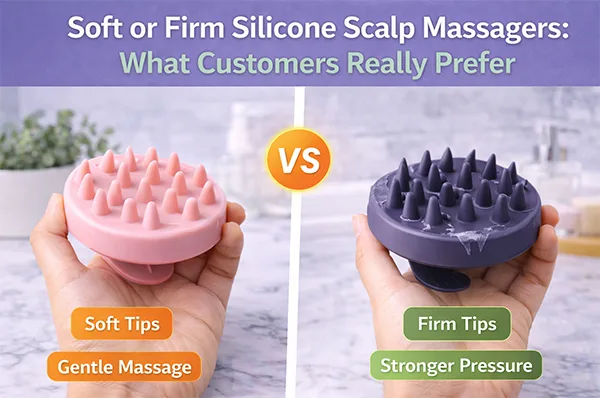
Do customers prefer softer silicone tips for comfort, or firmer ones for stronger scalp pressure?
The answer is not simply one or the other. Consumer preference depends on hair type, scalp sensitivity, usage scenarios, and psychological expectations of massage performance. Understanding these factors is critical for designing products that succeed in competitive Western markets.
The article uses B2B product strategy, ergonomic science, actual usage feedback, and consumer behavior research to reveal buyer needs while providing brands with design specifications for their silicone scalp massager products.
Why Silicone Tip Firmness Matters
Unlike traditional plastic or boar-bristle brushes, silicone scalp massagers rely heavily on material flexibility to deliver both cleansing and stimulation.
Tip firmness directly affects:
-
Pressure transmission to the scalp
-
Comfort during prolonged use
-
Shampoo distribution efficiency
-
Hair tangling risk
-
Perceived product quality
From a user perspective, firmness determines whether the tool feels:
-
Relaxing and spa-like
-
Therapeutic and stimulating
-
Gentle for sensitive skin
-
Effective for deep cleansing
Because scalp conditions vary widely among consumers, firmness becomes one of the most decisive purchase factors.
Understanding Silicone Hardness (Durometer)
Silicone firmness is typically measured using Shore A hardness:
| Silicone Hardness | Consumer Feel | Typical Experience |
|---|---|---|
| 20–30A | Very soft | Gentle massage, sensitive scalp friendly |
| 30–45A | Medium-soft | Balanced comfort and cleansing |
| 45–60A | Medium-firm | Stronger stimulation |
| 60A+ | Firm | Deep pressure, exfoliation-focused |
Most successful scalp massagers sold in Western markets fall between 30A and 50A, suggesting consumers generally prefer a balance rather than extremes.
What Consumers Say: Real Usage Insights
Community discussions and user feedback reveal consistent patterns:
-
Users with thick hair appreciate firmer tips because softer ones bend before reaching the scalp.
-
Sensitive-scalp users report discomfort when bristles feel rigid.
-
Many consumers describe the ideal brush as “firm with some flexibility.”
One user explained that silicone brushes work well because they are “firm with a bit of give,” allowing effective scalp contact without hair pulling. Another noted that gentle circular motion—not aggressive pressure—produced the best dandruff reduction results.
These insights highlight an important truth:
👉 Consumers want controlled pressure, not maximum hardness.
Why Soft Silicone Tips Are Popular
1. Comfort and Relaxation
Soft silicone provides a spa-like sensation that aligns with wellness trends. Many buyers use scalp massagers during evening showers as stress-relief tools rather than purely cleansing devices.
Benefits include:
-
Reduced scalp irritation
-
Comfortable daily use
-
Safe for beginners
-
Pleasant tactile experience
For customers transitioning from hand washing to tools, softness lowers psychological resistance.
2. Sensitive Scalp Compatibility
Western consumers increasingly report scalp sensitivity due to:
-
Dry shampoo overuse
-
Chemical treatments
-
Frequent coloring
-
Environmental stress
Soft tips minimize scratching and micro-abrasions, making them ideal for:
-
Dry scalp
-
dandruff-prone users
-
post-treatment hair care
This category represents a large share of repeat buyers.
3. Hair Protection
Soft silicone reduces friction and tangling—especially important for:
-
Long hair
-
Curly hair
-
Fine or fragile strands
Consumers often abandon rigid brushes because they pull hair. Soft silicone solves this pain point.
Why Firmer Silicone Tips Still Have Strong Demand
Despite comfort advantages, firmer designs remain highly popular among specific customer segments.
1. Deep Cleansing Expectations
Many buyers associate stronger pressure with better cleaning performance. Firmer tips:
-
penetrate dense hair more easily
-
lift oil and buildup
-
improve shampoo lather distribution
Users in humid climates or those with oily scalps frequently prefer stronger stimulation.
2. Massage and Blood Circulation Perception
Consumers often believe firmer pressure improves scalp circulation and hair growth support. Whether scientifically proven or not, perceived effectiveness strongly drives purchasing decisions.
A firmer brush feels more “functional” and results-oriented.
3. Thick or Dense Hair Types
Soft bristles may collapse before reaching the scalp in:
-
thick hair
-
coarse hair
-
high-density hairstyles
For these users, firmness equals usability.
The Real Market Winner: Medium-Firm Flexibility
Across reviews and product success trends, one conclusion stands out:
⭐ Most consumers prefer medium-firm silicone tips that combine pressure with flexibility.
This hybrid design delivers:
-
noticeable massage feedback
-
safe comfort levels
-
effective cleansing
-
reduced hair pulling
Instead of choosing soft or firm, successful products engineer elastic resistance—tips that bend slightly under pressure but quickly rebound.
Design Factors Beyond Firmness
Firmness alone does not determine user satisfaction. High-performing scalp massagers integrate several additional design elements.
Tip Shape
Rounded cone tips distribute pressure evenly and prevent scratching.
Tip Length
Longer tips reach the scalp through thick hair, allowing softer silicone to still perform effectively.
Tip Density
Higher density creates uniform massage without excessive force.
Handle Ergonomics
A comfortable grip reduces the need for aggressive pressure.
Hollow vs Solid Structure
Hollow tips feel softer while maintaining structural stability.
Consumer Segmentation: Matching Firmness to Target Markets
For private-label brands and wholesalers, segmentation is key.
| Consumer Group | Preferred Firmness | Product Positioning |
|---|---|---|
| Sensitive scalp users | Soft | Gentle care / wellness |
| Daily shampoo users | Medium-soft | Comfort + cleansing |
| Oily scalp customers | Medium-firm | Deep clean |
| Thick hair consumers | Firm-medium | Strong reach |
| Spa & relaxation buyers | Soft-medium | Stress relief |
Offering multiple firmness options significantly increases conversion rates.
B2B Insight: Why Customization Wins in Wholesale
For suppliers like beaut-lohas.com, customization is becoming a competitive advantage.
Modern buyers increasingly request:
-
Different silicone hardness levels
-
Dual-density designs
-
Market-specific product versions
-
Private-label branding aligned with target demographics
Instead of a single universal product, brands now launch product families tailored to different scalp needs.
This approach reduces returns and improves customer satisfaction—two critical factors in Western e-commerce markets.
Future Trend: Dual-Firmness Scalp Massagers
Emerging designs combine:
-
softer outer tips for comfort
-
firmer inner cores for pressure
This structure mimics professional massage techniques and addresses multiple user preferences simultaneously.
Expect hybrid firmness to become a dominant innovation direction over the next 2–3 years.
Final Verdict: Soft or Firm?
So, what do customers actually prefer?
✅ Soft silicone tips win for comfort, sensitivity, and relaxation.
✅ Firmer tips win for deep cleansing and thick hair usability.
⭐ Medium-firm flexible silicone satisfies the largest portion of the market.
The winning formula is not extreme softness or rigidity—but balanced elasticity that delivers pressure without discomfort.
For brands, the smartest strategy is offering customizable firmness options aligned with specific consumer needs rather than chasing a one-size-fits-all solution.
Conclusion: Product Strategy for Modern Scalp Care Brands
The growing importance of scalp health in haircare practices has led to silicone scalp massagers becoming vital tools for maintaining wellness instead of their previous status as mere beauty products.
Customers no longer buy based solely on appearance—they evaluate tactile experience, performance, and comfort. Manufacturers and distributors need to understand firmness preference because it helps them create products which users will connect with both emotionally and physically.
The growth of global wholesale markets for beaut-lohas.com requires its B2B platform to invest in three areas which include adjustable silicone hardness and ergonomic engineering and segmented product positioning.