- Have any questions?
- +86 19574832024
- admin@beaut-lohas.com

Silicone Baking Mats
Baking is both an art and a science, and every baker recognizes how much the tools can influence the outcome of any recipe. Cookie dough, pastries, or roasted veggies- one of the very frequent decision-making processes is this: should I use parchment paper or silicone baking mats? Both have their pros and cons; however, increasingly, home bakers and professionals lean towards silicone mats, viewing them as durable and cost-effective options with an eco-friendly twist. Here, we delve into the comparison of parchment paper versus silicone baking mats and explore why silicone options are gaining stars in contemporary kitchens.
What Are Silicone Baking Mats?
In simple words, a silicone baking mat is a no-stick layer of food-grade silicone with fiberglass mesh reinforcement. This structure distributes heat evenly, does not allow sticking, and does away with greasing of baking trays. Designed to fit standard sheet pans, these mats are reusable and can sustain high oven temperatures, generally as high as 480°F (250°C).
Silicone baking mats have a much longer life than parchment papers, which are disposed of after use. Given that the care of the mat is observed, it is highly possible for a single mat to replace hundreds of rolls of parchment, making them both economical and environmentally friendly.
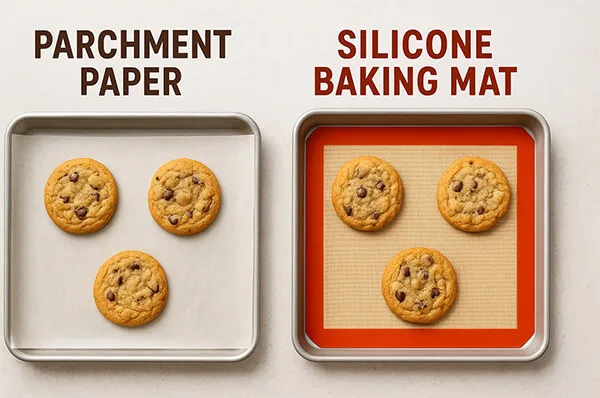
Parchment Paper vs. Silicone Baking Mats: A Side-by-Side Comparison
To understand whether it is better to bake on parchment paper or silicone baking mats, let’s break down the pros and cons of each option.
1. Non-Stick Performance
-
Parchment Paper: Coated with silicone or quilon, parchment paper provides a good non-stick surface for cookies and cakes. However, it can sometimes tear or stick if not used properly.
-
Silicone Baking Mats: The non-stick performance of silicone mats is superior. Even sticky foods like caramel, melted cheese, or delicate pastries release easily without greasing.
Winner: Silicone baking mats
2. Durability and Reusability
-
Parchment Paper: Meant for single use. Some bakers reuse it once or twice if it remains clean, but it eventually burns or becomes greasy.
-
Silicone Baking Mats: Can be reused thousands of times. With proper cleaning and storage, one mat may last for years.
Winner: Silicone baking mats
3. Heat Resistance and Safety
-
Parchment Paper: Safe up to about 420°F (215°C). At higher temperatures, it may scorch or turn brittle.
-
Silicone Baking Mats: Withstand up to 480°F (250°C) without burning. They are ideal for high-heat recipes, such as roasting vegetables.
Winner: Silicone baking mats
4. Environmental Impact
-
Parchment Paper: Although some versions are compostable, most parchment paper is coated, which reduces biodegradability. Frequent use contributes to kitchen waste.
-
Silicone Baking Mats: Reusable and eco-friendly. By replacing disposable sheets, silicone baking mats reduce the need for constant paper production and waste.
Winner: Silicone baking mats
5. Cost Efficiency
-
Parchment Paper: Low initial cost, but the expense adds up over time since it must be replaced regularly.
-
Silicone Baking Mats: Higher upfront cost, but cost-effective in the long run. One mat can replace hundreds of rolls of parchment paper.
Winner: Silicone baking mats
6. Convenience and Versatility
-
Parchment Paper: Lightweight, disposable, and no cleanup required. Great for quick bakes and lining cake pans.
-
Silicone Baking Mats: Easy to clean with soap and water, dishwasher safe, and versatile. They can be used not only for baking but also for kneading dough, rolling out pastry, or freezing items.
Winner: Tie — depends on your baking needs.
Why Silicone Baking Mats Are the Smarter Choice
When you look at the above comparison, silicone baking mats clearly stand out as the more sustainable and practical choice. Here are some reasons why:
1. Eco-Friendly Living
In today’s world, where sustainability is a growing concern, switching to silicone baking mats can significantly reduce your household waste. Instead of throwing away sheet after sheet of parchment paper, you can wash and reuse a mat for years.
2. Professional Baking Results
Silicone baking mats are often used in professional kitchens because they provide consistent results. The fiberglass mesh inside the mat helps distribute heat evenly, which prevents over-browning and ensures perfectly baked cookies, pastries, and bread.
3.No Need for Grease
With parchment paper, some recipes still require butter or oil to ensure complete release. Silicone mats eliminate that need entirely, making your baking healthier and lower in added fats.
4. Multi-Purpose Tool
Beyond baking, silicone baking mats can be used as a surface for candy-making, kneading sticky dough, rolling out fondant, or freezing fruits. Their versatility makes them a true investment in any kitchen.
When Parchment Paper Still Wins
Though silicone baking mats have many benefits, there are situations where using parchment paper makes better sense.
Lining Cake Pans: With round cake pans, it’s easier to cut and fit parchment paper.
Disposable Convenience: On a baking trip, at the rental kitchen, or making things at a friend’s house, parchment paper is easy to use and discard.
Layering: Parchment helps in stacking cookies, wrapping them, or separating layers inside storage containers.
So some things really call for parchment paper, though its usefulness is much aided by silicone baking mats.
How to Care for Silicone Baking Mats
In any case, to linger the life of your silicone baking mats, consider these simple tips:
- Cleaning: After using, clean with warm soapy water. If some grease doesn’t come off easily, just soak it for a few minutes then gently scrub.
- Dishwasher Safe: They can factorially go into the dishwasher. But washing by hand will just keep the mats longer.
- Storage: Keep them either flat or rolled. Folding will cause creases.
- Avoid Sharp Tools: You shouldn’t cut food directly on the mat as knives will damage the surface.
Final Verdict: Which Is Better?
When deciding whether it is better to bake on parchment paper or silicone baking mats, the answer depends on your baking habits.
-
If you bake occasionally and prefer disposable convenience, parchment paper may suit your needs.
-
If you bake regularly, value consistent results, and care about sustainability, silicone baking mats are the smarter investment.
Not only are they reusable and eco-friendly, but they also deliver superior non-stick performance and save money in the long run. For professional chefs and passionate home bakers alike, silicone baking mats are a must-have tool in the kitchen.
Conclusion
While parchment paper will always have a place in baking, silicone baking mats represent the future of eco-conscious, cost-effective, and high-performance baking. Their versatility, durability, and consistent results make them a clear winner for anyone serious about improving their baking game. By switching to silicone baking mats, you are not only enhancing your recipes but also making a sustainable choice that benefits the environment.