- Have any questions?
- +86 19574832024
- admin@beaut-lohas.com

Silicone Baking Mat
1. Understanding What “Food-Grade Silicone” Really Means
Food-grade silicone is made from a combination of silicon, oxygen, hydrogen, and carbon — all elements considered safe for food contact. True food-grade silicone is:
-
Non-toxic and BPA-free
-
Heat-resistant up to around 480°F (250°C)
-
Flexible, durable, and odorless
-
Free from plastic fillers or dyes that may melt or leach chemicals
Counterfeit mats often mix silicone with cheaper plastics or synthetic rubbers to cut costs. These blends may look similar but can warp, smell, or release fumes at high temperatures.
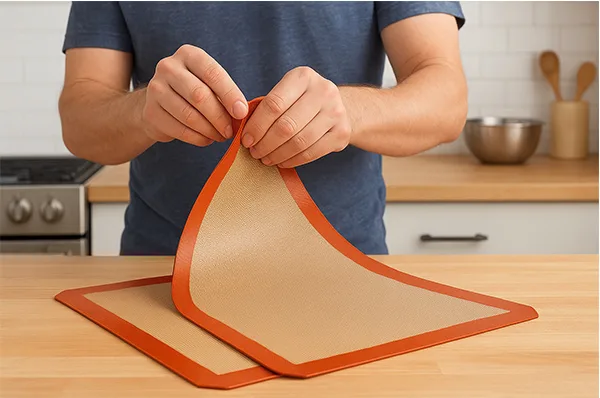
2. The Simple “Pinch and Twist” Test
One of the easiest ways to check authenticity at home is the pinch and twist test:
-
Take a small section of the silicone baking mat.
-
Pinch and twist it firmly.
-
Observe the color closely.
✅ If it stays the same color, it’s likely 100% silicone.
❌ If it turns white, it probably contains plastic fillers or synthetic compounds.
This test works because genuine silicone has strong molecular bonds that don’t discolor when stretched, while plastic fillers break under pressure, revealing a white hue.
3. Smell Test After Heating
High-quality silicone should be odorless, even when heated.
Here’s how to test it safely:
-
Place the mat in the oven at 350°F (175°C) for about 10 minutes.
-
Remove it carefully and smell it.
✅ No smell or only a faint neutral odor: food-grade silicone.
❌ Strong chemical, plastic, or burnt rubber smell: low-quality or mixed material.
Unpleasant odors indicate that volatile compounds or fillers are present, which may release toxins during cooking.
4. Flexibility and Feel
Authentic silicone mats are soft yet sturdy, with a smooth, grippy texture.
When you bend or roll them, they should return to their original shape without cracking, tearing, or leaving marks.
Counterfeit mats may feel:
-
Stiffer or plasticky
-
Oily or waxy on the surface
-
Easy to deform or crease
A genuine silicone baking mat should never feel brittle or rough — flexibility is one of its defining features.
5. Heat Resistance and Color Stability
Silicone is known for its excellent heat resistance. If your mat becomes sticky, discolored, or warps after baking at normal temperatures (up to 450°F / 230°C), it’s probably not pure silicone.
To test heat performance:
-
Place the mat in the oven at 400°F (205°C) for 15 minutes.
-
Check for any melting, bubbling, or changes in texture or color.
High-quality silicone should remain intact and stable, while fake versions may release smoke, shrink, or discolor.
6. Water and Oil Absorption Test
Genuine silicone is non-porous — it should not absorb water, oil, or food residue.
Here’s how to test:
-
Drop a bit of water or oil onto the surface.
-
Let it sit for a few minutes.
-
Wipe it off.
✅ If it wipes away easily without marks, the mat is likely genuine.
❌ If the surface becomes greasy, dull, or absorbs stains, it contains filler materials or poor-quality silicone.
7. Check the Labeling and Certifications
Reliable brands clearly mark their products with certifications and compliance labels, such as:
-
LFGB Certified (European food safety standard)
-
FDA Approved (U.S. Food and Drug Administration)
-
BPA-Free / Phthalate-Free
You should also see the temperature range printed on the mat, usually -40°F to 480°F (-40°C to 250°C).
If the packaging lacks clear details or safety certifications, that’s a red flag. Authentic brands are transparent about their material standards.
8. Brand Reputation and Reviews
With so many brands selling silicone baking mats online, checking reviews and brand reputation is crucial.
Look for:
-
Verified customer reviews mentioning long-term durability
-
No reports of melting, discoloration, or odor
-
Transparent brand communication and warranty policies
Well-known brands like Silpat, Amazon Basics, and Artisan are trusted for consistent quality. However, even with reputable brands, counterfeit versions can appear on marketplaces — always buy from authorized sellers.
9. Conduct a Boiling Test (Optional)
If you’re still uncertain, you can perform a boiling water test:
-
Boil a pot of water and place a small piece of the silicone mat in it for 10 minutes.
-
Observe for changes in color, shape, or smell.
✅ No change: high-quality silicone.
❌ Deformation, stickiness, or odor: fake or low-grade material.
This test helps verify if the mat maintains integrity under heat and moisture.
10. Weight and Thickness Consistency
Authentic silicone baking mats have a consistent weight and thickness — typically around 0.7–1 mm thick. If your mat feels too light, flimsy, or uneven, it may not provide proper heat distribution or durability.
A heavier, dense mat usually indicates higher silicone content and better performance for even baking.
✅ Final Thoughts
Verifying the quality or authenticity of a silicone baking mat is very important for safety and performance reasons. Real silicone mats for food use don’t produce any smells, are very flexible, can withstand high temperatures, and are easy to clean. Imitation mats or those filled with cheap materials can be mistaken for the real ones but can end up putting your food safety and oven cleanliness at risk.
Always squeeze the mat—quickly do the pinch test—check the label—review the labeling before you buy—and purchasing only from reputable sources. A premium silicone baking mat is more than just a baking tool—it is a long-term investment in safe, eco-friendly, and hassle-free cooking.