- Have any questions?
- +86 19574832024
- admin@beaut-lohas.com

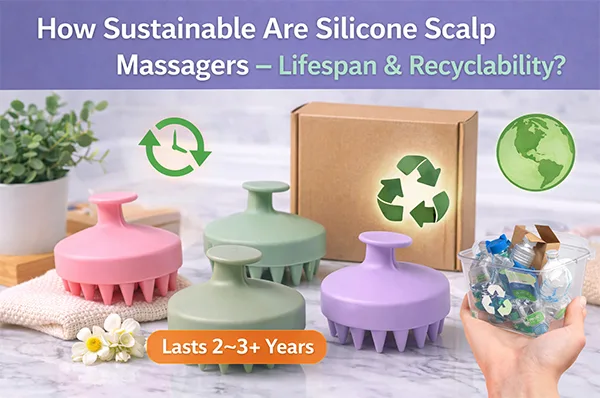
A Comprehensive Guide for Beauty Brands, Wholesalers & OEM Buyers — Beaut-lohas.com
Businesses now recognize sustainability as their essential requirement for operation. Consumers in North America and Europe and worldwide markets prefer to purchase products which exhibit both high performance and environmental sustainability. Beauty accessories such as silicone scalp massagers must meet two essential sustainability requirements:
1. Product lifespan — the duration which the tool remains functional during actual use
2. End-of-life recyclability — the methods which materials undergo disposal or repurposing
Scalp massagers now function as fundamental hair-care instruments which people use for cleansing purposes and relaxation and treatment procedures. Brands need to learn about their sustainability advantages which exist from OEM design until customers complete their product experience.
At beaut-lohas.com, a leading silicone scalp massager manufacturer and private-label supplier, we work daily with US and EU clients on sustainable product strategies. We analyze the actual sustainability of silicone scalp massagers through their complete lifespan and recyclability and overall environmental footprint.
1. What Makes Silicone a Sustainable Material?
Silicone is a versatile elastomer derived from silica (sand) and synthetic elements. It’s not plastic; it has a distinct chemical structure that provides:
-
High heat resistance
-
Elasticity & durability
-
Chemical inertness
-
Non-porous surface
These properties contribute to longer product life and reduced waste compared to many plastics.
2. Lifespan: Why Silicone Scalp Massagers Last Longer
2.1 Durable Performance Under Daily Use
Silicone scalp massagers are designed to withstand:
-
Repeated pressure
-
Wet environments (shower and shampoo use)
-
Contact with shampoos, conditioners, oils, and medicated formulas
-
Normal bending and flexing
Unlike cheaper plastics and TPE (thermoplastic elastomer), high-quality silicone doesn’t crack, harden, or discolor with regular use.
At beaut-lohas.com, our premium food-grade silicone scalp massagers are tested for longevity, consistently showing high performance over 1–3 years of daily use.
2.2 Resistance to Chemical Degradation
Silicone’s non-reactive nature means it resists:
-
Shampoo and conditioner compounds
-
Essential oils
-
Dandruff and scalp treatment shampoos
-
UV exposure
-
High temperatures in bathrooms
This helps maintain product integrity in real environments without breaking down or losing shape.
2.3 Comparison to Other Materials
| Material | Average Practical Lifespan | Notes |
|---|---|---|
| Silicone (premium) | 2–3+ years | Minimal fatigue, stable color |
| TPE / Rubber | 6–12 months | Prone to stress cracking |
| ABS Plastic | 1–2 years | Rigid, but can crack at joints |
Silicone’s superior durability reduces replacement frequency — a key sustainability metric.
3. Recyclability: How Silicone Fares at End of Life
Recyclability depends on material type and local recycling infrastructure. Silicone differs significantly from traditional plastics.
3.1 What Happens When a Silicone Scalp Massager Reaches End-of-Life?
Unlike thermoplastics, silicone cannot be simply melted and remolded because it’s a thermoset material. However, it can be recycled through specialized processes:
-
Industrial silicone recycling — chemical breakdown into raw constituents
-
Re-use in formulations for sealants or low-grade silicone products
-
Energy-recovering incineration in compliant facilities
While not as straightforward as PET bottle recycling, silicone recycling does exist and is gaining traction.
3.2 How Recyclability Compares to Plastic Products
| Material | Ease of Recycling | Notes |
|---|---|---|
| PET / HDPE Plastic | Easy (widely accepted) | Single stream recycling |
| Silicone | Moderate (specialized programs) | Not accepted in all cities, but recyclable |
| TPE / Mixed Polymers | Difficult | Often non-recyclable in standard streams |
Silicone does not release dioxins when incinerated — a sustainability advantage.
4. Reducing Environmental Impact Through Product Design
Sustainability isn’t just about materials — it’s about design choices, too.
4.1 Designing for Longevity
Longer product life = fewer replacements = less waste.
At beaut-lohas.com:
-
Scalper bristles and body are one-piece molded
-
No weak joints or glued parts that fail early
-
Color and softness optimized to prevent early wear
This design philosophy extends usable lifespan and reduces landfill burden.
4.2 Packaging Sustainability
Many clients adopting sustainable packaging see strong consumer response.
Popular options include:
-
Eco kraft boxes (recyclable cardboard)
-
Minimalist uncoated paper sleeves
-
Soy-ink printed retail boxes
Reducing plastic wrap helps brands communicate sustainability values better.
4.3 Reusable and Refillable Concepts
Some forward-thinking brands bundle scalp massagers with refillable shampoo kits or reusable toiletries bags — enhancing reusability and reducing single-use product waste.
5. Lifecycle Assessment: From Production to Disposal
A product’s sustainability depends on its full lifecycle:
5.1 Raw Material Extraction
Silica — the base material for silicone — is abundant, and proper sourcing minimizes environmental impact.
5.2 Manufacturing Stage
Unlike petroleum-based plastics, silicone production:
-
produces fewer toxic byproducts
-
avoids VOC emissions common to some plastics
At beaut-lohas.com, our production adheres to environmental standards and reduces waste through optimized moulding processes.
5.3 Transportation and Distribution
Lightweight silicone tools reduce fuel consumption when shipped in bulk — an indirect sustainability benefit. Customization at production avoids unnecessary add-ons and repeat shipments.
5.4 End of Life
Silicone’s stability slows degradation, reducing microplastic concerns that plague traditional plastics.
Even if recycling infrastructure is not local, silicone’s inert nature means it won’t leach harmful chemicals in landfills, unlike many petroleum-based plastics.
6. Consumer Perception and Sustainability Marketing
Consumer research shows that environmental messaging improves:
-
Purchase intent
-
Brand loyalty
-
Perceived product value
Key messages that resonate:
✔ Durable — “Longer product life, less waste”
✔ Recyclable material
✔ Minimal packaging
✔ Made without harmful plastics
Brands using these messages often see higher conversions, especially in US and EU eco-conscious segments.
7. Private Label & OEM Opportunities with Beaut-lohas.com
As a trusted scalp massager OEM/ODM supplier:
-
We offer custom silicone hardness and colors with durability focus
-
Provide eco-friendly packaging options
-
Help brands align with sustainability standards
-
Support low MOQ testing for new sustainable lineups
Whether your brand targets premium eco markets or mass retail, customized sustainable designs help differentiate your offering.
8. Challenges and Future Opportunities
While silicone’s sustainability profile is positive overall, challenges remain:
-
Limited recycling acceptance in some regions
-
End-of-life collection and processing
-
Consumer education about proper disposal
But innovation continues:
-
Recycling programs dedicated to silicone products
-
Hybrid sustainable materials under R&D
-
Brand take-back and reuse initiatives
Brands partnering with suppliers like beaut-lohas.com are well-positioned to take advantage of these evolving frameworks.
Conclusion: Are Silicone Scalp Massagers Sustainable?
Yes — from both lifespan and environmental perspectives.
Silicone scalp massagers:
-
Last multiple years with daily use
-
Resist chemical and physical degradation
-
Avoid early failure common in cheap plastics
-
Offer recycling potential through specialized facilities
-
Are inert and safe in landfills when recycling isn’t available
For brands, emphasizing longevity + recyclable potential — backed by thoughtful design and packaging — is a winning sustainability strategy.
At beaut-lohas.com, we help brands deliver durable, eco-conscious scalp massagers that perform well in both US and EU markets.