- Have any questions?
- +86 19574832024
- admin@beaut-lohas.com

A Market-Driven Analysis for Beauty Brands and Wholesale Buyers
Scalp care, which was once considered a niche wellness habit, is now developing into a mainstream beauty product and subsequently to scalp massagers has been a very fast-growing category across Amazon, Shopify stores, salons, and pharmacies in both the US and EU. The fast-growing category of scalp massagers has already spread rapidly across Amazon, Shopify stores, salons, and pharmacies in the US and EU. For brand owners, importers, and distributors, the main strategic question remains one:
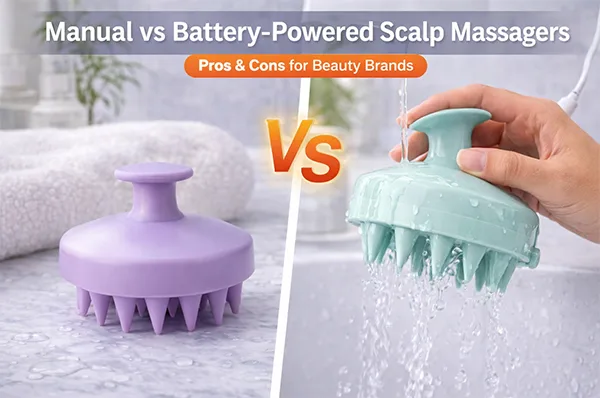
Do consumers prefer manual use over battery-operated( electric) scalp massagers?
The reply is variable. Customer preference according to situations, being the use case, price sensitivity, age groups, retail channels, and brand positioning, varies widely. This is indeed a comprehensive guide, beaut-lohas.com scrutinizes consumer behavior, market data trends, and B2B sourcing insights to assist you in making more informed product choices.
1. Overview of the Global Scalp Massager Market
Scalp massagers are now widely associated with:
-
Hair loss prevention routines
-
Shampoo and scalp cleansing
-
Stress relief and relaxation
-
Hair growth product absorption
-
Salon and spa scalp treatments
According to e-commerce trend data and distributor feedback:
-
Manual scalp massagers dominate volume sales
-
Battery-powered scalp massagers lead in revenue per unit
This split explains why both product types continue to grow simultaneously.
2. Manual Scalp Massagers: Why They Remain the Bestseller
2.1 Simplicity Drives Mass Adoption
Manual silicone scalp massagers are extremely popular because they are:
-
Easy to use
-
Intuitive for first-time buyers
-
Maintenance-free (no charging or batteries)
Consumers often discover scalp massagers as an impulse add-on when purchasing shampoo or hair care sets.
2.2 Price Sensitivity in Mass Markets
Manual scalp massagers typically retail between USD $5–$12, making them attractive for:
-
Price-conscious consumers
-
Gift sets and bundles
-
Subscription boxes
For wholesalers and distributors, this means:
-
High reorder frequency
-
Strong margins at scale
-
Ideal for promotional campaigns
2.3 Waterproof and Shower-Friendly by Nature
Manual silicone scalp massagers:
-
Are 100% waterproof
-
Perform well in wet environments
-
Do not require IP ratings or electronics compliance
This makes them especially popular in:
-
Supermarkets
-
Drugstores
-
Bathroom-focused retail displays
2.4 Consumer Perception: “Gentle and Natural”
Many customers believe manual scalp massagers offer:
-
Better pressure control
-
Reduced risk of scalp irritation
-
A more “natural” hair-care experience
This perception is particularly strong among:
-
Sensitive scalp users
-
Natural & organic beauty buyers
-
Eco-conscious consumers
3. Battery-Powered Scalp Massagers: The Premium Experience
3.1 Technology-Driven Appeal
Battery-powered scalp massagers introduce features such as:
-
Vibration
-
Rotating massage heads
-
Sonic or micro-vibration motors
These features create a spa-like experience at home, which appeals to customers seeking relaxation and luxury.
3.2 Higher Willingness to Pay
Electric scalp massagers usually retail between USD $25–$80, depending on features and brand positioning.
Customers purchasing these products often:
-
View them as wellness devices
-
Expect visible results
-
Are influenced by influencer marketing and reviews
For brands, this translates into:
-
Higher per-unit profit
-
Lower return rates when quality is high
-
Strong storytelling opportunities
3.3 Popular Among Hair Loss & Treatment Users
Consumers using:
-
Medicated shampoos
-
Hair growth serums
-
Anti-hair-loss treatments
Often prefer electric scalp massagers because they believe vibration improves:
-
Blood circulation
-
Product absorption
-
Overall treatment effectiveness
This makes battery-powered models especially suitable for:
-
Dermatology-focused brands
-
Hair loss clinics
-
Professional hair-care lines
3.4 Importance of Waterproof Certification
Modern consumers expect electric scalp massagers to be:
-
IPX6 or IPX7 waterproof
-
Safe for shower use
-
Rechargeable via USB
Brands that fail to meet these expectations often face poor reviews. This is why reliable manufacturing and quality control are critical.
4. Customer Preference by Market Segment
| Customer Segment | Preferred Type |
|---|---|
| Budget-conscious buyers | Manual |
| First-time users | Manual |
| Wellness & spa lovers | Battery-powered |
| Hair loss treatment users | Battery-powered |
| Eco-friendly consumers | Manual |
| Gift buyers | Battery-powered |
| Subscription boxes | Manual |
5. Sales Channel Influence on Preference
Online Marketplaces (Amazon, Shopify)
-
Battery-powered models perform well due to video demos
-
Reviews and influencer content drive trust
Offline Retail (Drugstores, Supermarkets)
-
Manual scalp massagers dominate shelf space
-
Lower price encourages impulse purchases
Professional Salons & Clinics
-
Electric scalp massagers preferred
-
Often used as part of paid scalp treatments
6. What Smart Brands Are Doing in 2025
Rather than choosing one over the other, successful brands:
-
Offer both manual and battery-powered lines
-
Position manual models as entry-level products
-
Upsell electric models as premium upgrades
This strategy increases:
-
Customer lifetime value
-
Brand credibility
-
Cross-selling opportunities
7. Wholesale & Private Label Insights from beaut-lohas.com
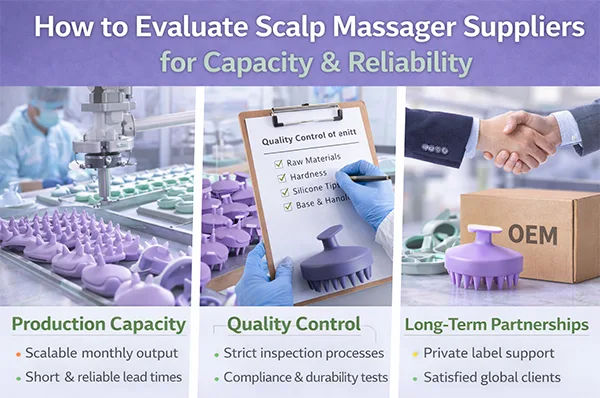
As a professional silicone scalp massager manufacturer and wholesale supplier, beaut-lohas.com works closely with brand owners, importers, and distributors across the US and EU markets. Based on real order data and long-term OEM/ODM cooperation, we observe clear differences in customer preference between manual and battery-powered scalp massagers.
From a manufacturing and wholesale perspective, manual silicone scalp massagers generate:
-
Higher repeat orders
-
Faster production cycles
-
Lower compliance and certification costs
-
Strong demand for private label and logo customization
Meanwhile, battery-powered scalp massagers require:
-
Strict waterproof and safety standards (IPX6/IPX7)
-
Stable motor quality and lifespan testing
-
Higher expectations for packaging, branding, and user experience
At beaut-lohas.com, we support both product categories with:
-
✔ Flexible MOQ for wholesale and private label orders
-
✔ Custom mold development, logo embossing, and color matching
-
✔ Retail-ready packaging solutions (eco kraft box, gift box, blister)
-
✔ Quality control systems aligned with US & EU market standards
This dual-category capability allows our partners to build entry-level and premium scalp care product lines under one reliable supply chain.
8. Final Verdict: A Strategic Product Mix Backed by beaut-lohas.com
From beaut-lohas.com’s experience as a long-term scalp massager OEM supplier, the most successful brands do not choose between manual or battery-powered scalp massagers — they leverage both.
-
Manual scalp massagers attract first-time users and high-volume sales
-
Battery-powered scalp massagers strengthen brand image and increase profit margins
By sourcing both product types from beaut-lohas.com, beauty brands and distributors can:
-
Expand product portfolios efficiently
-
Maintain consistent quality and branding
-
Reduce supplier fragmentation and operational risk
This balanced strategy has proven effective for many of our US and EU partners scaling their scalp care categories.