- Have any questions?
- +86 19574832024
- admin@beaut-lohas.com

Silicone Baking Mats
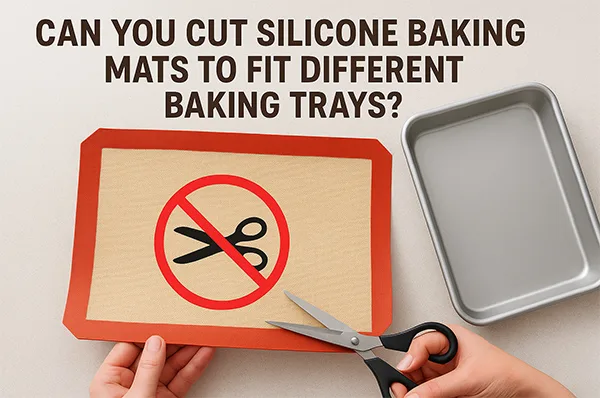
Silicone baking mats are now an indispensable tool in the kitchen for bakers and home cooks worldwide. They are long-lasting, reusable, and good for the environment, thus providing a very good alternative to the disposable parchment paper and aluminum foil. However, if you have ever experienced your mat not fitting your baking tray, you might have asked: Is it allowed to cut up a silicone baking mat?
The condensed version of the answer is: It depends — but basically, it is not advisable. Although trimming silicone baking mats may look like an easy solution, cutting them can affect the mats’ structure, safety, and performance negatively. Let’s find out the reasons, and what your best options are if you need a different size.
Understanding the Structure of Silicone Baking Mats
To understand whether it’s safe to cut a silicone baking mat, it’s important to know how these mats are made.
High-quality silicone baking mats are typically constructed from food-grade silicone reinforced with a fiberglass mesh. This mesh is embedded inside the silicone layer to provide strength, stability, and even heat distribution.
This fiberglass layer is what allows the mat to withstand high temperatures — often up to 446°F (230°C) — and prevents it from stretching or tearing during use. However, this same layer is also the reason you should not cut your silicone baking mat.
If you cut through the silicone, you risk exposing the fiberglass interior, which is not food-safe and can release fibers or cause contamination when heated.
Why Cutting Silicone Baking Mats is Not Recommended
Here are the main reasons why trimming or resizing a silicone baking mat can be problematic:
1. Risk of Exposing Fiberglass
As mentioned, most silicone mats are reinforced with fiberglass mesh. When you cut into the mat, that inner mesh becomes exposed. This can lead to fiberglass particles getting into your food, which is unsafe for consumption.
Even a small cut can lead to the silicone peeling away from the edges over time, further exposing the interior and reducing the lifespan of the mat.
2. Compromised Heat Resistance
The fiberglass core helps the mat distribute heat evenly and maintain its shape. Once cut, that structural integrity is lost.
A trimmed mat may become flimsy, warp under heat, or bake unevenly, especially at higher temperatures.
This means your cookies or pastries might brown unevenly, and your mat may deteriorate much faster.
3. Potential for Silicone Tearing or Melting
Cutting the mat changes the seal around its edge. Most mats have factory-sealed edges that prevent the silicone from separating or melting. Once you alter that seal, the silicone may start to peel, bubble, or release odors when exposed to heat.
This could lead to sticky residue on your baking tray or even damage your oven over time.
4. Voiding Warranty or Quality Guarantee
If you purchase a silicone baking mat from a reputable brand, it likely comes with a warranty or satisfaction guarantee.
Cutting or altering the product will typically void any warranty, as manufacturers design mats to be used in their original dimensions.
So even if the modification seems harmless, it may end up costing more if your mat wears out prematurely.
Safe Alternatives to Cutting Your Silicone Baking Mat
Fortunately, there are several practical and safe alternatives to resizing your silicone baking mat:
1. Buy Pre-Cut Sizes
Many manufacturers offer multiple mat sizes to fit standard baking trays, such as:
-
Quarter sheet (9″ x 13″)
-
Half sheet (11″ x 16″)
-
Full sheet (16″ x 24″)
-
Round or custom shapes for air fryers, pizza pans, and cake molds
This allows you to choose a mat that perfectly fits your tray without any modification.
2. Fold or Trim Only the Corners (If No Fiberglass Core)
If you own a 100% silicone mat without a fiberglass layer, it may be possible to trim a small amount from the edges or corners using scissors.
However, this only applies to mats made entirely of pure silicone. Before cutting, confirm with the manufacturer whether the product contains fiberglass mesh.
If it does, do not cut it under any circumstances.
3. Use the Mat as a General Baking Surface
If your silicone baking mat doesn’t fit the tray, you can still use it on larger baking sheets or place it directly on the oven rack for catching drips and spills.
You can also repurpose it for kneading dough, rolling out pastry, or working with chocolate and candy, since it provides a non-stick, heat-resistant surface for all kinds of kitchen tasks.
4. Order Custom-Size Silicone Baking Mats
If you regularly bake with unique tray dimensions — such as for professional or commercial kitchens — the best option is to order custom-size silicone baking mats directly from a manufacturer or supplier.
Many silicone product factories offer OEM (Original Equipment Manufacturer) and ODM (Original Design Manufacturer) services, meaning they can produce mats in specific sizes, colors, and thicknesses, complete with your logo and packaging design.
This ensures you get a perfect fit without risking safety or performance.
How to Identify a High-Quality Silicone Baking Mat
If you’re shopping for new mats instead of cutting existing ones, here are key features to look for:
-
Food-grade silicone: Certified BPA-free and LFGB or FDA approved.
-
Heat resistance: Should safely handle up to 446°F (230°C) or higher.
-
Reinforced fiberglass core: For even heat distribution and stability.
-
Non-stick surface: Requires no oil or parchment paper.
-
Reusable and easy to clean: Dishwasher-safe for convenience.
-
Customizable options: If buying wholesale, choose a manufacturer offering logo printing and size customization.
Eco-Friendly and Economic Benefits of Silicone Baking Mats
One of the biggest advantages of silicone baking mats is their sustainability. A single reusable mat can replace hundreds of sheets of parchment paper or aluminum foil, significantly reducing kitchen waste.
They’re also cost-effective — while the initial investment is higher than disposable liners, a good-quality mat can last for years if properly cared for.
Simply wash it with warm soapy water or place it in the dishwasher after use, and it’s ready for your next baking session.
Conclusion: Cutting Silicone Baking Mats Is Not Worth the Risk
While it might seem convenient to trim a silicone baking mat to fit your tray, doing so can cause safety, durability, and performance issues. Most mats contain fiberglass, and cutting through that layer can expose harmful materials and reduce the mat’s lifespan.
The best approach is to buy a properly sized mat or order custom-made silicone baking mats that fit your trays perfectly.
Silicone baking mats are a smart, eco-friendly investment — just make sure to keep them intact and use them as designed. With the right care and fit, your mat will serve you well for countless batches of cookies, pastries, and baked goods.