- Have any questions?
- +86 19574832024
- admin@beaut-lohas.com

Silicone Under Eye Patches
Dark circles stand as the most prevalent skincare problem which European and North American consumers face. Under-eye discoloration occurs due to sleep deprivation, stress, aging, and genetic factors all of which create an appearance of tiredness for individuals who actually feel well-rested. The popularity of silicone under eye patches has surged as skincare routines shift toward using eco-friendly reusable products which follow minimalist design principles.
The main question exists because it remains unclear whether silicone under eye patches actually help with dark circles or function as another passing beauty trend.
The article investigates scientific research together with dermatologist viewpoints and actual consumer needs and information about how to use products which brands and retailers and B2B buyers need to understand modern skincare trends.
Understanding What Causes Dark Circles
You need to establish proper evaluation methods for silicone patches because “dark circles” represent multiple distinct medical conditions which dermatologists divide into different categories. The following list shows how dermatologists classify dark circles into different types:
1. Pigmented Dark Circles
People with medium to deep skin tones experience these dark circles because their bodies produce excessive melanin. The skin becomes darker because of both sun exposure and skin inflammation.
2. Vascular Dark Circles
People with thin under-eye skin show their blood vessels which make their skin appear bluish or purple. The condition arises when people experience fatigue together with dehydration and restricted blood flow.
3. Structural or Shadowing Dark Circles
People create shadows through their facial volume loss which comes from aging and their tear troughs that develop hollows.
4. Lifestyle-Related Dark Circles
Sleep deprivation together with screen time and allergies and stress creates temporary under-eye darkness for people who experience these conditions.
The different causes of dark circles require multiple solutions because no product serves as a complete solution to all problems. The use of silicone under eye patches does not solve all problems. They offer important benefits.
What Are Silicone Under Eye Patches?
Silicone under eye patches are reusable skincare tools made from medical-grade or cosmetic-grade silicone. Unlike disposable hydrogel or fabric masks, they do not typically contain active ingredients themselves.
Instead, they function as an occlusive layer, meaning they seal the skin and enhance the absorption and effectiveness of skincare products applied underneath.
Key characteristics include:
-
Non-porous silicone surface
-
Reusable and washable design
-
Flexible skin adhesion
-
Compatible with serums, creams, and eye treatments
Their mechanism is closer to professional dermatology occlusion therapy than traditional sheet masks.
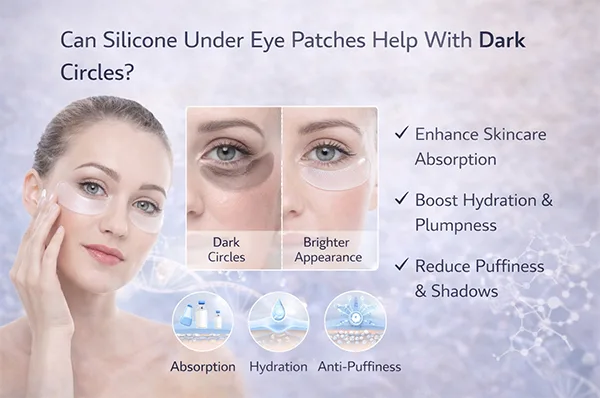
How Silicone Patches May Help Reduce the Appearance of Dark Circles
1. Enhancing Product Absorption
Dermatologists often emphasize that hydration and active ingredients are crucial for improving under-eye appearance. Silicone patches trap moisture and prevent evaporation, allowing ingredients like:
-
Hyaluronic acid
-
Vitamin C
-
Niacinamide
-
Peptides
-
Caffeine
to penetrate more effectively.
This enhanced absorption can improve brightness and hydration — two factors closely tied to reducing visible dark circles.
2. Increasing Hydration and Skin Plumpness
Dehydrated under-eye skin appears thinner and duller, which exaggerates darkness. Silicone patches create a micro-environment that reduces transepidermal water loss (TEWL).
When skin stays hydrated:
-
Fine lines appear smoother
-
Light reflection improves
-
Shadows become less noticeable
Many users report that dark circles look lighter immediately after use due to improved skin plumpness.
3. Reducing Puffiness That Intensifies Darkness
Under-eye puffiness casts shadows that worsen dark circles visually. When paired with cooling serums or refrigerated storage, silicone patches help compress and calm swelling.
While they do not directly treat pigmentation, reducing puffiness can significantly improve overall under-eye appearance.
4. Supporting Consistent Skincare Application
One underestimated benefit is behavioral. Silicone patches help keep eye creams in place, preventing migration or rubbing off during multitasking.
For consumers who struggle with consistent skincare routines, this improves product efficiency over time — indirectly helping dark circle management.
What Dermatologists Generally Say
Dermatologists typically agree on several key points:
✔ Silicone patches are supportive tools, not standalone treatments
They enhance skincare performance rather than replacing active ingredients.
✔ Hydration improvement is scientifically plausible
Occlusion therapy has long been used in dermatology to improve moisture retention and skin barrier recovery.
✔ Results depend on dark circle type
-
Hydration-related or vascular dark circles may improve visibly.
-
Pigmentation-related dark circles require brightening ingredients.
-
Structural shadows need professional treatments.
In short: silicone patches help optimize skincare outcomes but are not miracle cures.
What Silicone Under Eye Patches Cannot Do
To set realistic expectations — something especially important for brands marketing to Western consumers — silicone patches cannot:
-
Permanently remove genetic dark circles
-
Eliminate deep pigmentation alone
-
Replace sunscreen or clinical treatments
-
Reverse volume loss or aging structures
Overpromising results often leads to negative reviews, while education-driven marketing builds trust.
Why Silicone Eye Patches Are Trending in Western Markets
Several consumer trends explain their rapid growth:
1. Skin Minimalism
Consumers prefer fewer products with multifunctional benefits. Reusable patches amplify existing skincare rather than adding new steps.
2. Sustainability Awareness
Reusable silicone aligns with eco-conscious purchasing decisions, reducing single-use mask waste.
3. Cost Efficiency
Instead of repeatedly buying disposable eye masks, consumers invest once and reuse for months.
4. Social Media Visibility
Visible patches during skincare routines make them highly shareable on platforms like TikTok and Instagram.
Best Practices for Using Silicone Under Eye Patches
For optimal results, dermatology-informed usage matters.
Step-by-Step Guide
-
Cleanse the face thoroughly.
-
Apply eye serum or cream targeting dark circles.
-
Place silicone patches gently under the eyes.
-
Leave on for 10–20 minutes.
-
Remove and clean patches with mild soap.
-
Store in a hygienic container.
Pro Tips
-
Use caffeine-based formulas in the morning for circulation support.
-
Use hydrating or peptide products at night.
-
Refrigerate patches for anti-puffiness benefits.
-
Maintain consistent daily or weekly use.
Consistency is often the difference between noticeable improvement and disappointment.
Consumer Expectations vs. Real Results
Based on market feedback and dermatology guidance:
| Concern Type | Expected Benefit |
|---|---|
| Mild dark circles | Visible improvement over time |
| Dehydration lines | Immediate smoothing effect |
| Puffiness | Temporary reduction |
| Deep pigmentation | Limited improvement without actives |
| Genetic dark circles | Minimal change |
Educated consumers increasingly appreciate transparency, making realistic positioning crucial for brands.
Opportunities for Skincare Brands and Retailers
For B2B buyers and private-label skincare brands, silicone under eye patches present strong market potential because they:
-
Fit clean beauty and sustainability trends
-
Pair well with serums and eye creams (cross-selling opportunity)
-
Offer high perceived value with low material waste
-
Encourage repeat engagement with skincare routines
Customization options such as logo embossing, color matching, packaging design, and bundled skincare kits further enhance brand differentiation.
Final Verdict: Do Silicone Under Eye Patches Help With Dark Circles?
Yes — but indirectly.
Silicone under eye patches help reduce the appearance of dark circles primarily by:
-
Improving hydration
-
Enhancing absorption of active ingredients
-
Reducing puffiness
-
Supporting consistent skincare usage
They are most effective when used as part of a targeted skincare routine rather than as a standalone solution.
For modern consumers seeking reusable, sustainable, and performance-enhancing skincare tools, silicone under eye patches represent a practical and dermatologist-aligned addition to under-eye care.