- Have any questions?
- +86 19574832024
- admin@beaut-lohas.com

Are Silicone Baking Mats Worth It?
When it comes to home baking, every tool in your kitchen can make the difference between a frustrating mess and a seamless, enjoyable experience. Over the last decade, silicone baking mats have surged in popularity, often praised as the eco-friendly, cost-effective, and non-stick alternative to parchment paper and aluminum foil. But many home bakers and even professionals still ask the same question: Are silicone baking mats really worth it?
This article will take a deep dive into the features, benefits, drawbacks, and overall value of silicone baking mats, helping you decide whether they deserve a spot in your kitchen.
What Are Silicone Baking Mats?
Silicone baking mats are reusable, flexible sheets made primarily of food-grade silicone, often reinforced with fiberglass mesh. They are designed to replace single-use items like parchment paper and foil, providing a non-stick surface that can handle high oven temperatures. Unlike parchment paper that may burn or curl, silicone mats remain flat and durable through repeated use.
Commonly, these mats come in half-sheet or full-sheet pan sizes, but they can also be trimmed or found in specialized sizes for toaster ovens, air fryers, and even microwaves.
Key Benefits of Silicone Baking Mats
1. Truly Non-Stick Performance
One of the biggest advantages of silicone baking mats is their naturally non-stick surface. You can bake cookies, macarons, or roasted vegetables without adding oil, butter, or cooking spray. Baked goods slide off with ease, which reduces frustration and ensures delicate items like pastries maintain their shape.
2. Reusable and Eco-Friendly
Instead of constantly buying rolls of parchment paper or foil, silicone mats can be washed and reused hundreds of times. This not only saves money but also reduces kitchen waste, making them a more sustainable choice. For environmentally conscious bakers, this is a major selling point.
3. Even Heat Distribution
The fiberglass mesh embedded in many silicone mats helps distribute heat evenly across the baking surface. This can lead to more consistent results—cookies bake with uniform bottoms, and roasted vegetables caramelize evenly without sticking or burning.
4. Temperature Resistance
Most silicone baking mats can withstand temperatures from around -40°F (-40°C) to 480°F (250°C). This makes them versatile for baking, roasting, freezing, and even candy-making.
5. Easy Cleanup
Silicone mats are dishwasher safe, though many bakers simply rinse them with warm, soapy water. Since food doesn’t stick, you won’t have to spend time scrubbing pans or worrying about baked-on messes.
6. Durability
With proper care, a single silicone baking mat can last for years. For avid bakers, this makes them an economical investment.
Potential Drawbacks of Silicone Baking Mats
While silicone mats offer plenty of advantages, they are not perfect. Here are some points to consider:
1. Upfront Cost
Compared to parchment paper, the initial investment can feel high. A quality silicone mat usually costs between $15 and $30. However, the long-term savings often outweigh this cost.
2. Not Always Ideal for Crisping
Because silicone is insulating, it doesn’t always create the crisp, browned bottoms that some recipes (like pizza or very crispy cookies) require. A metal pan or parchment might give better crisping in these cases.
3. Storage Challenges
Silicone mats are floppy and can be difficult to store neatly. Rolling them up can work, but improper storage may cause them to warp or crease.
4. Can Retain Odors and Stains
If you use a silicone mat for very strong-flavored foods (like garlic-roasted vegetables or salmon), it may absorb odors. Similarly, sugar or oily foods can leave behind slight stains. These issues don’t affect performance, but some users find them unpleasant.
Best Uses for Silicone Baking Mats
Silicone baking mats shine in many specific baking and cooking tasks:
-
Cookies & Pastries: Their non-stick surface ensures delicate baked goods hold their shape.
-
Macarons: Professional pastry chefs often rely on silicone mats for even heating and consistency.
-
Candy Making: Since they handle high heat, they are great for working with sugar or caramel.
-
Roasting Vegetables: They prevent sticking and make cleanup simple.
-
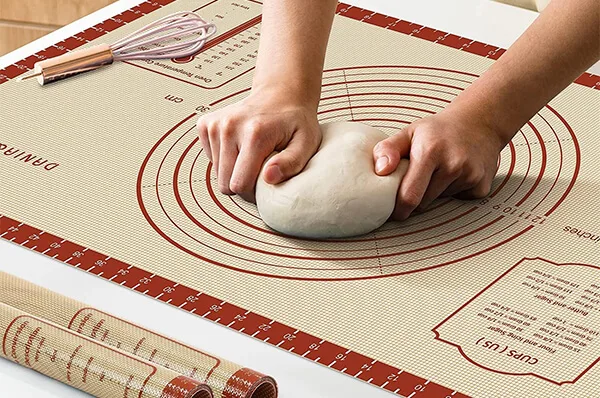
Rolling Dough or Kneading: Larger mats can be used as a non-stick work surface.
Cost Comparison: Silicone Mats vs. Parchment Paper
Let’s break down the economics:
-
A single silicone mat costs about $20 and lasts for several years.
-
A roll of parchment paper costs around $4–$6, and frequent bakers may use multiple rolls per year.
If you bake once a week, you could easily go through 10–15 rolls of parchment annually. That adds up to $50–$75 a year, meaning the silicone mat pays for itself in just a few months.
Are Silicone Baking Mats Safe?
Yes—when made from food-grade silicone, these mats are safe for everyday baking. They are FDA-approved, BPA-free, and designed to withstand high oven temperatures. To ensure safety, it’s best to purchase from reputable brands rather than cheaper, unverified options.
Tips for Caring for Your Silicone Baking Mat
To get the most out of your investment:
-
Avoid Cutting on the Mat: Knives or pizza cutters can damage the silicone.
-
Wash Properly: Use warm, soapy water or place in the top rack of the dishwasher.
-
Avoid High Broiler Settings: Direct flames or very high heat (above 480°F/250°C) may degrade the silicone.
-
Store Flat or Rolled Gently: Avoid folding to prevent creases.
So, Are Silicone Baking Mats Worth It?
For most home bakers, the answer is a resounding yes. The combination of non-stick convenience, cost savings, eco-friendliness, and durability make them an excellent addition to any kitchen. While they may not completely replace parchment paper or foil for every recipe, they are versatile enough to handle the majority of baking tasks.
If you bake frequently—whether cookies, pastries, or roasted vegetables—a silicone baking mat is an investment that pays off quickly. For occasional bakers, it may still be worthwhile for its ease of use and sustainability benefits.
Final Thoughts
Silicone baking mats represent the intersection of practicality, sustainability, and modern kitchen innovation. They save money, reduce waste, and simplify the baking process. While they aren’t perfect for every dish, they are certainly worth considering for any home baker looking to upgrade their tools.
So the next time you find yourself reaching for parchment paper, you might want to ask: Why not use a silicone mat instead?