- Have any questions?
- +86 19574832024
- admin@beaut-lohas.com

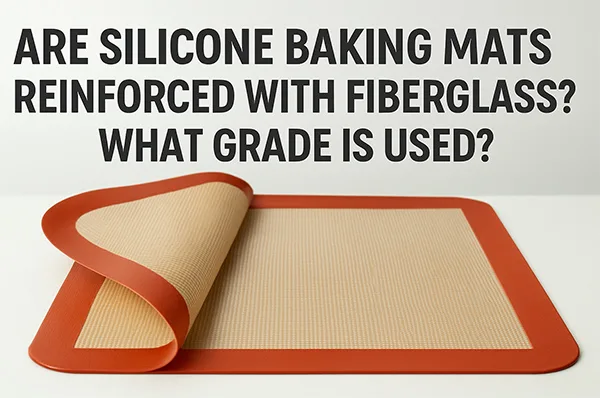
Silicone Baking Mats
Silicone baking mats have turned into indispensable items in the daily cooking and baking processes in both home and industrial settings. For instance, one of the main concerns or questions that arise during the negotiations between the professional buyers, pastry manufacturers, food brands, and wholesale distributors is the presence or absence of fiberglass in the silicone baking mats, and if it is there, what the quality of fiberglass used is. Above all, this knowledge helps to guarantee that the product is safe, has a consistent performance, and lasts for a long time.
This article is a thorough investigation into the fabrication of silicone baking mats, the use of fiberglass reinforcement, safety issues, and the important factors that B2B purchasers should take into consideration when looking for the right manufacturers.
1. Why Fiberglass Is Used in Silicone Baking Mats
Most high-quality silicone baking mats are made from a combination of:
-
Food-grade silicone (often platinum-cured)
-
A woven fiberglass mesh embedded in the center
Fiberglass is not used for insulation or heat resistance. Instead, it provides:
✓ Structural Stability
Silicone alone is too soft to hold shape when exposed to high oven temperatures.
Fiberglass mesh ensures:
-
Even thickness
-
Resistance to stretching
-
Long-term dimensional stability
✓ Even Heat Distribution
The woven design spreads heat consistently across the surface, which is especially important for:
-
Cookies
-
Macarons
-
Bread rolls
-
Pastries
This results in more uniform browning.
✓ Increased Durability
Fiberglass prevents tearing and helps mats withstand:
-
Repeated bending
-
Pressure from kneading
-
Industrial dishwasher cycles
-
High-frequency commercial baking
2. What Grade of Fiberglass Is Typically Used?
The fiberglass used in silicone baking mats is usually E-glass, the most common commercial-grade fiberglass known for excellent strength and heat tolerance.
E-Glass Fiberglass (Most Common)
-
Used in 90%+ of professional baking mats
-
Stable up to 260°C / 500°F
-
Excellent tensile strength
-
Safe for indirect contact (when fully encapsulated)
Other less common types include:
S-Glass (High-Strength Variant)
-
More expensive
-
Used in premium or heavy-duty mats
-
Better tensile strength and heat endurance
-
Rare in consumer-grade mats, more common in OEM specialty orders
C-Glass (Chemical Resistant)
-
Occasionally used for industrial applications, not typical for food mats
For B2B buyers, asking the factory for E-glass specification sheets is a common due diligence step.
3. Is Fiberglass Safe in Silicone Baking Mats?
A common concern is whether fiberglass exposure poses risks during baking.
The answer is:
Fiberglass is safe as long as it remains fully encapsulated inside the silicone.
Manufacturers seal the woven mesh between two thick silicone layers. When properly produced:
-
No fibers are exposed
-
No chemicals leach
-
No risk of inhalation or ingestion
Potential Safety Risks Only Occur When:
-
The mat is cut, exposing inner fiberglass
-
The silicone layer becomes worn, thin, or damaged
-
The product is made using low-grade silicone or poor manufacturing quality
This is why B2B clients should avoid cutting mats into custom shapes unless made in-factory before silicone application.
4. How to Verify a Mat Uses Reinforced Fiberglass
B2B buyers can confirm fiberglass reinforcement through:
1. Factory Documentation
Request:
-
Material composition report
-
E-glass certification
-
LFGB/FDA test reports
2. Light Test
Hold the mat up to a strong light source.
A fine cross-hatched or woven pattern should be visible—this is the fiberglass mesh.
3. Thickness Verification
Standard silicone baking mats range from 0.6mm to 0.8mm.
If the mat is thinner than 0.5mm, it may contain:
-
Low-quality silicone
-
Sparse fiberglass mesh
-
Inconsistent layering
4. Uniformity Check
Press the surface lightly. Premium mats maintain:
-
Elasticity
-
Structure
-
No soft or thin spots
5. Benefits of Fiberglass-Reinforced Baking Mats
✓ Higher Durability
Mats can last for thousands of baking cycles.
✓ Better Heat Distribution
More consistent results in professional pastry production.
✓ Stable, Non-Deforming Structure
Especially important in large commercial baking sheets.
✓ Easier Handling
The mat stays perfectly flat and resists curling.
✓ Supports Heavy-Duty Use
Can handle rolling, kneading, and repeated oven exposure.
6. What B2B Buyers Should Ask Manufacturers
When sourcing silicone baking mats, buyers should inquire about:
-
What grade of fiberglass is used?
(Most buyers prefer E-glass by default.) -
Is the fiberglass fully encapsulated?
There should be no exposed threads. -
Report Availability
-
FDA 21 CFR 177.2600
-
LFGB
-
BPA-free declaration
-
-
Silicone Quality
Platinum-cured silicone is considered premium due to its purity and durability. -
Maximum Temperature Rating
Should withstand 230–260°C for professional use. -
Thickness Options
0.7mm is considered the professional sweet spot. -
Customization Capabilities
-
Size
-
Logo printing
-
Border colors
-
Retail packaging
-
Private label branding
-
7. Common Misconceptions About Fiberglass in Baking Mats
“Fiberglass can leak into food.”
False — unless the mat is damaged or cut.
“You can cut silicone mats to fit trays.”
False — doing so exposes fiberglass, making the mat unsafe.
“Thicker mats always mean better quality.”
Not always—heat distribution may decrease if too thick.
“Non-fiberglass mats are safer.”
Pure silicone mats are less durable and prone to deformation.
8. Final Thoughts: Should You Choose Fiberglass-Reinforced Mats?
For commercial kitchens, bakeries, and food brands, fiberglass-reinforced silicone baking mats offer the best balance of performance, safety, and durability. E-glass fiberglass remains the industry standard due to its strength, heat tolerance, and compatibility with food-grade silicone.
When sourcing wholesale or OEM/ODM mats, always ensure:
-
Tested and certified materials
-
Full encapsulation
-
Consistent silicone thickness
-
Professional-grade fiberglass mesh
High-quality silicone baking mats can significantly improve baking efficiency, reduce waste from parchment paper, and deliver better product consistency—making them indispensable tools for modern food businesses.